
Entrepreneur and author Sandeep Mall has sparked a widespread debate on civic sense in India after sharing his observations he regularly notices during school drop-offs with his granddaughter. His comments have reignited discussions around traffic discipline

In a dramatic legislative stalemate on Friday, the Constitution (131st Amendment) Bill was defeated in the Lok Sabha after the government failed to secure the mandatory two-thirds majority. Despite a day of high-octane debate, the Bill—which sought to expand the House to 50 seats and implement a

Coventry City end 25-year wait: Return to Premier League under Frank LampardCoventry promoted to Premier League after 25-year absence. Updated on: Apr 18, 2026 9:17 AM IST ReutersEdited by Probuddha Bhattacharjee Share via Copy link Coventry City ended their 25-year absence from the Premier League

Doug Ford, the leader of the Canadian province of Ontario, has been criticised for his government's purchase of a pre-owned C$28.9m ($21m; £15.5m) private jet, with opposition leaders calling it a "gravy plane". News of the purchase was first reported by the Toronto Star newspaper on Friday and

There is a painting near the entrance of Staged Realities that stopped visitors cold on opening night. A man on a bicycle loaded with a miscellany of wares — a monkey, a lantern, a parrot, a bunch of bananas — looks out of the canvas with the frank

How to Make Panchamrit at Home for Akshay Tritiya Puja and Temple-Style PrasadPanchamrit is a sacred drink made with five ingredients: milk, curd, honey, sugar, and ghee. It is commonly prepared as prasad during Hindu rituals and poojas. Updated on: Apr 18

Ahmedabad, Apr 18 (PTI) Winless after six matches, time is running out for Kolkata Knight Riders playoff hopes but their embattled skipper Ajinkya Rahane has urged the side to “embrace tough phases, play with freedom, and focus on one game at a time".Ahmedabad

Kangana Ranaut opened up about her relationship rumours with Chirag Paswan. While Kangana is a part of the Bharatiya Janata Party (BJP), Chirag is the Union Minister of Food Processing Industries since June 2024. Kangana Ranaut and Chirag Paswan’s relationship rumours spread like wildfire after
Pumpkin seeds can trigger indigestion and low BP, warns Ayurveda expert
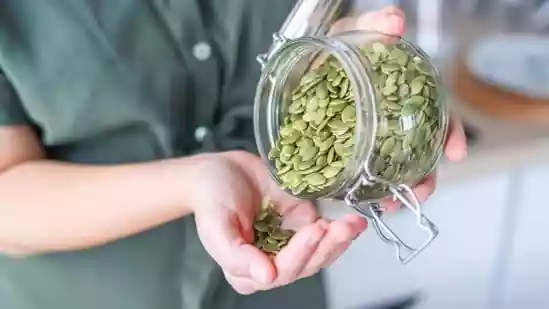
Pumpkin seeds have quietly earned a spot on the list of popular ‘superfoods', thanks to their rich dose of magnesium, zinc, antioxidants, and healthy fats. Many people sprinkle them on salads, blend them into smoothies, or eat them as a crunchy snack. But while pumpkin seeds offer impressive health benefits, they aren't suitable for everyone — and eating them the wrong way or in excess can cause more harm than good. Like most nutrient-dense foods, they need to be consumed mindfully. So, if you've been snacking on them daily or considering adding them to your routine, here's what you should know about their possible side effects and who should avoid them.
According to Ayurveda expert Dimple Jangda, "Pumpkin seeds are warm in nature and work well for people with Vata and Kapha body types because they boost digestive fire and promote warmth. However, they are not ideal for those with Pitta imbalance or acidity, as they naturally generate heat and may worsen symptoms."
Their tough outer coating also makes them harder to digest. Eating them in large quantities may lead to bloating, heaviness, or indigestion, especially if your gut is already weak. People prone to digestive issues should consume them in moderation or opt for soaked seeds to make them easier on the stomach.
Pumpkin seeds are rich in fiber, healthy fats, magnesium, and antioxidants, and may even support sleep and tissue repair. But if someone has a pumpkin seed allergy or experiences bloating, gas, or indigestion after eating seeds in general, it is best to avoid them, Jangda tells Health Shots. Those with a sensitive gut or chronic digestive issues may also find pumpkin seeds too heavy to break down.
Pumpkin seeds may be nutritious, but they are not suitable for young children due to choking risks and digestive difficulty. Digestive systems are still developing in kids, and the hard texture of the seeds can also be tough on their gut. If needed, powdered forms or seed butters are safer alternatives.
Pumpkin seeds are naturally rich in magnesium, a mineral known for lowering blood pressure. While this is generally beneficial, consuming large amounts of pumpkin seeds may cause excessively low blood pressure in people already taking antihypertensive medicines.
A study published in Food Science & Nutrition found that pumpkin seeds have ACE-inhibitor-like properties, similar to blood pressure–lowering medications. So, if you already have low blood pressure or are on medication, consult a doctor before including them regularly.
Pumpkin seeds may be tiny, but they are calorie-dense. One cup of whole roasted pumpkin seeds contains around 285 calories, according to the US Department of Agriculture. The American Heart Association recommends one ounce (about a quarter cup or around 28 to 30 grams) of pumpkin seeds a day. However, mindless snacking, especially on salted or roasted varieties, can easily push your calorie intake higher than expected.
Since weight gain happens when calorie intake exceeds what you burn, excessive consumption of pumpkin seeds can contribute to unwanted weight gain, even though they are healthy.
Pumpkin seeds are loaded with healthy fats, fiber, magnesium, iron, selenium, and antioxidants. A study published in Complementary Therapies in Clinical Practice noted that including pumpkin seeds in your diet may help reduce cholesterol and blood pressure, supporting heart health.
Jangda describes pumpkin seeds as sweet and astringent, helping tighten tissues and reduce excess water retention. They also support estrogen metabolism, which is why they are often recommended during the first 14 days of the menstrual cycle in seed-cycling routines.
Rich in fiber, pumpkin seeds can also help relieve constipation and support digestive health. A study published in Nutrients found that their high fiber content improves overall digestive health.
The best way to consume pumpkin seeds is by soaking them for at least an hour, which softens their outer layer, making them easy to digest. Here is how to include them smartly:
Limit intake to 1 tablespoon per day if you have a sensitive gut or are watching calories!
(Note to readers: This article is for informational purposes only and not a substitute for professional medical advice. Always seek the advice of your doctor with any questions about a medical condition.)
Source: HindustanTimes
Related Posts: Peri Peri Pumpkin Seeds Fortis nutritionist says ‘1 tbsp pumpkin seeds may improve heart health’ Pumpkin seeds for men Chia seeds vs sabja seeds Warm Up This Winter With This Heavenly Pumpkin Halwa When is Starbucks bringing back the Pumpkin Spice Latte Flax, Chia, Pumpkin, Or Sunflower Planning to serve pumpkin pie this Thanksgiving From Pumpkin Wrap To Pasta Benefits of pumpkin seed oil for skin and hair

If you’ve ever looked at house plans in India or spoken to a builder, you’ve probably heard this before — the kitchen should be in the south-east corner. It sounds oddly specific, but there’s a reason this idea is so common. A lot of it comes from Vastu Shastra
1 hours ago

Only commercial ships can cross Hormuz with 'fees of Iranian people', top Tehran official saysIran implied that it calls the shots on Hormuz operations and not the US. Updated on: Apr 18, 2026 11:02 AM IST Edited by Sana Fazili Share via Copy link As the Strait of Hormuz reopens after weeks of
1 hours ago

Iran's actions in the Strait of Hormuz have revealed a key vulnerability for President Trump. The conflict has led to rising energy costs and inflation, impacting American consumers. This economic pressure is forcing Trump to seek a diplomatic solution
1 hours ago

Hours after Iranian Foreign Minister Abbas Araghchi said that the Strait of Hormuz is “completely open”, Indian ships stranded in the Persian Gulf started sailing out of the Strait. The Hindu has been tracking Indian-flagged vessels and ships bound for India in the Persian Gulf for the past
1 hours ago

, chief technology officer of business-to-business (B2B) applications at American AI company OpenAI, announced on Saturday that he will be leaving the company at the end of next week, marking the close of a three-year stint during a period of high-profile product launches
1 hours ago

With not one, but two ceasefires in place across the Middle East, is the scene now set for a pair of historic breakthroughs? The ceasefires - in Iran and Lebanon - are both described as "shaky" (ceasefires generally are), but as the din of war fades away once more
1 hours ago

In 2006, as the challenge to the criminalisation of homosexuality under Section 377 of the Indian Penal Code returned to the Delhi High Court, a civil society coalition, Voices Against 377, was trying to gather testimonial affidavits from those directly affected by the law.In 2006
1 hours ago

Flight operations in Delhi face disruption as IndiGo issues a travel advisory amid bad weather, warning passengers of delays, diversions, and the need to check flight status before travel. India’s largest airline IndiGo has advised passengers travelling to and from Delhi amid inclement weather
1 hours ago

Sunrisers Hyderabad has signed South African pacer Gerald Coetzee for the rest of the IPL 2026 season. Coetzee replaces David Payne, who is out due to an ankle injury. Payne played two matches for SRH this season. Coetzee brings international and IPL experience to the SRH squad
1 hours ago

‘You won’t believe Bengaluru is getting so hot’: Woman shares viral video of crayons melting in the sunWhile sharing a video of the crayons, the Bengaluru content creator asked whether she should try frying an egg outside in the sun. Published on: Apr 18
1 hours ago

Pope Leo XIV on Friday (April 17, 2026) warned against the use of AI to fan "polarisation, conflict, fear and violence" and criticised the "environmental devastation" caused by the extraction of rare earths to fuel the digital boom. "The challenge posed by these systems is greater than it appears:
1 hours ago

United States President Donald Trump’s administration on Friday issued a waiver allowing countries, including India, to purchase sanctioned Russian oil and petroleum products, that were loaded onto ships as of Friday. The US Treasury Department said that the waiver allows these purchases till May
1 hours ago

We’ve seen the hints, heard the whispers, and followed the breadcrumbs. But now, the uncertainty around LeBron James’ future has taken a dramatic turn. According to a report by The Athletic, the NBA’s all-time leading scorer is seriously considering walking away from the game
1 hours ago

Sunrisers Hyderabad’s clash with Chennai Super Kings at the Rajiv Gandhi International Stadium on Saturday (April 18, 2026) is more than just another league fixture – it feels like a turning point waiting to unfold. Both teams are seeking to turn promise into something more permanent
1 hours ago

Akshay Kumar says son Aarav doesn’t want to join films: ‘Woh ₹4500 ki naukri kar raha hai’Akshay Kumar revealed that his son is quite similar to him but has no interest in joining films. He further shared Aarav is learning fashion. Apr 18, 2026
1 hours ago

Rising temperatures and electricity bills make air conditioners one of the biggest household expenses in Indian homes. While using ACs in the scorching summer heat is non-negotiable, you can save some of the electricity bill by choosing the right AC model. For instance
1 hours ago

In 1940s Calcutta (now Kolkata), as Japanese air raids rattled the city, a group of musicians travelled by horse carriage to a recording studio, dodging sirens. The building was exposed, its only defence hand-dug trenches. At each siren wail
1 hours ago

Heavy menstrual bleeding, now commonly referred to as menorrhagia, is a common symptom in the reproductive population. It interferes with daily activity, work life, and life in general. From a clinical point of view, menorrhagia is defined as heavy bleeding from the vagina which needs changing
1 hours ago

An Indian man living in Paris shared his experience of job hunting in Europe and how different it feels compared to India. He spoke about the challenges many students and professionals face when they move abroad for work. His video has sparked a broader conversation
1 hours ago

Aaditya Thackeray stated the women's quota bill, tied to delimitation, was a political move to weaken states and secure unfair wins. He claimed the bill, which sought to increase Lok Sabha seats and implement women's reservation, was rejected by opposition MPs
1 hours ago

Actress-producer Patralekhaa has hit back at body-shaming remarks made after her recent appearance at the screening of Rajkummar Rao starrer ‘Toaster’. The actress, who welcomed her first child with Rajkummar in November 2025, slammed the paparazzi pages making insensitive remarks surrounding
1 hours ago

Kerala Minister V Sivankutty on Thursday announced the SSLC or class 10 results are expected to be declared in the third week of May, while the second-year higher secondary or class 12 results are likely to be announced on May 25, he said. Students who appeared for the Kerala Class 10 and 12 board
1 hours ago

Recent developments, including significant voter list deletions and the BJP's UCC promise, have seemingly reversed a potential drift in the TMC's minority vote bank. Smaller Muslim outfits' ability to challenge the ruling party has diminished
1 hours ago

Gurugram neurologist warns work from home culture is more of a disadvantage than an advantage: ‘More migraine cases…’Work from home appears to be a lucrative option, but continuing it for an extended period often leads to health issues from deteriorating work-life balance. Updated on: Apr 18
1 hours ago

Zimbabwe's flag, banknotes and coat of arms all feature a stately looking eagle, sitting majestically on a plinth. Known as the Zimbabwe Bird, it has long been a symbol of national identity, but behind it lies a complex tale of displacement, colonial plunder and restitution.Zimbabwe's flag
1 hours ago

The Constitution Amendment Bill aimed at modifying the women’s reservation law and increasing Lok Sabha seats for the 2029 elections has been defeated in the Lower House. The Constitution Amendment Bill to tweak women reservation law and increase the number of seats in the Lok Sabha for 2029
1 hours ago

Ahead of the second round of negotiations between the United States and Iran to end the hostilities, President Donald Trump has signalled strong expectations for a breakthrough in the peace talks, but his remarks also placed notable emphasis on restraining Israel’s military actions as part of a
1 hours ago


