
Delhi University has completed three regular rounds of undergraduate admissions, but 13,433 UG seats are still vacant. According to the university’s latest spot-round vacancy list, the unfilled seats are spread across 1,160 college-course combinations

“We have a history of renowned political leaders; we hail from the lands of intellect. This university has nurtured multiple leaders, including Gulzarilal Nanda, Madan Lal Khurana, Mahadevi Varma, and many Chief Justices,” 23-year-old Priyanshu Vidrohi said

In Bihar’s Gaya district lies Patwa Toli, a village popularly known as the “Village of IITians." What makes it remarkable is the presence of IIT-educated engineers in almost every household. Every year, more than a dozen students from the village qualify for the IIT-JEE examinations

Jammu-born entrepreneur Onkar Singh Batra has added another remarkable achievement to an already extraordinary journey. From creating a website at the age of seven to developing a satellite at 16, Batra has spent much of his childhood exploring technology, entrepreneurship, and space

According to NITI Aayog’s Reimagining Skilling for Viksit Bharat@2047 report, only 8.25 per cent of graduates were able to secure jobs matching their qualifications in one year. This means that more than 91 per cent of graduates were either unemployed or working in jobs below their educational

I have passed Class 12 (PCMB) with a state rank of 10 and have taken NEET 2026 and KCET. I want to pursue B.Sc. Chemistry but people say I should not do so because I have such good marks. I am also considering BDS or a B.Sc. Paramedical course

Me: Lalitha, you’ve been colouring all this time. Do you enjoy colouring? This was an informal conversation I had with two young British-Indian children — a seven-year-old boy and his four-year-old sister, Lalitha — during a train journey from Coimbatore to Chennai.Me: Lalitha

The National Testing Agency (NTA) has been grounded in controversy since the NEET UG paper leak row. The central agency, which was envisaged in November 2017 as a single agency for conducting all higher education entrance exams, is under scanner after cancellation of UGC NET exam for three subjects
Inside BHU: Students cite safety risks, unchecked entry, and neglected infrastructure
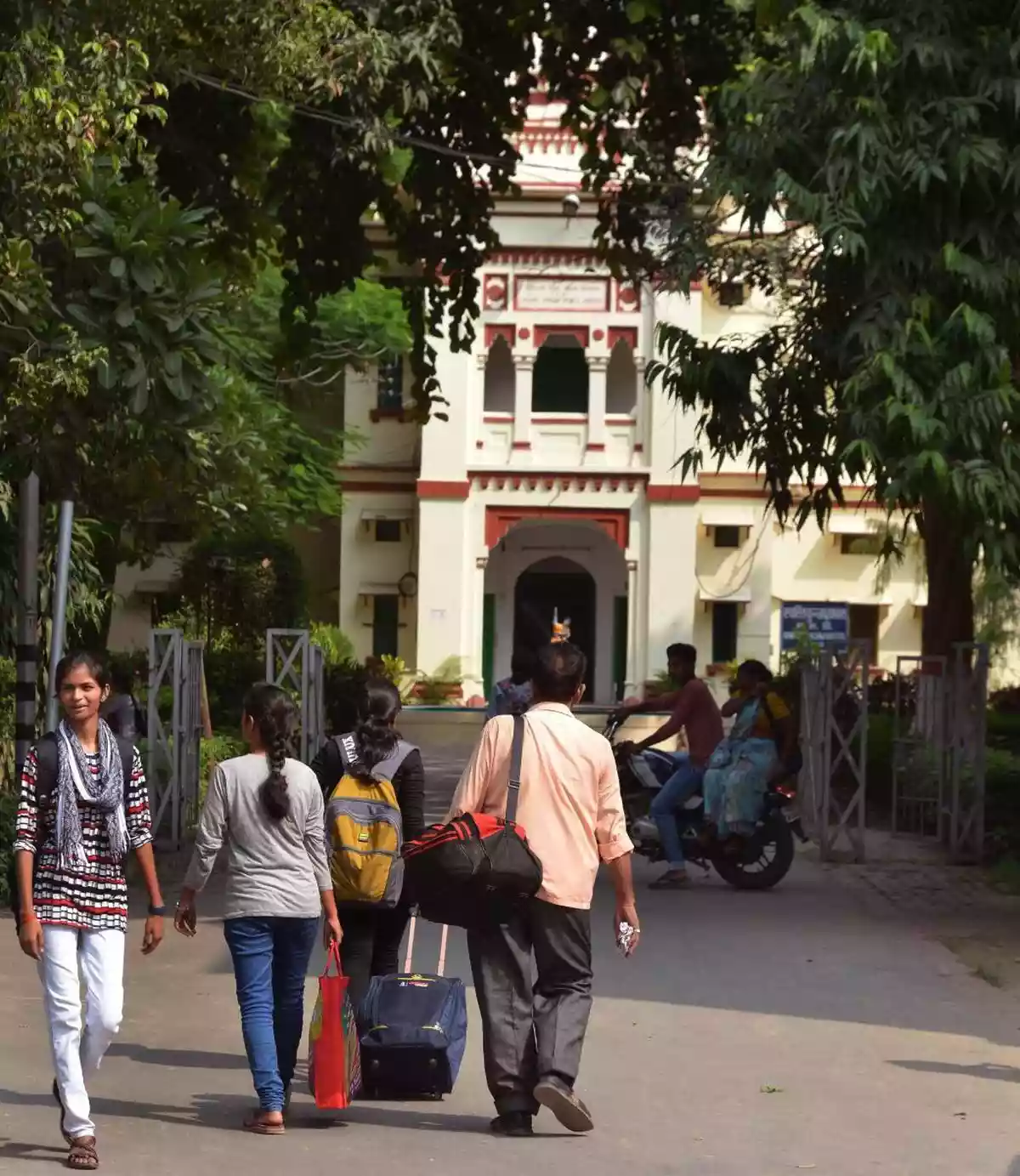
Inside BHU: Students cite safety risks, unchecked entry, and neglected infrastructure Premium
Banaras Hindu University (BHU), founded by Madan Mohan Malaviya over a century ago, was envisioned as a leading center of learning. Today, students and faculty say the university is struggling with safety lapses, infrastructure decay, and poor regulation—issues they claim have gone unresolved for years.
The foremost concern voiced by students and faculty alike is the lack of safety measures for women despite being home to thousands of female students from across India. “I don't feel comfortable walking alone after sunset,” says a postgraduate student from the Faculty of Arts. “The streetlights barely work, and outsiders loiter around the campus gates even at night. We've written complaints, but most are buried in files.”
The BHU Women's Cell has repeatedly flagged this problem. “We've recommended better illumination near women's hostels, CCTV surveillance in academic zones, and gender-sensitive patrol staff,” said a senior member of the Cell. “But most of our proposals are stuck in procedural limbo. Safety is not a luxury, it's a right.”
The irony is palpable. A university that prides itself on its heritage and intellectual excellence seems to falter when it comes to ensuring basic security for its women.
With sprawling grounds spread over 1,300 acres, BHU has numerous entry and exit points, most of them open throughout the day, and many even late into the night. There are few guards, fewer cameras, and almost no ID checks. “The campus is practically porous,” says a faculty member from the Institute of Science. “Anyone can enter, shopkeepers; YouTubers, even local business men as this is the shortcut traffic free route. It's a free-for-all.”
For female students, this lack of regulation translates into daily anxiety. Several have complained of outsiders photographing women on campus or filming reels near hostels and academic complexes. “This is not a tourist attraction, although a historical one,” said one undergraduate student angrily. “We came here to study, not to be filmed or stared at.”
Experts say such lapses make universities soft targets for intrusion, theft, and harassment. “Controlled access and surveillance aren't optional,” explains a retired IPS officer familiar with campus security systems. “They're the foundation of student safety.”
In the midst of BHU's architectural grandeur stands the Vishwanath Mandir that belongs to the University. Yet, the temple today reflects visible signs of decay, peeling paint, cracked flooring, and fading inscriptions.
“It's heartbreaking,” said a geology professor. “Its neglect mirrors how the administration has lost touch with the university's soul.”
The deterioration of heritage structures isn't just aesthetic; it reflects how even symbolic spaces meant for mental and emotional well-being are being sidelined amid bureaucratic inertia.
BHU's internal roads, designed for quiet mobility, are now dominated by heavy vehicles and outsiders. Trucks and private cars cut through narrow academic lanes, while young men from outside enter the premises to create social media content.
A Women's Cell report from last semester termed this trend “a systemic safety hazard.” It also noted that the influx of outsiders, often without security verification, poses a direct threat to women's security on campus.
“The campus is losing its sanctity,” says a research scholar from the Department of Sociology. “Between noise, dust, and intrusive strangers, it feels less like a university and more like a public thoroughfare.”
Autos and e-rickshaws have become the lifeline of BHU's sprawling campus. But their convenience comes with chaos. Many operate without licenses or adherence to speed limits.
“In the last three years, several accidents have occurred , some near hostels of Brocha and Birla, others around the central library,” said a hostel warden. “There are no speed breakers, no fines, no monitoring. Every day feels like a close call.”
Last year, a female student narrowly escaped serious injury after being struck by a speeding toto near the Kala Bhavan area. The administration promised stricter regulation, but students claim little has changed.
In its latest communication to the Vice-Chancellor's office, the BHU Women's Cell made five urgent demands: CCTV cameras at all key junctions and hostel peripheries; improved street lighting across campus pathways; 24×7 helpline and mobile patrol units for women students.; ID-based entry and visitor verification at all gates; and strict regulation of campus transport, including licenses and speed checks.
“These are basic, actionable points,” said the Cell's coordinator. “If implemented properly, they could drastically improve safety within weeks. What we need now is not another committee, but accountability.”
When contacted, a senior administrative official from BHU acknowledged the issues but maintained that the university is “working on a comprehensive security upgrade.”
“Proposals for enhanced CCTV coverage, smart gate systems, and streetlight repair are already under process,” the official said. “We're also considering a grievance redressal app to ensure quicker responses to student complaints.”
However, many on campus view these as recurring promises with no tangible results. “We've heard the same assurances for years,” says a faculty member from the Institute of Social Sciences. “Students don't need press statements, they need functioning lights and guards.”
Published - October 29, 2025 03:03 pm IST
Source: The Hindu
Related Posts: Education

An estimated 8.7 crore Indians aged 15 to 29 are not studying, working or undergoing training, said a report by the NITI Aayog, the main public policy think tank of the Union government. The report, titled Reimagining Skilling for Viksit Bharat@2047
15 hours ago

Over the past decade, India’s finance talent pool has expanded rapidly. Access to education has improved, certifications are more widely pursued, and exposure to financial concepts has increased. But the biggest concern in finance education today is the shift towards attention-driven learning
1 days ago

Eligibility: Indian nationals in school (Class 9 to 12), UG or PG courses with at least 75% or 7.9 CGPA (10% relaxation for SC/ST students) and an annual family income not exceeding ₹300,000 (School students) and ₹600,000 (other categories). Eligibility: Indian nationals in school (Class 1 to
1 days ago

The National Testing Agency (NTA) on Saturday issued a show-cause notice to M/s Eduquity Career Technologies Pvt. Ltd. over lapses in the conduct of the All India AYUSH Post Graduate Entrance Test (AIAPGET) at an examination centre in Jaipur
1 days ago

For several decades, AutoCAD has remained the foundational tool in Civil Engineering practice. It has shaped how design documentation is produced, reviewed, and executed across projects of varying scales. However, in the current trajectory of the Architecture, Engineering
1 days ago

Having read several of Saikat Majumdar’s novels and a couple of his non-fiction books, I consider him one of those rare contemporary writers who move seamlessly across fiction, nonfiction, and academia – embodying the spirit of a true literary polymath
1 days ago

Ausa police in Maharashtra’s Latur district have registered a First Information Report (FIR) against Cockroach Janta Party (CJP) founder Abhijeet Dipke, associate Ajinkya Shinde, and three to four unidentified individuals following allegations of unorganised intrusion, filming
1 days ago

For generations, the pursuit of grades or marks has ruled Indian academia. Teachers quite often lament that this socially constructed obsession with high scores impedes authentic contextual learning. Yet the contemporary learner is moving away from a test-oriented approach to ask: What will I get
2 days ago

A moving note reading “I will become a doctor in my next life" was recovered after a 19-year-old NEET aspirant died by suicide at his residence in Maharashtra’s Chhatrapati Sambhajinagar district. The deceased, identified as Krishna Subhash Sonawane
2 days ago

The National Testing Agency (NTA) on Thursday night defended its Rs 200 fee for challenging an answer key, saying the system is “designed to be fair" to all students. The agency also rejected concerns that the charge is “too expensive". The NTA’s answer key challenge process allows candidates
2 days ago

The President of India, Droupadi Murmu, will confer the National Teachers Awards on 48 school teachers at Vigyan Bhawan, in New Delhi, on September 5, 2026. The purpose of the National Teachers Award is to celebrate the unique contribution of some of the finest teachers in the country and to honour
2 days ago

The COVID-19 pandemic permanently reshaped how colleges and universities deliver coursework, conduct exams, and share resources. The shift toward hybrid and blended learning that it accelerated has become the new standard. For many students, this transformation has unlocked greater flexibility and
2 days ago

AP ICET Counselling 2026 : The Andhra Pradesh State Council of Higher Education (APSCHE) has officially announced the schedule for the AP ICET 2026 centralised web counselling. Candidates seeking admission to MBA and MCA programmes at universities and affiliated colleges in the state can commence
2 days ago

The Centre on Thursday (August 20, 2026) told the Supreme Court that the 2026 University Grants Commission equity regulations on preventing caste-based discrimination on campuses is under reconsideration. On January 29, the apex court had directed that the University Grants Commission (Promotion of
4 days ago

In June 2026, thousands of students gathered at Delhi’s Jantar Mantar after the National Eligibility-cum-Entrance Test (NEET-UG) was cancelled following a paper leak, demanding accountability from the government. The protests, which culminated in the resignation of Union Education Minister
4 days ago

Following NEET UG, irregularities have also come to light in the UGC NET June 2026 examination. However, the Central Government told the Supreme Court on Wednesday that the system used to conduct NEET UG is foolproof and difficult to breach. The government explained that several moderators are
4 days ago

The NCERT has reconstituted the textbook development team for classes 11 and 12 political science with a mandate to integrate cultural rootedness, Indian knowledge systems and inclusion, with at least four of the members having direct or indirect links with the RSS
4 days ago

The Delhi High Court has put JNU’s postgraduate admissions on hold. The court has stopped the university from finalising any admissions that use extra “deprivation points." The court said adding bonus marks to scores from a big national exam like CUET is unfair
4 days ago

In many Maths classrooms, a student encounters a challenging question, pauses for a moment, and almost immediately looks towards the teacher for assistance. Within seconds, a method is demonstrated, the solution is revealed, and the class moves on. The problem is solved
5 days ago

A university convocation is traditionally a rite of passage—a solemn initiation where the next generation of legal minds are welcomed into the fold of justice. However, this month, the halls of NALSAR University of Law became the site of a regulatory tantrum that threatened to undermine the very
5 days ago

IIT Kharagpur will begin the registration process for the Joint Admission Test for Masters (JAM) 2027 on September 5, 2026. The application window will remain open until October 12, 2026. The institute, which is organising the examination this year
6 days ago

Mumbai: The Karnataka High Court admitted a fresh plea by Qatar Holding LLC against debt-laden edtech firm Byju’s, seeking to enforce a SGD 7.2 million ( ₹53 crore) arbitration award against founder Byju Raveendran and his company Byju’s Investments Pvt. Ltd (BIPL) in July
6 days ago

The Jharkhand government, led by Chief Minister Hemant Soren, announced on August 17, 2026, that the JSSC Combined Graduate Level (JSSC-CGL) examination held in 2024 has been cancelled. The government has also ordered a detailed investigation into alleged irregularities in government recruitment
6 days ago

The Enforcement Directorate (ED) on Tuesday carried out searches at 21 locations in Karnataka and Ahmedabad over alleged irregularities in the Karnataka Public Service Commission’s (KPSC) Veterinary Officers recruitment examination, ANI reported
6 days ago

For decades, India’s school education policy pursued a simple objective: to bring a school within reach of every child. The neighborhood school became an instrument of social justice, particularly for poor and rural families. However, many such schools have limited infrastructure and serve very
6 days ago

The Uttar Pradesh Board of Secondary Education (UPMSP) has released the results for the 2026 High School Improvement and Intermediate Compartment examinations. Candidates can check their results on the UP Board website, upmsp.edu.in. Along with the results
6 days ago

The Congress on Monday (August 17, 2026) stepped up its attack on the National Testing Agency over its decision to re-conduct the UGC-NET examination for three subjects, demanding accountability for what it termed “serious” lapses in the examination system and a white paper on 15 major
6 days ago


