
Editorial independence is core to our work. Some links may earn us a commission, without influencing our opinions.This mistake almost cost me my GST refund at Changi Airport; Buy these Charles & Keith handbags in India insteadA simple mistake at Changi Airport nearly cost us our GST refund after a

The United States and Cuba held talks this week on a U.S. offer of $100 million in assistance, which Washington has dangled as an incentive for reforms, a U.S. official said on Tuesday (May 19, 2026). Mike Hammer, the acting U.S. ambassador to Havana, met on Monday (May 18

The legendary GTI badge goes electric for the first time. The Volkswagen ID Polo GTI Electric was originally previewed as the ID. 2all concept in 2023. It has a 0 to 100km/h sprint time of 6.8 seconds. Volkswagen has unveiled an electric version of its famous ID. Polo hatchback. While the new

Mouni Roy brings India to Cannes with chic patola print gown, dazzles the night in midnight blue dressAt Cannes, Mouni Roy donned two striking looks, including a chic midnight-blue gown and a stunning patola-embroidered dress. Published on: May 20

Bengaluru techie explains why life in Germany felt calmer than India: ‘Never opened laptop after work’A Bengaluru techie said life in Germany felt quieter and more balanced than his daily routine in Bengaluru. Published on: May 20, 2026 10:05 AM IST By Mahipal Singh Chouhan Share via Copy link
How Russia’s Economy Is Booming Despite Sanctions
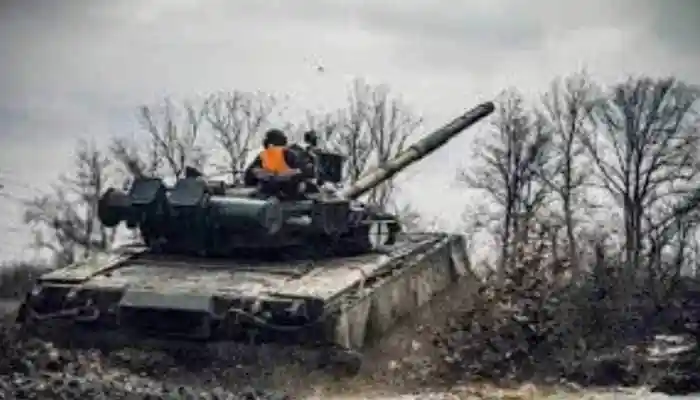
How Russia’s Economy Is Booming Despite Sanctions — And Why It Doesn’t Depend On India’s Oil Purchases
In his detailed analysis Why Russia's War Economy Is Stronger Than You Think (Money & Macro, October 17, 2025), Dutch economist Dr. Joeri Schasfoort argues that this resilience is not accidental. It arises from deliberate adaptation: a transformation of Russia's economy from a market-driven system into a centrally managed machine designed for war.
New Delhi: When Western economists predicted that Russia's economy would implode under the combined weight of sanctions, battlefield costs, and isolation, their models seemed logical. After all, economic textbooks teach that prolonged war spending eventually destabilizes production, trade, and public morale. Yet, three and a half years after invading Ukraine, the Russian economy has not only avoided collapse—it has outperformed several major European economies like Germany and the UK. In his detailed analysis Why Russia's War Economy Is Stronger Than You Think (Money & Macro, October 17, 2025), Dutch economist Dr. Joeri Schasfoort argues that this resilience is not accidental. It arises from deliberate adaptation: a transformation of Russia's economy from a market-driven system into a centrally managed machine designed for war.
The reasons behind this shift, and its sustainability, reveal as much about Russia's strategy as they do about the limits of sanctions and global economic warfare.
The Rise of a “Phase One” War Economy
From early 2022 to mid-2024, Russia entered what Schasfoort calls “Phase One” of a war economy—an activation of dormant capacity. Before the war, many Russian factories sat idle, unemployment was high, and consumption lagged due to restrictive monetary policies. The conflict—and subsequent sanctions—forced Moscow to inject vast fiscal stimulus into domestic industries. This burst of state spending, largely fueled by sovereign wealth funds, revived moribund sectors, reabsorbed labor, and raised output.
Add Zee News as a Preferred Source
This is a classic wartime mobilization pattern: idle resources suddenly become productive when central priorities shift from consumer comfort to military needs. The same occurred in Nazi Germany's rearmament campaign in the 1930s and the U.S. build-up during World War II. For Russia, the immediate outcome was paradoxical. While global observers forecast economic collapse, Russians—by some measures—became richer on average, as employment soared and war-linked enterprises paid premium wages.
Fortress Russia and the Triangular Trade-off
The resilience of the ruble in the face of unprecedented sanctions was another surprise. This was primarily the work of Elvira Nabiullina, Governor of the Bank of Russia, who implemented Putin's long-premeditated “Fortress Russia” doctrine. The approach recognized the “monetary trilemma” that no country can simultaneously maintain a fixed exchange rate, free capital flow, and sovereign monetary policy. Pre-war Russia sought free capital flows and stability, but this left its currency vulnerable to sanctions—just as Iran's was in 2012.
When the West froze about USD 300 billion in Russian reserves, Nabiullina imposed strict capital controls, preventing money from leaving the country and stabilizing the ruble's value. This move effectively ended Russia's run on its currency and allowed the government to flood domestic markets with liquidity without causing hyperinflation. The Russian economy was thus restructured around isolation—autarky by design, stability through control.
Why Collapse Hasn't Happened
Schasfoort identifies four common pathways to economic collapse—currency flight, import blockades, unsustainable debt, and social unrest—and systematically explains why Russia currently avoids each.
Currency flight is impossible with capital controls. Western investors cannot flee, and Russian corporations cannot remit foreign profits abroad. Ruble convertibility has become a managed illusion.
Import collapse has been mitigated by Russia's resource base and Chinese partnerships. The country produces all its food and most of its energy, while Chinese companies substitute for Western suppliers.
Debt collapse remains remote because state and household leverage are extremely low. Russia's government debt-to-GDP ratio stands below 20 Percent, and household borrowing is muted by high interest rates.
Popular revolt, the most unpredictable factor, is suppressed through authoritarian governance. Although inflation is now high (about 7 percent) and real wages are eroding, support for the war—sustained by nationalism and state media—remains stable.
This insulation, however, is not immunity. The economy functions through coercion: labor shifts from consumer industries to arms plants; profit-making companies are nationalized; and capital markets are sealed. It is a fortress, yes—but one with weakening foundations beneath its walls.
The Transition Toward “Phase Two” Militarization
The first phase of activation brought prosperity. The second, now unfolding, entails sacrifice. Moscow's spending priorities increasingly divert resources from civilian to defense industries. The government spent nearly 8.5 trillion rubles ($100 billion) on defense in just the first half of 2025. Meanwhile, 67 of Russia's 89 regions are running severe deficits as resources flow toward Moscow and military clusters in Tatarstan, the Urals, and Siberia.
Civilian production is shrinking. Only four of Russia's twenty major manufacturing sectors are expanding—and three of these are directly war-related. Industrial hubs such as Samara or Nizhny Novgorod now rely on drone assembly lines, while auto plants have cut workweeks to four days. Inflation is surging past 7%, and national housing investment is down by nearly half. Even the Kremlin's statistics agency, Rosstat, concedes that one-third of Russian enterprises are unprofitable.
The political response mirrors 20th-century precedents. As price increases threaten to ignite popular discontent, Moscow is preparing price controls on essentials like bread and fuel. These measures echo the managed economies of the Soviet Union and Nazi Germany. They limit inflation temporarily but ultimately suppress productivity.
The Numbers Behind the Stability
Despite this increasing strain, recent budgets confirm that the Kremlin remains committed to high military outlays. The 2025–2026 fiscal plan allocates about 8 percent of GDP to defense and security, the highest proportion since the Cold War. However, the underlying structure of spending is shifting—less through debt, more through taxation.
To fund war expenditures, the Kremlin has raised income and value-added taxes; the VAT now stands at 22 percent. This effectively shifts the cost of war onto the Russian population. The government's macroeconomic forecast from the Finance Ministry anticipates GDP growth slowing from 4.3 percent in 2024 to just 1 percent in 2025 and about 1.3 percent in 2026. Inflation may settle near 4 percent, but only through high interest rates, falling investment, and declining private demand.
This configuration—low growth, moderate inflation, high state control—defines Russia's new equilibrium. As one Carnegie analysis observed, Russia's economy has become a “marathon runner on budget steroids.” It is sustained not by efficiency, but by endurance.
The Cracks Beneath the Surface
Although Russia's economy appears structurally stable, its vulnerabilities are growing. Ukraine's escalating campaign of drone strikes, launched in August 2025, has devastated Russian oil refineries and fuel depots. The International Energy Agency now expects Russia's refinery throughput to remain suppressed into mid-2026. Fuel shortages have already triggered long queues across provincial cities and accelerated inflation.
Simultaneously, fiscal disparities inside Russia have intensified. Moscow's incomes have increased by 11 percent, but regional earnings in Siberia and the Far East have risen by less than 2 percent. As a result, local budgets have collapsed while the Kremlin continues to “centralize profits,” effectively redistributing wealth from the periphery to sustain state-owned military operators.
The broader picture, as Russian economist Natalia Zubarevich notes, is one of hyper-centralization—a system that can preserve macroeconomic balance only by sacrificing regional stability.
Sustainability Through Control, Not Growth
In this architecture, stability does not stem from efficiency or innovation but from coercive control. Russia's economic apparatus now mirrors its political one: tight, hierarchical, and insulated from feedback loops. Every aspect of production and consumption is subordinated to state objectives. While this makes it resilient to external shocks—like sanctions or capital flight—it also condemns it to stagnation.
A recent Chatham House report summarized this shift aptly: the “Fortress Russia” economy has adapted admirably to pressure but at the cost of long-term growth; real GDP is already 12 percent lower than it would have been without the war.
This trajectory points not to collapse but to decay. War economies rarely implode suddenly; they erode, over years, under the weight of inefficiency and political rigidity. The Soviet Union remained stable for decades under similar pressures before unraveling.
The Western Dilemma
Schasfoort concludes that Western strategies reliant on passive sanction regimes misunderstand this dynamic. Russia's command economy, scarred but functional, can survive isolation far longer than predicted. As he argues, “simply waiting is not enough to stop the Russian war machine.” The implication is clear: if the West wants to protect Ukraine without triggering global economic upheaval, it must increase targeted economic and military support rather than rely solely on sanctions or wishful forecasts of collapse.
What this means, in practical terms, is that the war economy now defines Russia's identity. It is the organizing logic of its fiscal system, its workforce, and its propaganda. As long as the Kremlin maintains central command and public discipline, collapse remains a distant prospect—even as everyday Russians quietly pay the price in inflation, shortages, and lost freedoms.
In essence, Putin's Russia is not a failing economy. It is a thriving fortress built on moral exhaustion, political obedience, and economic regimentation. Its endurance may eventually crumble, but not soon—and not without deliberate external pressure.
The Trump administration has on many occasions blamed India for funding Russia's war machine. However, the analysis above shows that the resilience of the Russian economy has little to do with India buying Russian oil and more to do with President Putin's effective management of his wartime economy. According to recent reports by Reuters, Indian refiners are poised to sharply cut Russian oil imports amid American sanctions on Russian refineries. This move appears to be driven less by economic considerations and more by desperation.
This analysis captures the paradox at the heart of the Russian war economy in 2025: stronger than the West expected, weaker than the Kremlin admits, and sustained by control rather than prosperity. Waiting for its spontaneous collapse is fantasy; confronting it requires strategy.
Source: ZeeNews
Related Posts: Why the AI economy needs stronger innovation ecosystems Delhi Court seeks detailed status report in Janakpuri biker death probe Bowling groups have to be detailed in IPL because of how powerful batting units are First detailed look at tsunami captured from space by satellite—why it matters CBSE Releases Detailed SOPs For Class 10 NEET UG 2026 Detailed Syllabus Released Indian founder shares detailed breakdown of daily expenses in Munich West Bengal Governor Submits Detailed Report On Durgapur Gangrape To President Ravi Shankar Centre issues detailed statement on Rishabh Rikhiram Sharma SC seeks govt’s detailed response as gaming firms contest blanket ban

The All-India Organisation of Chemists and Druggists (AIOCD), which represents nearly 12.4 lakh chemists, pharmacists and drug distributors across India, has announced a nationwide strike on 20 May. The protest is expected to disrupt the supply of medicine in several parts of the country for the
1 hours ago

One of the most expensive Korean films ever made, this epic sci-fi begins as a "breathless rollercoaster ride" and mashes up The Terminator, Predator, Aliens and Avatar. The films that compete for the Palme d'Or at the Cannes Film Festival are known for their depth
1 hours ago

Union Education Minister Dharmendra Pradhan on Tuesday chaired meeting to assess preparations for the forthcoming NEET (UG) Re-Examination and demanded a foolproof conduct under strict security protocols. During the high-level meeting, Pradhan stressed on the need for complete integrity and
2 hours ago

Cornell professor talks AI chaos, and dismissing AI writersThe biggest AI developments, decoded. 20 May 2026. Published on: May 20, 2026 8:00 AM IST By Vishal Mathur Share via Copy link Cognitive warmup. Actor, comedian and filmmaker Seth Rogen has some choice words for creatives using AI to
1 hours ago

England captain Nat Sciver-Brunt could miss next month’s T20 World Cup after the all-rounder was ruled out of her side’s warm-up series against New Zealand and India. Sciver-Brunt tore her left calf while playing for the Blaze in domestic cricket earlier this month and was subsequently ruled
2 hours ago

Congressman Thomas Massie, one of the most vocal Republican critics of Donald Trump, has lost his fight for re-election to a challenger endorsed by the president. Ed Gallrein, a former Navy Seal, will now compete in November's midterm election after his victory in the Kentucky primary on Tuesday
1 hours ago

CHSE Odisha Class 12 Result 2026 LIVE: The Council of Higher Secondary Education (CHSE), Odisha, will declare the Class 12 (+2) examination results for 2026 today, May 20, at 12:30 PM. Students who appeared in the 12th board examinations can check and download their results from the official
2 hours ago

Qatar said on Tuesday (May 19, 2026) that U.S.-Iran negotiations, mediated by Pakistan, required more time to reach a deal, a day after President Donald Trump said he had postponed planned attacks to give the process a chance. "We are supportive of the diplomatic effort by Pakistan that has shown
1 hours ago

Stars are often photographed everywhere they go, but Salman Khan seemed to completely lose his cool after paparazzi surrounded him outside Mumbai’s Hinduja Hospital in Bandra on Tuesday night. The actor had reportedly visited the hospital to see a family member when photographers gathered outside
1 hours ago

May 20, Birthday Horoscope: Here's what the tarot cards have in store for youIf your birthday falls on May 20, here’s what your year ahead looks like, as per Tarot. Updated on: May 20, 2026 11:02 AM IST By Kishori Sud Share via Copy link If you were born on May 20
1 hours ago

Aaron Rodgers seen with wife Brittani ‘Starlight Leszczyński’? Viral post-marriage pic, Coyote Ugly claims fact-checkedA photo has gone viral allegedly showing Pittsburgh Steelers QB Aaron Rodgers with wife Brittani, and the caption identified her as ‘Starlight’ Leszczyński
2 hours ago

For over two decades, Chef Kunal Kapur has been one of the most recognisable faces of Indian cuisine from judging MasterChef India to championing regional flavours on global platforms. But today, the celebrity chef, restaurateur, author and television personality believes the future of dining is
1 hours ago

The ongoing war in West Asia and the rising costs of fuel and fertilizers give India an opportunity to enhance fertilizer use efficiency and moderate demand. India produces 80% of its urea requirement domestically and imports the rest while also boosting domestic production capacities to become
2 hours ago

For more than two decades, football fans of a certain vintage relied on a specific piece of cultural shorthand whenever the red-and-white half of North London let them down. In the classic The IT Crowd episode “Are We Not Men?", a pair of socially awkward computer nerds used an automated web
1 hours ago

Saiju Kurup is ecstatic. With Bharathanatyam 2: Mohiniyattam, which he acted in and co-produced,trending on streaming after raking in crores at the box office, the actor says he is still not able to process it. “I ask myself if this is all for real
1 hours ago

Bhopal dowry death victim's co-actor Swetaa Varma ‘in shock’, doubts suicide angleSwetaa Varma, who acted with the victim in a Telugu film, has reacted to her sudden death and said she is still in shock. May 20, 2026, 10:33:34 IST By Abhimanyu Mathur Share via Copy link A former co-star of the
1 hours ago

The Indian rupee slumped to a record low of 96.9 against the United States dollar on Wednesday. The currency had opened at 96.8. The Indian currency had closed at an all-time low of 96.5 against the US dollar on Tuesday. The slump has come amid elevated global oil prices and economic headwinds
1 hours ago

The Directorate of Government Examination, Tamil Nadu (TNDGE) has declared the SSLC Class 10th results 2026. Students who had appeared for the Tamil Nadu TNDGE SSLC 10th Result can go to the official website of tnresults.nic.in or dge.tn.gov.in and check their results
2 hours ago

Sebastian Stan recalls when Donald Trump tried to stall The Apprentice's Cannes premiere, calls out censorshipSebastian Stan, who played Donald Trump in his biopic The Apprentice, has slammed the US President and his policies. May 20, 2026, 10:21:54 IST By Abhimanyu Mathur Share via Copy link
1 hours ago

In recent days, Trump has repeatedly warned that if an agreement is not reached quickly, Iran will face difficult consequences. Iran, on the other hand, has said that it will respond strongly to any attack. New Delhi: In a significant development
1 hours ago

US President Donald Trump has endorsed Texas Attorney General Ken Paxton in his bid to unseat incumbent Senator John Cornyn in next Tuesday's Republican primary run-off race. By siding with Paxton, Trump is supporting a Texas politician who has long been a close ally of the president – but also
1 hours ago

BMW has revealed a manual-only M3 CS with rear-wheel drive and 543 bhp as a farewell model for the sixth-generation M3, targeting enthusiasts still wanting an old-school performance sedan experience. BMW making a manual-only BMW M3 CS in 2026 feels almost rebellious at this point
1 hours ago

Referring to the notices issued by the civic body, Paul alleged that several properties linked to Banerjee, his family and Leaps and Bounds company had come under scrutiny. New Delhi: In a significant development, the TMC-run Kolkata Municipal Corporation (KMC) has issued notices to several
1 hours ago

Rupee Weakens Further: The Indian rupee fell by 33 paise in early trade on Wednesday to touch a fresh record low of 96.89 against the US dollar, extending its losses for the past several sessions. It further weakened in the early trade session to drop to 96
2 hours ago

DRDO successfully tests ULPGM-V3 missile | All about the indigenous weaponThe defence ministry informed in a statement that the trials were conducted at a DRDO test range near Kurnool in Andhra Pradesh using an integrated GCS. Updated on: May 20
4 hours ago

The Trinamool Congress’ Falta candidate Jahangir Khan on Tuesday announced that he has withdrawn from the repolling in the Assembly constituency, two days ahead of voting. “This decision is for Falta’s development and the public good, following the chief minister’s special package
4 hours ago

Who is Andrej Karpathy? OpenAI cofounder and one of AI’s most influential figures joins AnthropicAndrej Karpathy, a founding member of OpenAI, has joined Anthropic. The 39-year-old announced his move to Anthropic on Tuesday. Updated on: May 20
4 hours ago


