
‘Never give up’: Bengaluru engineer reveals how he landed Amazon job after 7 rejectionsA Bengaluru man revealed he faced 7 Amazon rejections in 5 years before finally landing his dream job there. Published on: May 18, 2026 1:51 PM IST By Mahipal Singh Chouhan Share via Copy link A Bengaluru

Maha coaching firm director received NEET paper 10 days before exam, was ‘part of organised gang’HT has learnt that Shivraj Raghunath Motegaonkar was part of an organised gang who had the paper on his phone and had leaked it to several people. Updated on: May 18

ASI grants Hindus unrestricted daily access to MP’s disputed Bhojshala complexThe site will continue to be a protected monument under the AMASR Act 1958, with worship timings to be determined by the superintending archaeologist Published on: May 18, 2026 2:02 PM IST By Harsh Yadav

Feeling backed up for days? Gastroenterologist shares a simple bathroom hack that can help with constipationIf you're struggling with constipation and incomplete bowel clearing, try out this simple hack. Dr Salhab explains why it works. Updated on: May 18

A magnitude 5.2 earthquake in China’s southwest region of Guangxi early on Monday (May 18, 2026) killed two and forced more than 7,000 in the city of Liuzhou to evacuate as search and rescue operations continue and authorities warn of transport disruptions.A magnitude 5

An Indian court has told Apple to "fully cooperate" with investigators in an antitrust case related to the , not agreeing with the U.S. company's request to put the case on hold while it challenges the law governing antitrust penalties.The Delhi High Court said in an order posted on its

₹3 lakh stipend, hotel stay: IIT student’s Bengaluru internship sparks debateAn IIT student’s internship package in Bengaluru has sparked a wave of reactions online after investor and entrepreneur Kush Agarwal shared details of the offer Updated on: May 18

Drinking iced drinks in summer? Gastroenterologist warns why it actually may backfire and make you feel ‘hotter’The cooling effect of iced drinks may actually be a deception. Know why the instant cooling feeling in your body may be unhealthy. Updated on: May 18
Fatty Liver Isn’t Just An Adult Problem: The Alarming Rise Among Children
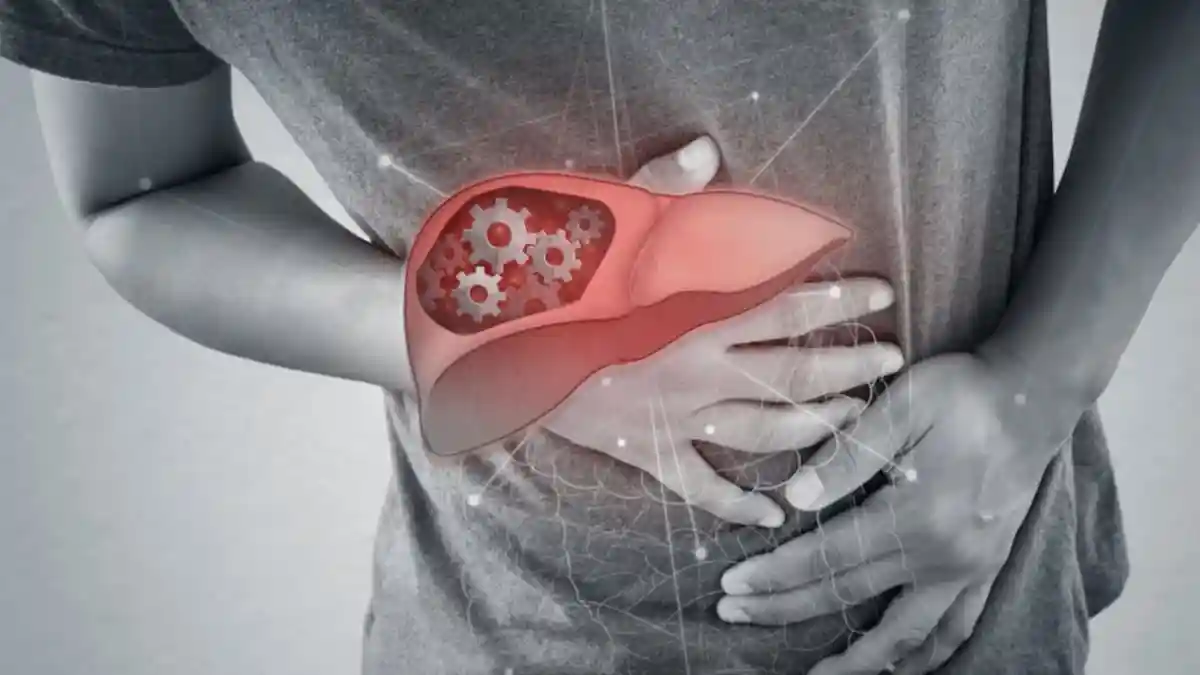
Fatty Liver Isn’t Just An Adult Problem: The Alarming Rise Among Children
Once considered a condition affecting middle-aged adults with sedentary lifestyles, fatty liver disease is now emerging as a silent epidemic among children and adolescents. What was once a rare paediatric diagnosis has evolved into a major public health concern, reflecting the rapid rise in childhood obesity, poor dietary habits, and lack of physical activity.
The trend is alarming not only because of its increasing prevalence but also due to the lifelong health risks it poses if left unchecked or ignored.
Dr. Raghavendra Babu, Senior Consultant, Gastrointestinal and HPB Surgery, GI Oncology & Liver Transplantation, SPARSH Hospital, Yelahanka, Bangalore, shares all you need to know.
Understanding Fatty Liver in Children
Fatty liver disease, or Non-Alcoholic Fatty Liver Disease (NAFLD), occurs when excess fat accumulates in the liver cells, unrelated to alcohol consumption. In children, this condition is typically linked to lifestyle factors such as a high intake of processed foods, sugary beverages, and low levels of physical activity.
Its silent nature makes it especially dangerous. Most children exhibit no obvious symptoms until the disease progresses to more severe stages, such as liver inflammation or scarring, known as Non-Alcoholic Steatohepatitis (NASH).
Recent studies indicate that nearly one in ten urban children may have fatty liver disease, with even higher rates among those who are overweight or obese. This mirrors a global trend — NAFLD has become one of the most common chronic liver conditions in children worldwide, often diagnosed between the ages of 10 and 15.
The Lifestyle Link
Modern lifestyles have dramatically reshaped children's health. Factors such as increased screen time, reduced outdoor activity, and easy access to calorie-dense, nutrient-poor foods have contributed significantly to the rise of fatty liver disease.
Children today often consume excessive amounts of refined carbohydrates, fried snacks, and sugary drinks, all of which promote insulin resistance and fat deposition in the liver.
The connection between obesity, metabolic syndrome, and fatty liver is well established. However, even children who appear physically thin can be at risk if their diet is poor and they engage in minimal physical activity.
Long-Term Impact
The implications of fatty liver disease extend far beyond childhood. If left untreated, it can progress to serious complications such as liver fibrosis, cirrhosis, or even liver cancer later in life.
Moreover, NAFLD in children often coexists with other metabolic disorders like type 2 diabetes, high cholesterol, and cardiovascular disease, setting the stage for lifelong health challenges.
Early intervention is therefore crucial not only to treat the liver condition itself but also to prevent a cascade of related metabolic complications.
Prevention Starts at Home and School
The positive news is that fatty liver disease in children is largely preventable and, in many cases, reversible with timely lifestyle changes. The foundation of prevention lies in balanced nutrition and regular physical activity.
Parents can play a vital role by encouraging children to eat meals rich in fruits, vegetables, whole grains, and lean proteins, while limiting junk food, sugary beverages, and processed snacks.
Schools, too, have an important part to play by incorporating nutrition education and physical fitness programs into daily routines. Regular health check-ups including liver function tests and ultrasound screenings for at-risk children can help in early detection and management.
A Call for Awareness and Early Action
Paediatric fatty liver disease is not merely a medical condition, it's a lifestyle warning. Its rising numbers reflect a broader societal shift towards convenience over health. Awareness, therefore, is the first step in reversing this trend.
Paediatricians, schools, and parents must work together to build environments that prioritize balanced diets and active living. As urbanization and sedentary habits continue to grow, the need for early intervention has never been more urgent.
Fatty liver is no longer an adult disease, it's a red flag for the next generation's well-being. Through education, awareness, and sustainable lifestyle changes, we can protect our children from becoming the youngest victims of a preventable illness and ensure a healthier, safer future for all.
Source: News18
Related Posts: England have been treated like adults - now they must play like adults Once considered asking Albinder Dhindsa to step aside at Blinkit Friends and The Middle actor Pat Finn dies aged 60 Coupang confirms data breach affecting 33 Heatwaves May Be Silently Affecting Your Hormones Breast Cancer Affecting Young Lives Anthropic confirms Claude AI outage affecting web Why Sleep Disorders Are the Hidden Crisis Affecting India’s Youth Delhi psychiatrist on how digital overload and stress are affecting Gen Z sleep Absence of minister affecting General Education Dept functioning

Baramulla MP Sheikh Abdul Rashid has been granted interim bail by the Delhi High Court until June 2 following the death of his father. Currently lodged in Tihar Jail in connection with terror-funding charges, Rashid will be escorted by police during his temporary release
2 hours ago

All four crew members ejected safely after two Navy jets collided and crashed on Sunday (May 17, 2026) during an air show at the Mountain Home Air Force Base in western Idaho, officials said. The collision involved two U.S. Navy EA18-G Growlers from the Electronic Attack Squadron 129 in Whidbey
2 hours ago

The Tamil Nadu Directorate of Government Examinations (DGE) will declare the TN Class 10 SSLC results 2026 soon. According to media reports, the TN SSLC results 2026 will be out on May 20, 2026. Once declared, the results will be available for download on the official website – dge.tn.gov.in
2 hours ago

“It is okay not to be okay. It is absolutely fine to ask for help. We need to normalize the conversation about mental health and treat it with the same respect as physical health.” — Prince William LiveMint's quote for the day by British Royal Prince William is a call to dismantle the
2 hours ago

The BJP has criticized the Congress following V D Satheesan's oath as Kerala Chief Minister. Party spokesperson Shehzad Poonawalla alleged the Congress has surrendered to Islamist groups like the IUML and Jamaat-e-Islami. He claimed the decision was made under pressure for vote-bank politics
2 hours ago

After months of speculation, RJ Mahvash has finally opened up about why she unfollowed Yuzvendra Chahal on Instagram. She said that friends can have arguments, and that is also the case with her and the cricketer. However, she said that since they shared many memorable moments
2 hours ago

The major talking point for Chennai Super Kings (CSK) in IPL 2026 has been that of the legendary MS Dhoni. Dhoni was initially scheduled to miss the first two weeks of IPL 2026 due to a calf strain and underwent rehabilitation in Chennai for it
2 hours ago

Congress leader VD Satheesan on Monday took oath as the chief minister of Kerala, taking helm of the state’s United Democratic Front government. Satheesan was sworn in 14 days after the Assembly election results were announced on May 4. The party named him as the next chief minister on Thursday
4 hours ago

Pakistani actor Sanam Saeed makes statement in shimmering saree at Cannes 2026, fans highlight Aishwarya Rai connectionZindagi Gulzar Hai actor Sanam Saeed stuns at Cannes 2026 in a green saree. Fans love the look, drawing comparisons to Aishwarya Rai’s iconic Cannes 2002 debut
4 hours ago

Hundreds of companies raised a combined $70 billion by selling shares to the public in the United States last year. But 2026 could shatter records, with rocket and AI company SpaceX, ChatGPT-maker OpenAI and AI startup Anthropic all potentially making their stock market debuts
4 hours ago

In May, Prime Minister Narendra Modi marks 12 years in office. Given the country's median age of 29, roughly half of all Indians – nearly 750 million people – have never known a different national leader as adults. Although the Bharatiya Janata Party that he represents had previously been in
4 hours ago

May 18, Birthday Horoscope: Here's what the tarot cards have in store for youIf your birthday falls on May 18, here’s what your year ahead looks like, as per Tarot. Published on: May 18, 2026 11:00 AM IST By Kishori Sud Share via Copy link If you were born on May 19
4 hours ago

Iran's Parliament Speaker Mohammad Bagher Ghalibaf, who recently emerged as a chief negotiator in talks with the United States, has been appointed to oversee relations with China, Iranian media reported on Sunday (May 17, 2026). "Mohammad Bagher Ghalibaf has recently been appointed as a special
4 hours ago

Chef Ranveer Brar shares a quick and creamy Aam Shrikhand recipe every mango lover must try: Step-by-step processLove mangoes? Try this creamy Aam Shrikhand by Chef Ranveer Brar that delivers the perfect mix of creamy, fruity, and indulgent flavours. Published on: May 18
4 hours ago

Step inside singer couple Mithoon and Palak Muchhal’s contemporary home with a luxe walk-in closet and elegant interiorsHere’s a sneak peek into the contemporary love nest of singer couple Mithoon and Palak Muchhal, featuring a lavish walk-in closet. Published on: May 18
4 hours ago

US President Donald Trump on Monday shared a map of West Asia on social media showing an American flag overlay and red arrows pointing towards Iran from several directions, adding to growing tensions between Washington and Tehran. The post came shortly after Trump warned that “the clock is
4 hours ago

‘Marriages can go wrong’: Sara Ali Khan on how personal experience keeps her from romanticising marriageSara Ali Khan discusses the complexities of marriage and why she prioritises self-growth over rushing into relationships. May 18, 2026, 11:44:24 IST Written by Vibha Maru Share via Copy link
4 hours ago

NEET-UG paper leak: Coaching institute director detained in Maharashtra’s LaturShivraj Motegaonkar, who runs Renukai Chemistry Classes , was brought to the CBI office in Pune for interrogation as the agency widened its probe Published on: May 18
4 hours ago

Mobility giant Uber is open to partnering with its ousted founder Travis Kalanick in his new autonomous vehicle venture, chief executive Dara Khosrowshahi , marking the first public acknowledgment from the company that it may work with its former chief again
4 hours ago

SC refuses to entertain PIL for reviewing wages of priests, temple staffSC refuses to entertain PIL for reviewing wages of priests, temple staff Published on: May 18, 2026 11:43 AM IST PTI Share via Copy link New Delhi, The Supreme Court on Monday refused to entertain a plea seeking to constitute a
4 hours ago

With the newly inaugurated Ganga Expressway now operational, travelling from Meerut to Prayagraj is expected to become dramatically faster, reducing travel time to nearly six to seven hours. Stretching across almost 594 kilometres, the expressway connects western and eastern Uttar Pradesh while
4 hours ago

IAS officer reflects on IIT Delhi to IIM Bangalore to civil services journey, says education missed key life lessonsIAS officer Divya Mittal reflected on how top education prepared students for exams, not loneliness or mental health. Published on: May 18
4 hours ago

Crispy chicken tossed in a glossy sweet-spicy sauce with crunchy vegetables, Beijing Chicken remains one of the most-loved Indo-Chinese dishes across India. Equal parts comforting and addictive, the dish is known for its bold flavours, smoky wok-tossed aroma
4 hours ago

China has agreed to significantly increase imports of American agricultural products, including beef and poultry, under a new understanding reached during US President Donald Trump’s recent summit in Beijing with Chinese President Xi Jinping, according to the White House
4 hours ago

(), China's top , said on Sunday it expects first-half revenue to reach 110 billion yuan to 120 billion yuan ($17.62 billion), according to a renewed prospectus, as surging memory chip prices boost its business outlook.Memory chip prices have risen globally as an artificial
4 hours ago

The millionaire businessman son of Palestinian President Mahmoud Abbas has won a steering role in his father’s political party Fatah, a party official said on Sunday (May 17, 2026), as a succession fight looms for control of the embattled Palestinian Authority (PA)
4 hours ago

India’s SMEs are accelerating AI adoption, unlocking efficiency and growth. As competition intensifies, recognition is becoming essential for credibility and visibility. Awards platforms now offer a crucial opportunity to stand out and gain an advantage.India’s SMEs are accelerating AI adoption
4 hours ago


