
MP woman sits with 42-year-old fashion designer son's corpse for 5 days, praying for his revivalPolice said a milkman went to deliver milk and reported a foul odour and seeping blood, leading to the discovery of the body five days after the man died Updated on: May 26

Think tanning and pigmentation are the same? Experts decode the crucial differences between the twoTanning and pigmentation are often used interchangeably, but there’s quite a difference between the two. Experts decode the difference. Published on: May 26

‘Don’t visit Sikkim if you litter’: Anand Mahindra sparks civic sense debateAnand Mahindra’s X post on littering in Sikkim has gone viral, sparking debate on civic responsibility and tourist behaviour. Updated on: May 26, 2026 4:46 PM IST By Vaishali Kapila Share via Copy link Industrialist

China and Pakistan have reached a "new broad consensus" on deepening strategic ties to beef up development of a joint economic corridor and establish the port of Gwadar as a regional connectivity hub, the neighbours said on Tuesday (May 26, 2026)

Four All India Anna Dravida Munnetra Kazhagam MLAs have resigned from the Tamil Nadu Assembly over two days, with three of them joining the ruling Tamilaga Vettri Kazhagam, The Hindu reported. Three of them, Maragatham Kumaravel, the MLA from Madurantakam

Editorial independence is core to our work. Some links may earn us a commission, without influencing our opinions.Backpacking across Europe? A solo traveller and content creator suggests the perfect packing listA solo traveller shares the smartest Europe backpacking essentials

PM Modi to visit Australia in ‘near future’: Australian foreign minister Penny WongWong said Australian Prime Minister Anthony Albanese had announced that Modi would visit Australia in the “near future”. Updated on: May 26, 2026 4:46 PM IST By HT News Desk Share via Copy link Prime Minister

Woman shows ladoos melting in Delhi heat, says ‘Inki abh barfi banegi’A viral video showing boxes of ladoos turning into a soft mess has left the internet amused, as people react with memes and relatable summer experiences. Updated on: May 26
Who Lived The Longest In The Mahabharata? Here Are Their Secrets
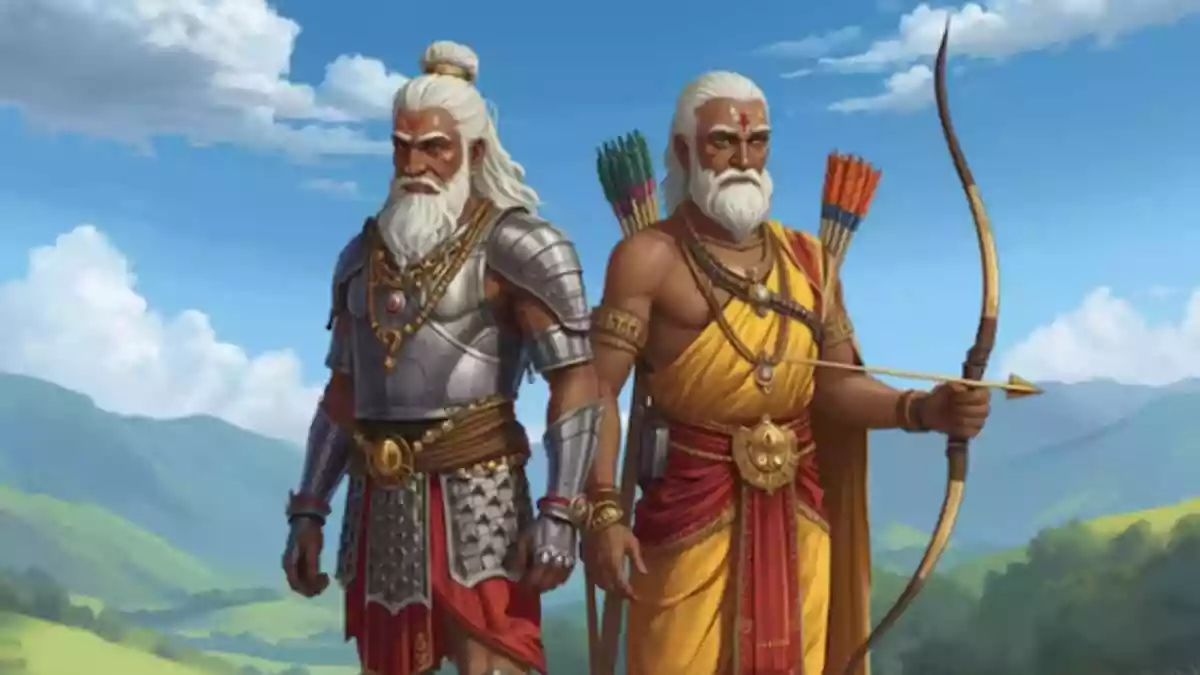
Who Lived The Longest In The Mahabharata? Here Are Their Secrets
In ancient lore, the Mahabharata era is often described as a time when human lifespans were far longer than what we see today, with many believed to have lived well beyond 80 or 90 years. According to traditional accounts, even the length of days and years was said to be different during that period, adding to the mystery surrounding life in that age.
Among the many notable figures of this period, two warriors, Dronacharya and Bhishma, were believed to have stood out for their exceptionally long lives.
Krishna too is believed to have lived for over 100 years. His longevity is often attributed to spirituality, divine blessings, discipline, yoga, and a balanced diet. Even today, many people around the world are known to cross the age of 100 by following similar principles.
Dronacharya and Bhishma, two revered warriors of the Mahabharata, are believed to have lived for around 120 years. Bhishma, who was granted the boon of choosing the moment of his death, is said to have passed away nearly 20 days after the war, despite suffering grave injuries.
Their extraordinarily long lifespans are believed to have stemmed from their highly disciplined lifestyles. Dronacharya's longevity stemmed from his dedication to yoga, exercise, martial arts, and a pure teaching life. Bhishma, whose age is recorded between 110 and 120 years in various scriptures, lived like a sage with strict discipline and devotion to duty.
Both warriors are believed to have maintained exceptionally long lives due to their rigorous training and unwavering discipline. They carried out their duties with utmost dedication, following strict routines that sustained both physical fitness and mental clarity.
Dronacharya, a master of martial arts and a committed teacher, is said to have followed a balanced and controlled diet that further supported his strength and sharpness.
Bhishma's ascetic lifestyle is also believed to have played a major role in preserving his health over the years. Dietary practices of that era emphasised natural, wholesome foods thought to promote longevity. Bhishma's vow of lifelong celibacy is further considered a key element in his disciplined way of living.
Both warriors are believed to have engaged in regular spiritual practices, which helped keep their bodies strong and healthy. The Mahabharata era is often described as a time when people naturally lived longer due to cleaner surroundings, healthier lifestyles, and a strong focus on both mental and physical discipline. It is said that individuals of that period could remain as fit at 100 as people around 70 are today.
Someone who is believed to have lived even longer was the sage Vyasa, the author of the Mahabharata. According to ancient accounts, he may have lived for around 130 years. Vyasa was born to Satyavati and the sage Parashara, and there is a unique and widely recounted story surrounding his birth.
Texts related to the Mahabharata suggest that Bhishma likely followed a sattvic diet throughout his life, consisting of fresh fruits, vegetables, whole grains, nuts, and dairy products such as ghee and milk. Ancient scriptures also emphasise the importance of dietary moderation, and Bhishma is believed to have practiced controlled eating, avoiding excess, an approach considered vital for maintaining health and preventing ailments linked to overeating.
These accounts also indicate that Bhishma did not generally consume meat, except on ritual occasions where it was prescribed.
There are no precise records of the Pandavas' ages, but estimates suggest Yudhishthir, the eldest, lived around 90-100 years. Bhim was about 1-2 years younger, Arjun 3-4 years younger, and the twins Nakul and Sahdev were 10-15 years junior to Arjun. During the Mahabharata war, Yudhishthir was approximately 70-75 years old. After the war, the Pandavas ruled Hastinapur for 36 years before renouncing everything to journey to heaven.
Dhritarashtra, born through the Niyoga process by sage Vedvyas after King Vichitravirya's death, was the elder brother of Pandu and Vidur. He was around 90-100 years old during the Mahabharata war. This is based on accounts suggesting that Duryodhana and his siblings were around 50–60 years old at the time of the war.
After the war, Dhritarashtra, along with Gandhari and Kunti, is believed to have lived in Hastinapur for about 15 years before retiring to the forest, where they are said to have died in a forest fire 2–3 years later.
In the Mahabharata era, the concept of a year was based on a lunisolar calendar, meaning time was calculated using both lunar and solar cycles.
The lunar year consisted of about 354 days, divided into twelve lunar months of roughly 29.5 days each. To keep this calendar aligned with the solar cycle, additional months (adhik maas) were inserted periodically.
Swipe Left For Next Video
The solar year, by contrast, spans approximately 365.25 days. To reconcile the difference between the two systems, ancient Indian timekeepers introduced adjustments, including the addition of an extra month every few years.
Historical accounts suggest that two extra months were added over a five-year period to synchronise the lunar calendar with the solar year. This adjustment helped compensate for the roughly 12-day annual difference between the lunar and solar cycles.
Source: News18
Related Posts: The lore of Sam Altman is being tested like never before Teen behind viral ‘lore behind your header’ tweet has 700 mn views Ancient Roads That Time Couldn’t Erase Watch This ‘Mystery Mansion’ That Cannot Be Described Congress cites book to claim Mahatma Gandhi described RSS as How Pak minister Khawaja Asif described military's interference Pankaj Dheer, who played Karan in Mahabharata, dies after cancer battle Gita, Mahabharata Scholars In 10-15 Years A King Got ‘Pregnant’ In Mahabharata & Lord Indra Cut His Thumb To Feed The Baby

Martha Mitchell was a flamboyant Washington DC socialite whose husband was embroiled in the Watergate scandal. Her shocking claims of a violent abduction and a "dirty business" were ridiculed as delusional – until they turned out to be true. Martha Mitchell was a character; everyone agreed on
5 hours ago

From the academic year 2026–27, bilingual classes will be introduced in all government schools across 15 districts of the state. While the government had earlier announced that English would be introduced in LKG classes, a fresh directive now states that an Urdu-English bilingual medium will also
6 hours ago

Trading scalpel for golf irons: Indian-origin golfer Manav Shah’s stirring journey to US OpenTrading scalpel for golf irons: Indian-origin golfer Manav Shah’s stirring journey to US Open Updated on: May 26, 2026 4:14 PM IST PTI Share via Copy link New Delhi
6 hours ago

Pakistan’s Defence Minister Khawaja Asif has said that he was not in favour of Islamabad joining the Abraham Accords to normalise relations with Israel. Also read | Pakistan deploys jet squadron, thousands of troops to Saudi Arabia amid escalating Iran war tensionsPakistan’s Defence Minister
5 hours ago

AIADMK MLA Esakki Subaya submitted his resignation today. He is the fourth MLA from the party to resign in two days. Subaya supported former ministers C Ve Shanmugam and S P Velumani. Three other AIADMK MLAs also resigned yesterday. They are expected to get tickets for upcoming byelections from the
8 hours ago

Kimi Antonelli extended his lead in the drivers' championship after Mercedes team-mate George Russell retired from the Canadian Grand Prix. Ferrari's Lewis Hamilton finished second and Max Verstappen's Red Bull made up the top three. Russell was successful earlier in the weekend when he converted
8 hours ago

Madhya Pradesh Chief Minister Mohan Yadav on Monday announced financial assistance of Rs 5 lakh each to the families of three persons who died in February 2003 during protests seeking to declare the Bhojshala-Kamal Maula mosque complex in Dhar district as a temple, The Hindu reported
8 hours ago

2026 Honda City facelift on wishlist? Key genuine accessories you can buyThe 2026 Honda City facelift can be accessorised with a plethora of genuine accessories. Published on: May 26, 2026 1:40 PM IST By Mainak Das Share via Copy link Limited Time Deals on Popular cars Volvo XC90 ₹ 97
8 hours ago

Lawyer seeks to register Cockroach Janta Party separately from US-based founderSudhir Jakhar, the lawyer calling himself the party’s national convener, submitted the application to the ECI secretary Updated on: May 26, 2026 1:57 PM IST By Harsh Yadav Share via Copy link A lawyer from Haryana’s
8 hours ago

South Korean seven-piece BTS have won Artist of the Year at the American Music Awards (AMAs) for the second consecutive year, cementing their status as one of the world's biggest bands. The award, considered the ceremony's grand prize, is just the latest crown jewel for the so-called kings of K-pop
8 hours ago

The ET Most Innovative AI Product Awards 2026 recognises the AI Platforms, Infrastructure & Developer Tools category. It highlights the technologies powering the next phase of enterprise AI from platforms and MLOps to observability and developer tools. These innovations are enabling scalable
8 hours ago

Vedant Shrivastava posts correct CBSE answer sheet, alleges marks slashed for right answerClass 12 student Vedant Shrivastava has received his correct answer sheets after CBSE admitted to a mix-up with his Physics paper. Updated on: May 26, 2026 1:13 PM IST By Sanya Jain Share via Copy link Class
8 hours ago

Assam Chief Minister Himanta Biswa Sarma announced plans to boost the state's economy to Rs 10 lakh crore by 2028. He stated the tabling of the Uniform Civil Code bill demonstrates the government's dedication to the rights of minority women. Sarma also noted the election results reflected public
8 hours ago

Air India has rolled out an upgrade to its Maharaja Club loyalty programme, allowing members to earn and redeem Maharaja Points on Air India Express flights covering more than 55 destinations across South Asia, Southeast Asia, and West Asia. The move broadens the scope of the airline group’s
8 hours ago

Hansal Mehta has long been recognised as one of India’s most emotionally observant storytellers. Whether through the raw realism of Shahid, the intimacy of Aligarh, the unsettling tension of Scam 1992 or the deeply human narratives that run across his body of work
8 hours ago

Tech Tonic | Ferrari Luce, Sir Jony Ive, and a subversion of ethosFerrari Luce is trying to tell the carmakers of the world that cars don’t have to feel like driving a tablet. Published on: May 26, 2026 11:43 AM IST By Vishal Mathur Share via Copy link The first car from Sir Jonathan Paul Ive
8 hours ago

SC stays Delhi HC ruling against barring law students over attendance shortageA bench of justices Vikram Nath and Sandeep Mehta passed the interim order while issuing notice on a petition filed by the Bar Council of India (BCI) against the November 2025 judgment of the Delhi HC Published on: May 26
8 hours ago

Hema Malini’s blush pink saree for receiving Dharmendra’s Padma Vibhushan is all about elegance and simplicity. See picsVeteran actor Hema Malini looked graceful in a blush pink saree as she accepted late actor Dharmendra’s Padma Vibhushan at the 2026 ceremony in New Delhi
8 hours ago

Bengaluru traffic police slaps auto driver over accident, viral video sparks outrageMany on social media have tagged Bengaluru Police, urging them to take a look into the matter where a cop allegedly slapped an auto driver. Published on: May 26
8 hours ago

Israeli Finance Minister Bezalel Smotrich on Monday (May 25, 2026) called on Prime Minister Benjamin Netanyahu to resume bombing Beirut in response to increased explosive drone attacks by Hezbollah on Israeli troops and northern Israel towns. Mr
8 hours ago

has reported a net profit of Rs 48.4 crore for FY26, its first full financial year after the completed its with , marking a turnaround from a Rs 216.7 crore loss in the previous year.Total income more than doubled to Rs 1,402.7 crore in FY26 from Rs 603.8 crore in FY25
8 hours ago

Partnership, the firm cofounded by Indian entrepreneurs , Sanjeev Kumar and Ashish Kumar, has launched a dedicated frontier-tech investment platform, (Fundamentum Frontier Advisors), with Rs 3,000 crore to invest in artificial intelligence and deeptech startups.Of this, Rs 2
8 hours ago

The admission process for IGNOU July 2026 session has commenced for Open and Distance Learning (ODL) and online programmes. Interested students can apply by visiting ignouadmission.samarth.edu.in. The Indira Gandhi National Open University has started the admission process for the July 2026
8 hours ago

Editorial independence is core to our work. Some links may earn us a commission, without influencing our opinions.From instant coffee to incredible: The best easy-to-use brewers for a better morningGood coffee at home no longer needs cafe visits, as these coffee machines can handle espresso
8 hours ago

5 crystals to bring luck and financial growthGemstones are tools to connect your goals with your actions and mindset. Here are five crystals that are often linked with luck and financial growth. Updated on: May 26, 2026 1:20 PM IST Edited by Kanakanjali Roy Share via Copy link While crystals are
8 hours ago

The U.S. military said it carried out “self-defence” strikes in southern Iran, including on missile launch sites and boats placing mines, even as President Donald Trump said on social media that negotiations were “proceeding nicely”. The strikes were done “to protect our troops from
8 hours ago

Wall Street is abuzz with next month’s expected blockbuster debut of Elon Musk’s rocket and satellite maker SpaceX, but few of the biggest IPOs in recent years have paid off for investors who bought in when the deals came to market. A Reuters analysis of the 50 IPOs with the highest
8 hours ago


