
Instagram recently introduced its one-time ‘Instants’ photo-sharing feature that allows people to send images right to their friends or close friends’ inboxes. The feature appears to be a way to encourage users to send short-term, spontaneous shots to their close contacts via messages

A cruise ship hit by a deadly hantavirus outbreak is scheduled to arrive in the port city of Rotterdam in the Netherlands on Monday morning (May 18, 2026). The MV Hondius has spent the past six days sailing from the Canary Islands, where the remaining passengers were escorted off the vessel by

Malaysia said on Monday (May 18, 2026) it had ended a search for passengers of a migrant boat from Indonesia that sank off the country's western coast last week after the bodies of all 16 missing were recovered. The Malaysian Maritime Enforcement Agency (MMEA) in Perak state said 23 people were

Quote of the day by Bella Hadid: ‘I can’t wait to be a mom, I think that would make me truly happy’When Bella Hadid got candid on her vision for the future, family, and being an auntie to Khai, sister Gigi Hadid's daughter. Read her exact quote on motherhood. Published on: May 18

Dark mode vs light mode: Ophthalmologist explains when you should toggle which mode on phone for lower vision stressInstead of aesthetic purpose, medically approach the display modes on your phone to lower visual stress. Updated on: May 18, 2026 5:17 PM IST By Adrija Dey Share via Copy link Your
Interview: Recognition for Palestine state harms the rights of stateless Palestinians
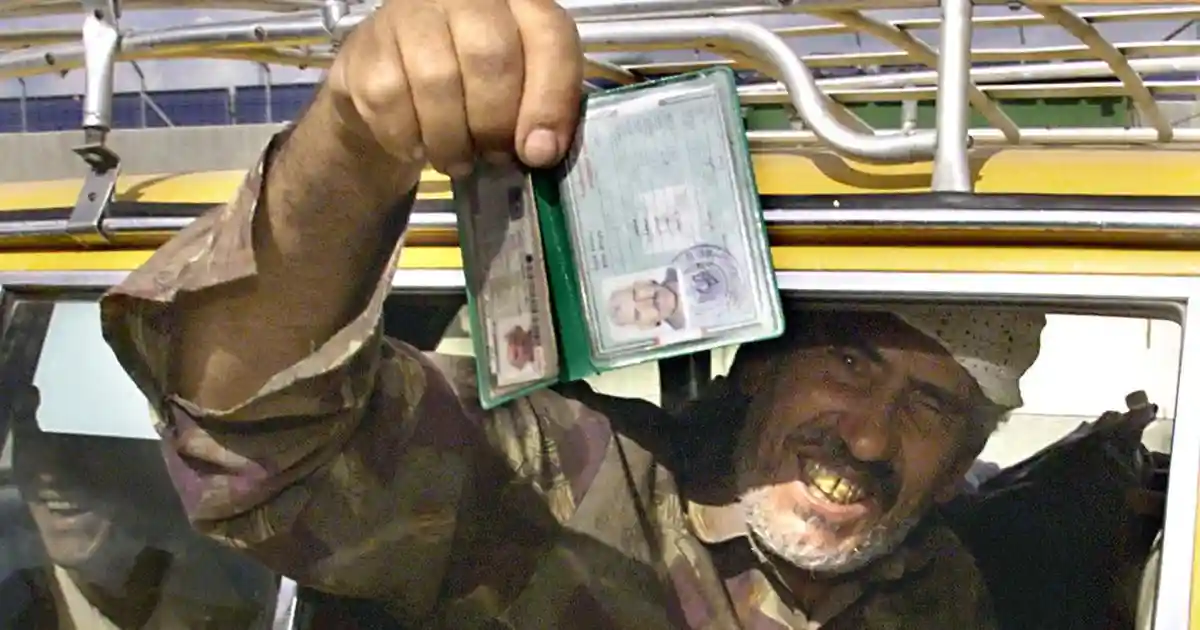
Australia, Britain, Canada and France became the latest Western nations to recognise a Palestinian state last month, but the backing has cost Palestinians rights in other countries since they are no longer considered stateless, a legal expert said.
Patrícia Cabral, legal policy coordinator at the European Network on Statelessness, a civil society alliance, cited the examples of Bulgaria, Hungary and Norway, where Palestinians had seen their rights curtailed after statehood recognition.
Recognising a Palestinian state aims to pressure Israel to end its two-year assault on Gaza, which has killed more than 66,000 people, displaced 1.9 million and led to famine.
A UN Commission of Inquiry concluded in September that Israel had committed genocide in the narrow 40 km strip of land, an assessment rejected by Israel.
US President Donald Trump this week outlined a peace plan with Israeli Prime Minister Benjamin Netanyahu to end the war, giving Palestinian militant group Hamas days to respond.
Cabral spoke to Context about the rights Palestinians should be afforded and the effect of recent political declarations.
Most Palestinians, who don't hold another nationality, should be considered stateless under international law. And that's because Palestine does not have a nationality law.
It doesn't have sovereign control over its borders, it doesn't have the ability to issue identity and travel documents without depending on Israel for that as well.
All of these are core elements of statehood.
Palestinians should be entitled to protection as refugees under the Refugee Convention, but then also as stateless persons under the 1954 Statelessness Convention.
Stateless Palestinians, as other stateless people, should be granted residency rights and access to economic and social rights, and also access to a facilitated route to naturalisation, for example, with reduced residency requirements, precisely because they are stateless and so they shouldn't be kept in limbo for a long time.
States also have safeguards to make sure children are not born stateless in their territory, which should also apply to Palestinian children who don't have another nationality.
Even if Palestine is recognised as a state by other countries, that is essentially a political statement. It's an act of political expression and it doesn't have legal implications.
But in some countries, the fact that the state recognises Palestine has meant that there's a change in administrative practice or there's a change in government policy, and suddenly Palestinians are considered to have a nationality instead of being considered stateless.
We've seen, for example, in Bulgaria and Hungary, many Palestinians are denied protection because their governments recognise Palestine as a state. And so they're left without any routes of protection many times, or their applications for protection are automatically rejected.
Yes, we are concerned with that. We have seen that happening in Norway, for example.
Norway recognised Palestine as a state last year and because of that, there's been a change in government policy that says because of this recognition, Palestinians should not be considered stateless.
So they would have to comply with an eight-year residency requirement to access Norwegian nationality instead of the usual three years that they were accessing before. And there's been a lot of backlash against this.
Because we have seen this happening in Norway, we're concerned that this may happen in other countries.
There's a lot of work that can be done in terms of raising awareness, training authorities, decision-makers and the judiciary to address this.
That's why we have put out a legal briefing (on protecting the rights of stateless Palestinians) so that legal practitioners are aware of this and are equipped with arguments that they can use in their own cases.
Definitely the courts have a role here as well.
This article first appeared on Context, powered by the Thomson Reuters Foundation.
Source: Scroll
Related Posts: Indian women's hockey team to tour Australia ahead of Nations Cup in NZ Why $10M US-Funded Contraceptives Are Burned In France As Poor Nations Plead University Of Western Australia To Open Mumbai How US megastar Luke Combs helped Britain fall in love with country music Canoeing-Britain's Clarke wins fourth successive kayak cross world title Britain's Daily Mail publisher enters exclusive talks to buy Telegraph Media Group for USD 654 million Has Britain's budget watchdog become too all-powerful Trump slams energy deal between California and Britain Why Ultra-Rich Businessmen Are Leaving Britain Britain's Kavanagh stuns ex-champion Moreno with three weeks

IU, Byeon Woo-seok apologise after 'Perfect Crown' faces criticism for historical inaccuraciesIU, Byeon Woo-seok apologise after 'Perfect Crown' faces criticism for historical inaccuracies May 18, 2026, 16:19:57 IST PTI Share via Copy link New Delhi
38 minutes ago

Heart diseases kill approximately 28.6 lakh (2.86 million) Indians annually, with heart attacks acting as a primary contributor to this figure. While there is a lot of awareness about heart attacks, their causes, prevention and the symptoms that might occur
40 minutes ago

Congress president Mallikarjun Kharge on Monday (May 18, 2026) accused the government of lacking foresight and keeping the state of the economy hidden from the people before Assembly elections. ALSO WATCH Watch: CNG prices hiked again in Delhi
39 minutes ago

MHADA lottery 2026 sees over 77,000 applications for 2,640 affordable homes in the Mumbai real estate marketMHADA lottery 2026: The state housing authority has extended last date for applications twice in the last one month, and also reduced price of over 1,200 homes Updated on: May 18
37 minutes ago

Mumbai landlord regrets renting out ₹80 lakh flat after dispute over unpaid electricity bill: 'Full-time stress job'A Mumbai-based landlord recently shared his frustration over managing a rented flat in Mira Road. Updated on: May 18, 2026 4:36 PM IST By Bhavya Sukheja Share via Copy link Owning a
36 minutes ago

The Supreme Court on Monday criticised its own January verdict that denied bail to activists Umar Khalid and Sharjeel Imam in the Delhi riots conspiracy case, saying that “bail is the rule and jail is an exception” even in prosecutions under the Unlawful Activities Prevention Act
37 minutes ago

A month after carrying out its biggest retrenchment exercise, India’s largest IT services firm Tata Consultancy Services (TCS) reportedly asked managers to place around 5% of employees in the company’s lowest performance category during the latest appraisal cycle
37 minutes ago

The Central Board of Secondary Education (CBSE) has made it compulsory for Class 9 students to study three languages. This new three language policy will come into effect from July 1, 2026. From the new academic session, Class 9 students will have to study three languages (R1, R2, R3)
39 minutes ago

The CBI’s investigation into the alleged NEET-UG 2026 paper leak has now shifted focus to Rajasthan’s Sikar district, where a family is accused of paying lakhs of rupees to get access to the leaked exam paper for their son. The case has drawn attention after investigators found that the student
37 minutes ago

Hantavirus-stricken cruise ship docks in the Netherlands for disinfectionThe MV Hondius was still carrying 25 crew members and two medical personnel as it reached Europe's largest port on Monday morning. Published on: May 18, 2026 5:02 PM IST AP Share via Copy link The cruise ship hit by a deadly
38 minutes ago

Cricket Australia CEO Todd Greenberg has allayed concerns about private investment in the Big Bash League. He stated that fears of Indian Premier League franchise owners taking control are overblown. Greenberg emphasised that Cricket Australia is seeking valuable partners
38 minutes ago

For many people living abroad, going back home can bring a feeling of comfort that is hard to explain. A Kerala-based content creator recently shared how returning to his village from London reminds him of the simple life he grew up with and the emotional cost of living away from home
37 minutes ago

‘Only four more months’: DMK leader's bold forecast on Vijay-led TVK regimeHe said that DMK president MK Stalin, who served as chief minister before Vijay’s sweeping victory in the April Assembly election, would soon return to power. Published on: May 18
36 minutes ago

Indian Grandmaster R. Praggnanandhaa played out a draw with Dutchman Jorden Van Foreest even as Germany's Vincent Keymer surged ahead following a facile victory in the fourth round of Super Chess Classic in Bucharest. With a sole win over Alireza Firouzja of France and three draws
40 minutes ago

‘People are earning more but losing peace’: Techie explains why life in Tier 1 cities is mentally drainingA techie said Tier 1 city life looked exciting from outside, but came with high rent, traffic and stress. Published on: May 18, 2026 5:00 PM IST By Mahipal Singh Chouhan Share via Copy link
36 minutes ago

India’s higher education admissions are evolving as students and parents prioritise relevance over legacy. Curriculum quality, faculty readiness, employability, and visible modernisation are reshaping trust in universities. As AI transforms jobs and skills
3 hours ago

‘Never give up’: Bengaluru engineer reveals how he landed Amazon job after 7 rejectionsA Bengaluru man revealed he faced 7 Amazon rejections in 5 years before finally landing his dream job there. Published on: May 18, 2026 1:51 PM IST By Mahipal Singh Chouhan Share via Copy link A Bengaluru
3 hours ago

Road crash in UP leaves 10 deadRoad crash in UP leaves 10 dead Published on: May 18, 2026 1:56 PM IST PTI Share via Copy link Lakhimpur Kheri , Ten people were killed when a van collided head-on with a truck on the Sisaiya-Lakhimpur national highway on Monday, police said
3 hours ago

Maha coaching firm director received NEET paper 10 days before exam, was ‘part of organised gang’HT has learnt that Shivraj Raghunath Motegaonkar was part of an organised gang who had the paper on his phone and had leaked it to several people. Updated on: May 18
3 hours ago

Spinach malfati is a comforting, vegetarian twist on Italian dumplings, where soft spinach‑paneer parcels meet a rich, roasted‑pepper walnut tomato sauce. Instead of a simple cream‑based pasta, these malfati celebrate earthy flavours: blanched spinach and creamy paneer are shaped into rustic
3 hours ago

ASI grants Hindus unrestricted daily access to MP’s disputed Bhojshala complexThe site will continue to be a protected monument under the AMASR Act 1958, with worship timings to be determined by the superintending archaeologist Published on: May 18, 2026 2:02 PM IST By Harsh Yadav
3 hours ago

Who is Salesforce CEO Marc Benioff who said he will not hire any more engineers?Marc Benioff, CEO of Salesforce, announced no new engineer hires due to reliance on AI for coding tasks. While AI increased productivity by 30%. Updated on: May 18
3 hours ago

Feeling backed up for days? Gastroenterologist shares a simple bathroom hack that can help with constipationIf you're struggling with constipation and incomplete bowel clearing, try out this simple hack. Dr Salhab explains why it works. Updated on: May 18
3 hours ago

A magnitude 5.2 earthquake in China’s southwest region of Guangxi early on Monday (May 18, 2026) killed two and forced more than 7,000 in the city of Liuzhou to evacuate as search and rescue operations continue and authorities warn of transport disruptions.A magnitude 5
3 hours ago

An Indian court has told Apple to "fully cooperate" with investigators in an antitrust case related to the , not agreeing with the U.S. company's request to put the case on hold while it challenges the law governing antitrust penalties.The Delhi High Court said in an order posted on its
3 hours ago

₹3 lakh stipend, hotel stay: IIT student’s Bengaluru internship sparks debateAn IIT student’s internship package in Bengaluru has sparked a wave of reactions online after investor and entrepreneur Kush Agarwal shared details of the offer Updated on: May 18
3 hours ago

Drinking iced drinks in summer? Gastroenterologist warns why it actually may backfire and make you feel ‘hotter’The cooling effect of iced drinks may actually be a deception. Know why the instant cooling feeling in your body may be unhealthy. Updated on: May 18
3 hours ago


