
Even though the fundamental elements of competitive examinations in India over the last decade have remained similar to those of previous years, the technology associated with them continues to evolve. Imagine a JEE, NEET or IAS aspirant being able to identify and simplify the problems within

"Call me Ringo." That's what the former Beatles drummer says when asked if we should call him Sir. He joins us at the swanky Sunset Marquis hotel in West Hollywood where rock stars have gathered for decades in a luxury oasis behind the Sunset Strip."Call me Ringo

India is set to become a global sporting powerhouse. Sports Minister Mansukh Mandaviya predicts India will rank among the top 10 sporting nations by 2036. By 2047, the nation is projected to break into the top five. This vision is fueled by government initiatives like Fit India and Khelo India

The Gauhati High Court on Friday (April 24, 2026) rejected Congress leader Pawan Khera’s anticipatory bail plea in connection with a case registered by Assam Chief Minister Himanta Biswa Sarma’s wife, Riniki Bhuyan Sharma, in the Assam Police Crime Branch

Benchmark indices Sensex and Nifty tumbled in early trade on Friday (April 24, 2026) as surging oil prices and unabated foreign fund outflows unnerved investors. Weakness in IT stocks and a negative trend in global markets also weighed on investor sentiment

Manchester City moved to the top of the Premier League table with a narrow 1-0 win over Burnley at Turf Moor, a result that also confirmed the hosts’ relegation on Wednesday. A fifth-minute strike from Erling Haaland proved decisive as City climbed above Arsenal on goals scored

IIT Madras's SWAYAM plus launches 3 new AI courses for beginners, registration beginsIIT Madras's SWAYAM plus has launched three new AI courses for beginners. The registration process is underway and will close on May 10. Published on: Apr 24

Chhattisgarh: Forest dept rolls out action plan for conservation, livelihoods in BalodabazarChhattisgarh: Forest dept rolls out action plan for conservation, livelihoods in Balodabazar Published on: Apr 24, 2026 2:11 PM IST PTI Share via Copy link Raipur
How sugarcane farming fuelled a rise in leopard attacks in Maharashtra
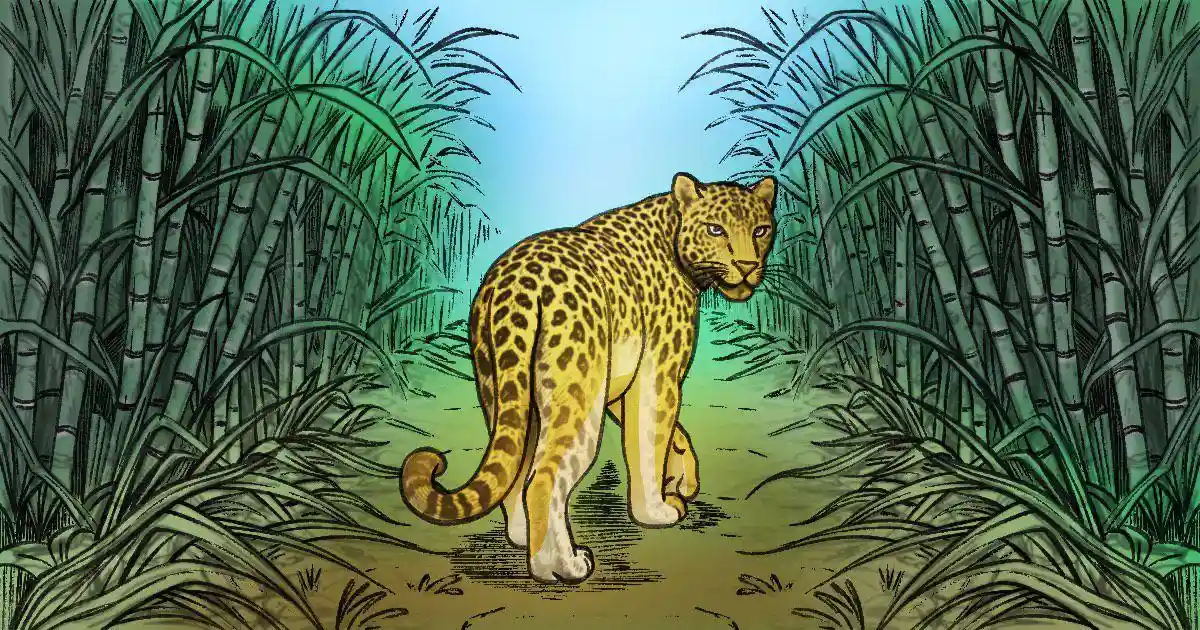
One night in October, Saluram Kargal was sleeping near his goats outside his home in the village of Wadgaon Borwadi, around 100 km from Pune. The one-room brick home is situated in an enclosure surrounded by an eight-foot-high fence. Suddenly, Kargal's sleep was broken by the sound of the animals yelping. He opened his eyes and saw a blur of orange near the goats.
It was two leopards.
One swiftly grabbed a 6-kg goat by its neck and jumped out of the enclosure over the fence, then disappeared into the sugarcane fields that surround the house. The second grabbed another goat and also tried to escape, but its paw got stuck in the fence.
Each goat cost between Rs 10,000 and Rs 20,000. Desperate to save at least one of them, Kargal attacked the leopard.
“The leopard dug its teeth into my thigh,” Kargal told Scroll in mid-December. “I screamed and my son ran out with a stick and began to hit it.” The leopard fled, only to return minutes later and attack Kargal again.
The animal bit the 40-year-old farmer on his stomach, hand and left leg, tearing through his flesh. Kargal fell unconscious – his stomach and thigh were bleeding profusely. The leopard next attacked Kargal's 15-year-old son, Santosh. But now, the family's four dogs pounced on the leopard from all sides, and bit it to death.
By this time, Kargal and Santosh were unconscious – they woke up four hours later in a hospital, where forest guards had rushed them.
Three months on, Kargal is able to walk, but with a limp and some pain. “I can never forget that leopard and that night,” he said.
This story is part of Common Ground, our in-depth and investigative reporting project. Sign up here to get the stories in your inbox soon after they are published.
Kargal's village, Wadgaon Borwadi, is located in Junnar taluka in Pune district.
Junnar, which is spread over 5,826 sq km, is nestled at the northern end of the Western ghats. The surrounding region is dotted with lakes, waterfalls and picturesque valleys. On one of the mountain peaks in Junnar sits the Shivneri fort, where Shivaji, the founder of Maratha empire, was born. The site attracts a steady stream of tourists through the year, mostly from Mumbai and Pune.
This striking locale is also the site of a complex human-animal conflict – between leopards and people like Kargal, who live in small villages.
One reason this conflict has arisen is the high density of leopards in the area.
Although the last count of leopards in Junnar dates back to 1920, when a survey found between 420 and 500 leopards in the area, officials estimate their numbers have dramatically risen. “Now we estimate their population to be 800 to 1,000. Maybe more,” said Smita Rajhans, assistant conservator of Junnar forest division.
Ankit Kumar, a senior researcher at the Wildlife Institute of India, who is working under the senior scientist Bilal Habib on leopard behaviour and population estimation in Junnar, said that they found that the region had a density of around six or seven leopards in every 100 sq km. Kumar explained that in other parts of Maharashtra, such densities are typically found in protected areas, like the Tadoba-Andhari tiger reserve, which has around seven leopards for every 100 sq km, and the Sahayadri tiger reserve which has six for every 100 sq km.
Considering that Junnar is not a protected area and has heavy human habitation, Kumar said, he considered its leopard population density “towards the higher number”.
The high density in the region is closely linked to changes in patterns of land use over decades in the districts of Pune, Solapur and Nashik. Since the 1970s, at least five dams have come up in the region, in response to which farmers began to grow the water-intensive cash crop of sugarcane. The dense fields offered leopards the ideal habitat to breed, while the presence of humans ensured good prey availability in the form of dogs and goats.
Experts noted that conflict was almost inevitable in such a situation. “A low-density large carnivore population and low-density human population can co-exist. But when both become high, then that's a recipe for conflict,” said YV Jhala, former dean of the Wildlife Institute of India, and a biologist who has worked extensively with tigers, leopards and cheetahs.
Indeed, these factors have resulted in a high number of “chance encounters” with humans, Rajhans noted, often leading to fatal attacks.
Between 2002 and this year, 56 people, most of them children, have been mauled to death and another 156 have been injured, according to data that the Junnar forest department shared with Scroll. Last year, while Kargal survived, five others lost their lives in leopard attacks in Junnar. At least 26,979 cattle have been killed.
Since 2002, the forest department has paid residents of Junnar a total of Rs 26.62 lakh for deaths and permanent disabilities that have resulted from leopard attacks. “But the compensation means nothing when you lose a family member,” said Maya Sonawane, a farm labourer.
The problem has even had some political ripples: to draw attention to locals' frustrations and fears over the problem, in December, Junnar member of the legislative assembly Sharad Sonawane attended a session of the assembly in a leopard costume and mask.
Even as the problem persists, Junnar's residents do whatever they can to avoid encountering leopards, which they refer to by the Marathi word “bibtiya”. When Scroll visited three villages in late December, locals advised us not to move around alone. Cages to trap the big cats were a common sight and we found fresh pug marks at multiple locations in two of the villages. Locals shout loudly while walking to scare any possible leopards in nearby fields, and shut themselves indoors by 8 pm.
In all these villages, locals guarded us and made whistling noises as we walked around sugarcane fields, meeting families. We were prepared to flee whenever a tiny rustle in farms was heard. “We live in fear all the time,” Kargal said. “Imagine you have to keep looking behind your back even when you sit on your porch.”
Sixty-two-year-old Laxman Mandlik remembers Junnar's barren, undulating landscape before sugarcane was introduced in the region. At the time, the major crops grown in the region were wheat and maize, both sown on limited cultivable land. Leopards were present then too, he recounted, but conflicts were rare because “their numbers were less”, he said.
In 1972, the government built five dams on the Kukadi river, to provide water in Pune, Ahmednagar and Solapur. Along with these dams, located in and around Junnar, the government also created an extensive canal system that made water easily available for thirsty crops, such as sugarcane.
“A sugar factory came in 1982 which increased demand for sugarcane and made it lucrative for farmers to grow the crop,” said Mandlik, a retired schoolteacher and a farmer. Between 2000 and 2010, the area in Junnar under sugarcane cultivation doubled from 8,000 hectares to 16,000 hectares.
The crop is typically harvested once between every 12 months and 18 months. In this period, it can grow into a dense foliage more than 15 feet tall, which offers shelter to leopards to give birth to and raise cubs. Furthermore, the animals are usually left undisturbed because farmers in this region rely on drip irrigation, and so rarely need to venture into the farms to water the crop.
“This gave leopards privacy,” said Feroz Pathan, a “rescue member” with the Junnar forest department, whose job is to trap, relocate and rescue leopards, as well as raise awareness among residents on ways to protect themselves. “Unlike forests where predators could kill their cubs, in sugarcane farms they had no enemies. Cubs began to survive better on farms.”
Kumar explained that the cats also diversified their diets – while in forests, they typically eat animals such as deer and wild boar, his team's photographic evidence showed leopards feeding on rats in farms, as well as dogs and livestock like goats and sheep. “We could not have predicted it, but we seemed to have created a perfect habitat for the leopard,” he said.
Indeed, the team's camera traps showed that Junnar's leopards had made the fields their home. “There was always a notion that leopards come here from some place and attack and then leave,” he said. “But, our study showed that this was not the case.” Their research, which is yet to be published, revealed that 70% of the leopards the team documented persisted in the area for at least three years. Based on this, the team informed locals that the animals were living “in their very own backyards”, Kumar said.
As the animal's population grew, so did conflicts with it. A 2023 study that looked at data from 2001 to 2019 found that the number of attacks on livestock had increased sharply since 2015, ranging from 400 to 900 a year – in contrast, the region had seen between 200 and 400 such attacks a year between 2001 and 2014.
The threat to human lives also increased. Sakubai Kakade, a 65-year-old farmer in Kalwadi village, experienced the tragic consequences last year, when her eight-year-old grandson Rudra was killed by a leopard in their sugarcane field. After that she stopped going to the farm alone. “To cut the sugarcane, we ask sugar factory owners to send workers. Nobody wants to risk their lives anymore,” she said.
Locals in Junnar have also started to rely on migrant workers to cut their harvest. Vaishali Wagh is one such migrant worker, who travels from Jalgaon to Junnar every year for four months to harvest sugarcane. She, too, lives with the fear of leopards. “I keep looking back to make sure she is there,” said Wagh about her eight-month-old baby who was playing in the dry grass as Wagh cut the tall-stemmed cane metres away. “There is nothing else I can do. We have heard of leopards and we are scared. But I have to earn money to pay off a loan of Rs 1 lakh.”
In Kalwadi, farmers have been advised to avoid sugarcane cultivation close to borders of the village, to minimise the risk that leopards will stray in. The sides of the village's roads are kept clean of shrubs or bushes to ensure that leopards do not have easy hiding places. Further, to ensure their safety, children in the village are not allowed to leave their homes alone at any time. “If they do, there is always an elder,” said Tushar Waman, the sarpanch of the village.
The forest department has approved Rs 13 crore for measures to tackle the leopard problem in Junnar for 2025-'26.
As part of this work, it has identified 650 isolated houses, and aims to provide residents with 75% of the cost of erecting solar fences around them, which deliver mild electric shocks to animals that might intrude. The department has also set up around 400 cages across Junnar to trap leopards, though, Kalwadi's sarpanch Waman noted, this number is proving insufficient as the number of distress calls climbs every day.
In addition, the department has designed and distributed spiked collars to 3,300 farmers – worn around the neck, the area leopards often bite first, these devices can protect farmers who are attacked.
Among the most prominent long-term strategies that the government has resorted to in Junnar is translocating animals. Since the early 2000s, the forest department has sought to mitigate the problem by moving animals from human-habited areas into forested regions of Junnar, or other forested areas in the state.
But experts note that this approach is ultimately unlikely to be successful. “Such translocations only solve the problem for a while in the location from where they are translocated,” Jhala said. “But it translocates the problem elsewhere.”
This was borne out by a 2010 paper by the ecologist Vidya Athreya, which examined a programme to translocate leopards in Maharashtra that began in 2001. As part of the programme, initially 29 leopards were captured from human habitats and released in the slopes of the Western Ghats, primarily in Bhimashankar Wildlife Sanctuary, and Malshej Ghat, parts of both of which are within 40 km of Junnar. The study found that translocation led to an increase in the frequency of leopard attacks on humans in the Junnar forest division by a staggering 325%.
“The release sites already contained resident leopards, thus, leopard movements out of the release sites were inevitable,” the authors wrote, since “the two small areas could not support the influx of large numbers of leopards.”
Kumar's more recent research also indicates that translocation is a flawed strategy. His team radio-collared 13 leopards that had been moved from various villages in Junnar to forested areas between 15 and 70 km away. The researchers found that the animals would almost always come back to the original sites within 30 days to two months. Further, Kumar explained that as the animals explored routes to return to their original homes, they would look for prey in an unfamiliar area, “which will lead to more interactions with humans”.
Jhala noted that translocations “could also mess with the social dynamics of where the animals are taken from”. For instance, he said, if a dominant leopard, which had perhaps been coexisting with humans, was shifted, other younger leopards less familiar with human presence could take over the territory. This “could exacerbate the problem”, Jhala said.
Forest department staffers said that the failure of these strategies can leave locals deeply angry, particularly after a village sees a fatal attack. “We are scared to even enter villages at such times,” Pathan said. “Recently, locals set a forest van and outpost on fire.”
In response, the forest department has for the moment halted translocations. Instead, it is housing captured leopards permanently in a centre in Manikdoh, initially meant for lost or injured animals. Another centre is being constructed in Junnar to accommodate the growing numbers of captive leopards.
But this approach is inherently limited. The Manikdoh centre has 50 enclosures, each of which is 25 square feet wide and can house one leopard. But currently, the centre houses 130 leopards, many in tiny trap cages where they can hardly move. “We are expanding our centre to build more enclosures and we will soon send 50 leopards to Vantara,” a senior official from the rescue centre told Scroll, referring to the Reliance Foundation's animal centre in Jamnagar, Gujarat.
The forest department is also attempting to use new technology to tackle the problem.
On a crisp December afternoon, forest helper Rushi Gaiwkwad inspected a cage trap that he had set up the previous day for a leopard found lurking in the village. He showed us an application on his mobile phone, developed by the forest department. The app is linked to 55 AI-powered cameras in Junnar, set up in villages where leopards are spotted frequently. The cameras are programmed to recognise leopards and capture images of the animals, as well as set off alarms on phones that have the app installed. “We receive a notification from it on our phone when it captures an image of a leopard. We immediately rush to the spot,” Gaikwad said.
Additionally, the forest department also relies on a more general warning system called the “animal intrusion detection and repellent system”, or “anider”, set up near several villages in Junnar. The system detects the intrusion of an animal into a human settlement and makes a loud sound to drive away the animal. “We have 75 anider machines that detect wildlife movement and set off an alarm,” Rajhans said.
Further, she explained, the department has installed 16 simpler alarm systems that make loud noises at regular intervals, such as of lions roaring, elephants trumpeting and firecrackers exploding. “This scares a leopard away,” Rajhans said.
But the sheer population of leopards in Junnar means that such measures cannot go very far towards tackling the problem. Every village that has a sugarcane field – and most do – report leopard sightings regularly. “If we spot a leopard today, the forest team comes tomorrow,” Waman said. “They are short on staff and cages to trap leopards.”
Other new proposals that the forest department is considering to manage the conflict have also been met with criticism. One of these entails moving leopards from Schedule I of the Wildlife Protect Act, 1972, to Schedule II, which would in effect reduce the level of protection they enjoy. This would make it easier to catch “maneater” leopards, the government has claimed.
However, experts claim this will be a disastrous step.
Jhala explained that under the act, the chief wildlife warden has the power to make decisions to remove an animal if they deem it harmful to humans. Changing the protection status would “make it easier for the chief wildlife warden since the onus of decision making would not come to him”, said Jhala. But, he argued, it would spell disaster for the animal. “The leopards are still in the trade, their skin is valuable,” Jhala said.
Another strategy being implemented entails giving immuno-contraceptives to wild female leopards to prevent reproduction and thus control the animal's population. In November, the union environment ministry granted the state forest department permission to proceed with a pilot test involving five female leopards.
Experts caution that this method might be inefficient and expensive, since each vaccine shot costs between $100 and $150, and interrupts the animal's reproduction cycle for only around two years, after which it needs to be injected again.
The sterilisation project was initiated in 2015 when Jhala was working at the Wildlife Institute of India. “We had set up experimental cages at the institute but soon after the ministry refused to release any money for this project,” he said.
This hampered progress on studying the approach closely, he noted. “Science cannot operate at a finger snap,” he said. “You have to have your science done before the problem comes up. If you do it when it comes up, it is too late.”
Officials involved with the process are also worried about the possible hormonal changes that the shot may induce in the leopards. “We are taking help from African authorities who have undertaken contraception for animals there,” Rajhans said. “They reported a change in animal behaviour. We want to make sure contraception does not make a leopard more aggressive. That is why we are starting with just five leopards and we will observe them for three years.”
Jhala argued that other long-term strategies would be more effective, such as “changing of cropping pattern which provides cover, or reducing vulnerability of livestock to predators, and total elimination of free-ranging feral livestock and dogs, which provide the food base to sustain leopard population”. He added, “Everything else is all eyewash. It's a matter of stalling the problem. But some hardcore decisions need to be taken.”
Meanwhile locals resort to extreme measures to protect their families. Maya Sonawane, a farm labourer, locks her three children indoors for the entire day when she is on farms working. “The leopard comes and sits under that tree,” she said, pointing to a tree in the courtyard. “My children watch it from the window.”
The toilet is located outside the house. “At night, we all wait outside if one person has to use it,” she said.
Some find humour in their grim circumstances. Laughing, Gaikwad said that the one silver lining was that thefts in Junnar had reduced, because “Even thieves are scared to go out alone at night.”
Source: Scroll
Related Posts: Heartfelt Viral Video Shows TTE Rescuing Jawans From Sleeping Near Train Toilets Neurologist explains impact of sleeping for ‘6 hours per night for 2 weeks Should You Drink Water Before Sleeping At Night Sleeping a lot is not really bad for health Sleeping Capsules At China’s Kunming Airport Help You Rest India a sleeping giant Bangladeshi Hindu Garage Worker Burnt Alive While Sleeping TCS breaks silence on pic of employee sleeping outside office due to Ujjain Railway Cop Thrashes Disabled Man Sleeping On Platform Think Sleeping Without A Pillow Is Healthier

MI host CSK at Wankhede in IPL 2026’s biggest rivalry clash, with both teams desperate at 2-4. The loss can be daunting for both team’s playoff chances. The Wankhede Stadium prepares for a monumental showdown on Thursday, April 23, as the Mumbai Indians (MI) host their historic rivals
1 days ago

West Bengal Elections BJP vs TMC: Political campaigns in West Bengal are creatively using fish and meat, staples of Bengali culture, to connect with voters. This strategy highlights the significant economic importance of the state's non-vegetarian food industry
1 days ago

A father and his toddler daughter have gone viral after sharing videos of their bike rides together, with heartwarming clips of their outings crossing millions of views online. Gareth Williams, 33, from Blaenau Gwent in Wales, began filming short clips of rides with his daughter Indie after
1 days ago

Editorial independence is core to our work. Some links may earn us a commission, without influencing our opinions.Under ₹1000 but still cute: These 8 summer dresses prove budget can look chicLooking stylish doesn’t have to come with a heavy price tag. These dresses prove that under ₹1000
1 days ago

Singapore is transforming from East-West gateway to neutral ground for the AI sector, with Chinese startups hoping to operate beyond government reach while U.S. firms seek foreign talent without the headache of stricter visa regulations. The city-state
1 days ago

Odisha govt asks colleges, varsities to constitute internal committees under POSH ActThe Higher Edu Dept directed universities, colleges, and teacher education institutions to strictly adhere to the provisions of the POSH Act, or face action. Published on: Apr 24
1 days ago

Theegala, Rai make modest start in Zurich ClassicTheegala, Rai make modest start in Zurich Classic Published on: Apr 24, 2026 11:48 AM IST PTI Share via Copy link Avondale , Sahith Theegala and Aaron Rai, who are very close friends, made a modest start in the Zurich Classic
1 days ago

China's DeepSeek releases long-awaited new AI modelDeepSeek-V4, "features an ultra-long context", the company said in a statement on social media platform WeChat, hailing it as “world-leading.” Published on: Apr 24, 2026 1:31 PM IST AFP Share via Copy link Chinese startup DeepSeek released a
1 days ago

Near the Kremlin several dozen people are queuing outside the presidential administration office. They've come to submit petitions calling on President Vladimir Putin to end a crackdown on the internet. Russian authorities have been tightening control of the country's cyber space
1 days ago

AirPods Max 2 is Apple doubling down on a sharp formula of subtle refinementFive years after the original, the AirPods Max 2 keeps that divisive yet iconic design , but delivers important audio hardware upgrades that define renewed finesse Published on: Apr 24
1 days ago
![New Delhi [India], April 24 (ANI): Australian cricketing icons Matthew Hayden and Brett Lee extended birthday wishes to Indian master blaster Sachin Tendulkar](http://newsorbit360.com/files/news/en/imgs/the-man-who-became-cricket.webp?height=520)
New Delhi [India], April 24 (ANI): Australian cricketing icons Matthew Hayden and Brett Lee extended birthday wishes to Indian master blaster Sachin Tendulkar on his birthday. Sachin, perhaps the most technically flawless batter to live, with nearly every cricket record to his name
1 days ago

Restaurant Week India (RWI) is back this April after a decade out of circulation, but it returns to a dining culture that no longer needs an introduction. Running from April 24 to May 3 across Mumbai, Delhi-NCR, and Bengaluru, the 2026 edition brings together over 55 restaurants offering
1 days ago

A woman who was taking a toilet break while on a road trip in the Australian outback ended up getting stuck waist-deep in a pit latrine after it collapsed. She was "trapped in the sewage pit for approximately three hours, until [she was] rescued by a local tradesman who happened to be passing by
1 days ago

Akshay Kumar and Vidya Balan have officially kicked off the next schedule of their upcoming film with director Anees Bazmee, as the team heads to Kerala for an extensive shoot. The development was confirmed by Akshay himself, who shared a video on social media, giving fans a glimpse of the journey
1 days ago

The Uttarakhand Board of School Education (UBSE), Dehradun, is set to announce the Class 10 and Class 12 results on April 25. The UBSE board exams for 2026 were held across the state from February 21 to March 20, while practical exams were conducted between January 16 and February 15 at schools and
1 days ago

A US special forces soldier involved in the military operation that captured Nicolas Maduro has been arrested after he allegedly bet on the removal of Venezuela's former leader before the information was publicly available. The US Department of Justice (DOJ) has charged Gannon Ken Van Dyke after he
1 days ago

An Iranian Ship Tried to Slip the Blockade. A U.S. Destroyer Chased It Down.Hundreds of ghost-fleet vessels are playing a game of cat-and-mouse as the U.S. tries to lock down Iran’s oil trade and pressure it to accept Trump’s terms Published on: Apr 24
1 days ago

Marco Rubio has said that the Iranian footballers will be allowed to take part in this year’s FIFA World Cup 2026 as he distanced the U.S. government from a reported idea suggesting that Italy could replace Iran in the tournament. Speaking to reporters in the Oval Office
1 days ago

Who is Parminder Singh? Akash Ambani welcomes ex-Google MD as CEO of Reliance-Meta AI ventureParminder Singh was appointed as the CEO of REIL, a joint venture between Reliance Intelligence Limited and Facebook Overseas Inc. Published on: Apr 24
1 days ago

India is projected to have 313 billionaires and more than 25,200 ultra-high net worth individuals by 2031, according to a study by global property management firm Knight Frank. India currently has 207 billionaires and 19,877 ultra-high net worth individuals, the study showed
1 days ago

A strong El Nino is expected in the second half of 2026. This will bring hotter, drier weather to Asia. Crops and food supplies will be affected. Farmers face fertiliser shortages and high fuel costs. India anticipates below-average monsoon rains
1 days ago

Nita Ambani at TIME100 Gala ditches gowns, represents India in a saree and stunning pearl-diamond jewels | PICSAt the TIME100 gala, Nita Ambani wore an exquisite traditional saree showcasing Indian craftsmanship, paired with statement jewellery from her collection. Updated on: Apr 24
1 days ago

Delhi HC orders protection for Uttam Nagar clash victim's family amid threat concernsJustice Girish Kathpalia recorded the State's submissions that adequate security arrangements are already in place, including the installation of CCTV cameras Updated on: Apr 24
1 days ago

Norway said on Friday it would present a bill in parliament by year-end to ban children from using social media until they turn 16, making technology companies responsible for the task of age verification.Several European nations seeking to rein in children's use of social media after
1 days ago

Finance Minister Nirmala Sitharaman has chaired a high-level meeting with heads of scheduled commercial banks and key stakeholders to assess the potential impact of emerging threats linked to recent developments in artificial intelligence (AI) models
1 days ago

China on Friday (April 24, 2026) announced it will send two giant pandas to Zoo Atlanta in the U.S., in Beijing's latest efforts of panda diplomacy despite tensions with Washington, and less than a month before a much-anticipated visit by U.S. President Donald Trump to Beijing
1 days ago

Delhi has criticised "inappropriate" remarks about Indians and India shared by US President Donald Trump on his Truth Social account. Trump shared a four-page transcript of remarks made by podcaster Michael Savage on America's birthright citizenship where he accused people from India and China of
1 days ago


