
U.S. President Donald Trump said on Saturday (May 23, 2026) a deal with Iran had been “largely negotiated,” with the proposal including opening the crucial Strait of Hormuz, though the agreement was “subject to finalisation.” “An Agreement has been largely negotiated

A person who approached a White House security checkpoint and began firing at officers has died, according to federal officials. The U.S. Secret Service said in a statement late on Saturday (May 23, 2026) that, according to a preliminary investigation

Pakistani woman says corporate culture makes employees feel guilty for taking leave: ‘Rest needs justification’A Pakistani woman said corporate jobs made employees feel guilty for taking paid leaves they were allowed to use. Published on: May 24

This crunchy veggie rice paper pancake is the perfect quick-fix snack for sudden hunger cravings at home: Full recipeFrom crispy edges to flavour-packed bites, try this veggie rice paper pancake recipe for an ultimate comfort snack for lazy evenings. Updated on: May 24

Amazon techie earning ₹11 lakh/month has 1 house in US, 4 properties in India, Range Rover — but no emergency fundAn Amazon employee earning close to $300,000 feels financially insecure despite significant savings and investments. Published on: May 24
Explore The Scotland Of India – The Hill Station You Have Never Heard Of
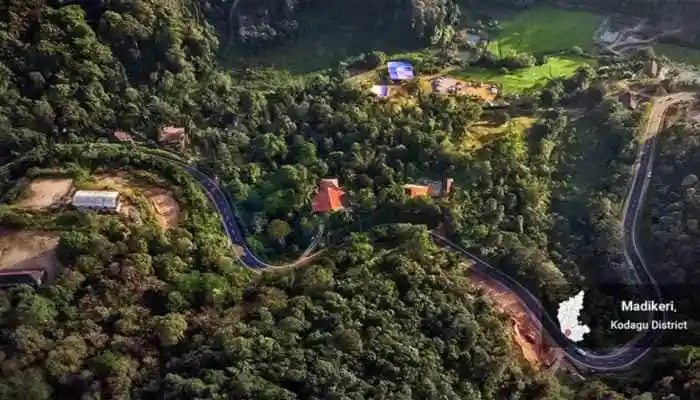
Explore The Scotland Of India – The Stunning Hill Station You Have Never Heard Of
Nestled in Karnataka's misty Western Ghats, Coorg mesmerises with rolling hills, lush coffee plantations and cultural treasures, earning it the nickname “Scotland of India.
Scotland of India: Nestled in the misty Western Ghats of Karnataka, Coorg or Kodagu is often hailed as the "Scotland of India”. This scenic hill station earned its nickname from British settlers who were mesmerized by its rolling hills, lush greenery and cool climate reminiscent of the Scottish Highlands. Beyond its natural beauty, Coorg is famous for sprawling coffee plantations, rich biodiversity and the sacred River Kaveri that begins its journey here. Each visit promises a mix of breathtaking landscapes and cultural heritage that makes it stand out among India's hill stations.
India is a land of endless variety, from snow-capped peaks in the north to serene beaches along the coast. Many destinations are so picturesque that they are compared to famous locations worldwide, some areas are called the “Switzerland of India”, while parts of Kashmir are dubbed “Mini Europe”.
Add Zee News as a Preferred Source
Among these, Coorg earns a special mention for its mist-covered hills and verdant valleys, making it the country's very own slice of Scotland.
The hill station's headquarters, Madikeri, is a hub of culture, history and nature. Known as the "Coffee Bowl of India", it produces both Robusta and Arabica coffee on its expansive estates.
The British were struck by its rolling hills, green valleys and cool weather, which reminded them of Scotland, thus giving it the iconic nickname.
It forms a part of the Western Ghats, recognised globally as one of the eight “hottest hotspots” of biodiversity, home to thousands of endemic plant and animal species.
The sacred River Kaveri originates from the Brahmagiri hills at the holy site of Talakaveri, serving as a lifeline for South India.
The Kodavas, Coorg's native community, are historically renowned for bravery and martial prowess, with many serving in the Indian armed forces.
Kodava men enjoy a unique privilege in India. They are exempt from the requirement of holding a firearm license.
Traditional Kodava attire stands out: men wear the Kupya and women drape sarees with pleats at the back.
Coorg is Karnataka's largest coffee producer, contributing significantly to India's total output.
The region's elevation and shade-grown coffee allow beans to mature slowly, concentrating their flavor and aroma.
Laterite soil, rich in iron and aluminum, dominates the area and supports coffee and cardamom cultivation.
Coorg experiences a Tropical Monsoon Climate, receiving heavy summer rainfall that sustains its evergreen forests and bountiful coffee plantations.
Virajpet in Coorg was historically one of Asia's largest honey-producing regions.
Coorg is home to Bylakuppe, India's second-largest Tibetan settlement, featuring the magnificent Namdroling Monastery, which is also called the Golden Temple.
Tadiandamol, the district's highest peak at 1,748 metres, is a popular trekking destination, while Pushpagiri stands as the second-highest.
The forests are predominantly Tropical Wet Evergreen and Semi-Evergreen, essential for maintaining the region's water cycles and carbon balance.
Omkareshwara Temple in Madikeri blends Gothic and Islamic architectural elements, with a dome and four minarets.
Dubare Elephant Camp, along the banks of the Kaveri, serves as a conservation and interactive centre, initially established for Mysore Dasara elephants.
Kodagu falls in seismic Zone II, but tectonic activity along the Western Ghats requires monitoring.
The Brahmagiri Wildlife Sanctuary preserves the Kaveri's catchment area, filtering water for downstream ecosystems and agriculture.
The moist climate supports dense epiphytic orchid growth, reflecting excellent air quality.
Morning mists result from the adiabatic cooling of moist air rising over the hills, creating Coorg's signature foggy vistas.
Dense canopy cover moderates the microclimate, keeping temperatures cooler and humidity higher than surrounding plains.
Coorg is more than a scenic hill station. It is a living ecosystem, a coffee haven and a repository of culture and tradition. Its rolling hills, cool climate and rich heritage make it deserving of its title as India's very own Scotland.
Source: ZeeNews
Related Posts: Some plants in the Western Ghats are sprouting cotton coats to protect buds From Misty Copeland to Maggie Rogers Rashmika Mandanna's Coorg-drape saree carries a rich cultural history Chhath ghats to election grounds J’khand HC refuses to vacate stay on sand ghats allocation as govt yet to frame PESA rules Discover four stunning waterfalls in Andhra Pradesh’s Eastern Ghats Ban on non-Hindus at Uttarakhand Ganga ghats should not be limited to devotees Pune’s Sahyadri Son To Kerala’s Ghats Guardian Devotees offer morning prayers at ghats across Bihar on last day of Chhath Puja Why does Amazon have no Western rivals

With big-budget spectacles and larger-than-life action becoming the norm, one upcoming Hindi film is now aiming for something Indian cinema has rarely explored in a full-fledged way… alien horror. Actor Akshay Kumar is set to headline Samuk, a sci-fi thriller centred around extraterrestrial
1 days ago

Kara OTT release: Dhanush's ₹50 crore heist film gets digital release in less than a month; when and where to watchKara OTT release: Vignesh Raja's Tamil film starring Dhanush and Mamitha Baiju was released in theatres on April 30. Know when and where to stream it online. May 24, 2026
1 days ago

The Supreme Court on Saturday registered a suo motu case in connection with the death of a woman in Madhya Pradesh, whose family has alleged that her in-laws harassed her for dowry, reported The Hindu. Chief Justice Surya Kant and Justices Joymalya Bagchi and Vipul Pancholi will hear the case on
1 days ago

Rare lung transplant at Apollo saves a life; spotlight on India's organ donor shortageRare lung transplant at Apollo saves a life; spotlight on India's organ donor shortage Published on: May 24, 2026 10:33 AM IST PTI Share via Copy link New Delhi, A year ago, every breath felt borrowed
1 days ago

Editorial independence is core to our work. Some links may earn us a commission, without influencing our opinions.These countertop organisers, crockery pick and jars can give your kitchen a Pinteresty spin by keeping the clutter awayTurn your kitchen into a photo-ready space with stylish organisers
1 days ago

Indian athletics witnessed a historic evening in Ranchi as Tejaswin Shankar became the first Indian ever to breach the 8000-point barrier in decathlon at the Federation Cup on Saturday. The 27-year-old produced a sensational all-round performance to finish with 8057 points
1 days ago

The Centre released draft rules for the Viksit Bharat – Guarantee for Rozgar and Ajeevika Mission (Gramin) Act, 2025 for public consultation. The rules focus on governance, grievance redressal, and transitioning from MGNREGA to the new rural employment scheme
1 days ago

The National Threat Analytics Unit of the Indian Cybercrime Coordination Centre (I4C) has warned of a sophisticated phishing campaign impersonating Apple tech support to target whose devices have been lost or stolen, officials said on Saturday.The I4C, which functions under the Union Home Ministry
1 days ago

Sachin Tendulkar praised his son Arjun's IPL debut for Lucknow Super Giants. Arjun Tendulkar showed patience and skill in his first match. He bowled well and took a wicket. Sachin Tendulkar expressed pride in his son's performance and attitude
1 days ago

White House shooting suspect claimed to be ‘real’ Osama bin Laden, threatened Trump online: ReportOsama bin Laden was the founder and leader of the terror group Al-Qaeda, which was reportedly responsible the 9/11 attacks. Updated on: May 24, 2026 11:02 AM IST By Anita Goswami Share via Copy
1 days ago

May 24, Birthday Horoscope: Here's what the tarot cards have in store for youIf your birthday falls on May 24, here’s what your year ahead looks like, as per Tarot. Published on: May 24, 2026 11:00 AM IST By Kishori Sud Share via Copy link If you were born on May 24
1 days ago

George Russell may have delivered the perfect answer to mounting pressure at Mercedes. After a fiery sprint race clash with championship-leading teammate Kimi Antonelli earlier on Saturday, the Briton bounced back in style to grab pole position for Sunday’s Canadian Grand Prix — edging the
1 days ago

BJP candidate Debangshu Panda is leading significantly in the Falta assembly constituency repoll. After five rounds of counting, Panda has secured a lead of over 14,000 votes against his CPI(M) rival. The repoll followed allegations of EVM tampering and irregularities during the initial polling
1 days ago

The suspect in a shooting near the White House was killed in an exchange of fire with Secret Service agents on Saturday evening, officials have confirmed. BBC's US media partner CBS has named the suspect as Nasire Best, a 21-year-old man who was known to the Secret Service and had a documented
1 days ago

CPI(M) MP raises concerns over CBSE's digital evaluation, seeks interventionCPI(M) MP raises concerns over CBSE's digital evaluation, seeks intervention Published on: May 23, 2026 5:22 PM IST PTI Share via Copy link New Delhi, The Rajya Sabha leader of the CPI, John Brittas
1 days ago

Imagine enjoying a decadent, fudge‑like treat that also supports your hormones, libido, and menstrual rhythm, all while being packed with collagen, magnesium, adaptogens, and lignan‑rich omega‑3s. These Seed Cycling Hormone Bliss Balls are designed around the simple yet powerful practice of
1 days ago

Weekly Love Horoscope for May 24-30, 2026: The stars brings positive energies for these zodiac signsWeekly Love Horoscope for May 24-30, 2026: This week asks for patience, trust, and emotional resilience. Published on: May 24, 2026 7:30 AM IST By Kishori Sud Share via Copy link Aries Love feels
1 days ago

From a darkly comic tale of revenge to a beautiful contemplation on friendship, here are the year's most acclaimed works of fiction so far. "Daring, deranged, cleverly written," is how Vogue describes the buzzy debut by Caro Claire Burke. In this satirical thriller
1 days ago

Overnight fires in Delhi: Shops, homes gutted in four blazesA fire department officer was injured after the tin shed of one of the shops he was standing on during the firefighting operation collapsed. Updated on: May 24, 2026 7:37 AM IST By Karn Pratap Singh Share via Copy link Four separate fire
1 days ago

As per the government, the new rules enable families living in Delhi to submit applications if their annual household income is within the newly prescribed limit. New Delhi: The Delhi government has reopened the process of issuing fresh ration cards under changed eligibility criteria after a gap of
1 days ago

The reported disruption of AI-animated film Critterz after OpenAI allegedly shut down Sora has sparked a larger conversation around one major issue in tech and entertainment: what happens when creators build entire projects on platforms they do not control?The reported disruption of AI-animated
1 days ago

Ex-Meta employee says non-Chinese workers were targeted for layoffsA laid-off Meta engineer has alleged that he was routinely excluded and ostracised by his Chinese colleagues at the company. Updated on: May 24, 2026 7:01 AM IST By Sanya Jain Share via Copy link A laid-off Meta engineer has alleged
1 days ago

Mackenzie Shirilla wanted Kim Kardashian's help; here's why it's not happeningMackenzie Shirilla sought Kim Kardashian's legal support following the release of The Crash documentary, but Kardashian reportedly has no plans to get involved. May 24, 2026
1 days ago

X warns founder against reuploading White House shooting video: 'Revenue reduced by 90%'Nikita Bier of X warned a user against reuploading the White House shooting video, asking him to ‘Quote’ or ‘Video Reshare’ instead. Updated on: May 24, 2026 6:14 AM IST By Sanya Jain Share via Copy link
1 days ago

Sonam Wangchuk says Article 371 talks for Ladakh still ‘work in progress’; backs Cockroach Janta PartySonam Wangchuk hoped constitutional safeguards will be granted to Ladakh after recent talks between Ladakh groups and the Centre. Updated on: May 24
1 days ago

Talking about international partnerships, PM Modi said India’s growing ties with global companies and countries would create new opportunities for young people. Prime Minister Narendra Modi distributed more than 51,000 appointment letters to newly recruited candidates during the 19th Rozgar Mela
1 days ago

Dipika Kakar’s father-in-law in ICU after suffering stroke, Shoaib Ibrahim seeks prayers: ‘24 hrs are crucial’Shoaib Ibrahim took to Instagram to inform fans that his father has been hospitalised once again after suffering another stroke. May 24, 2026
1 days ago


