Supreme Court to hear matter on statutory age of consent for adolescents on November 12
Supreme Court to hear matter on statutory age of consent for adolescents on November 12
The Supreme Court on Wednesday (September 24, 2025) set November 12 to hear the issue over the statutory age of consent for adolescents, saying it would rather hear it in “continuity” than a “piecemeal” manner.
The matter came up for hearing before a Bench of Justices Vikram Nath, Sandeep Mehta and N.V. Anjaria.
"We would prefer if the matter starts and continues rather than having it in piecemeal," the Bench said. The Bench fixed the matter on November 12, saying it would have continuous days of hearing.
The Centre has defended the statutory age of consent of 18 years, saying the decision was a "deliberate, well-considered, and coherent" policy choice aimed at shielding minors from sexual exploitation.
The Centre, in its written submissions through Additional Solicitor General Aishwaraya Bhati, argued that diluting the age of consent or introducing exceptions under the guise of adolescent romance would be not only legally unsound but also dangerous.
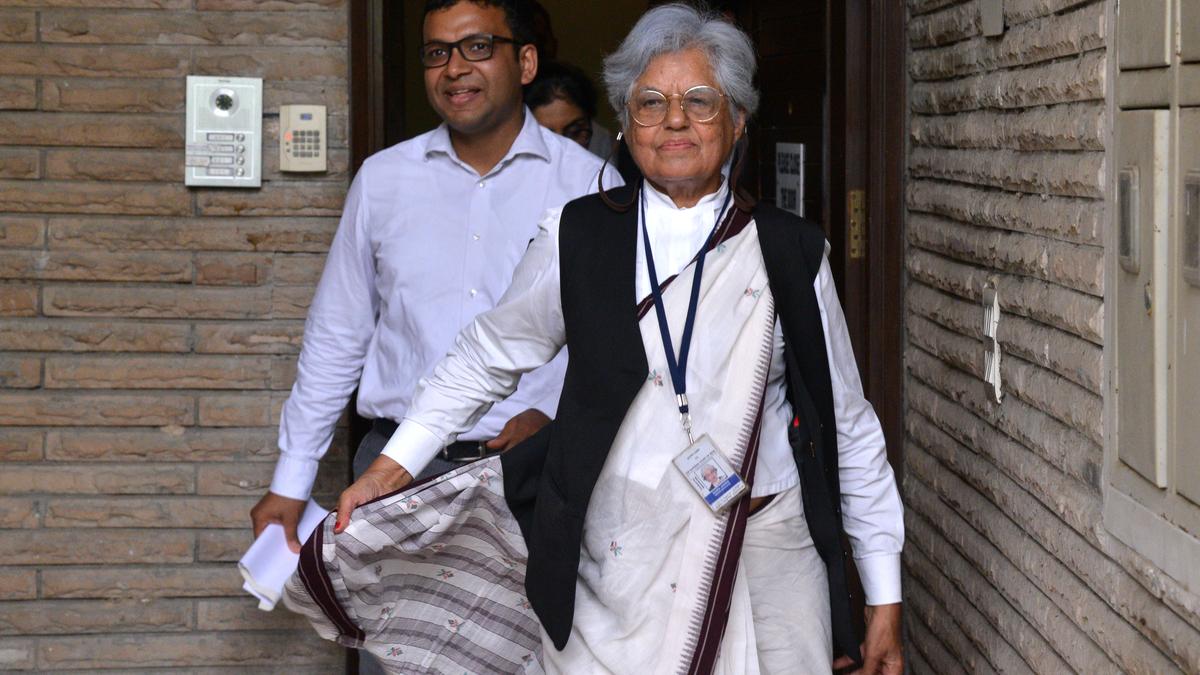
Senior Advocate Indira Jaising, assisting the Supreme Court as an amicus curiae, has urged the Supreme Court to read down the statutory age of consent from 18 to 16 years.
Advocate Jaising filed her written submissions challenging the blanket criminalisation of sexual activity involving adolescents aged 16 to 18 under the Protection of Children from Sexual Offences Act (POCSO), 2012 and Section 375 of the IPC.
On Wednesdsay (September 24), Advocate Jaising referred to a situation in which a person, aged between 16 and 18, gets involved in a consensual relationship and is prosecuted.
She said in "Nipun Saxena and others v. Union of India and others" the Supreme Court decided on separate issues.
She said the Nipun Saxena case and a separate suo motu case on the assessment of the criminal justice system in response to sexual offences were listed for hearing together before the Bench.
"We will deal with it as a whole. We will not segregate the issues. Let it open up, then we will see," the Bench said.
The Supreme Court was also informed about the intervention applications in the matter. "Can we stop lawyers from filing applications?" the Bench asked, asserting it was the Supreme Court's discretion whether or not to entertain.
Explained | Should the age of consent be changed for adolescents?
The Centre has said the existing statutory age of consent must be strictly and uniformly enforced.
"Any departure from this standard, even in the name of reform or adolescent autonomy, would amount to rolling back decades of progress in child protection law, and undermine the deterrent character of statutes like the POCSO (the Protection of Children from Sexual Offences) Act, 2012 and the BNS (Bharatiya Nyaya Sanhita)," it said.
The Centre further argued that the discretion on case-to-case basis must remain judicial and must not be read into the statute as a general exception or a diluted standard.
"Introducing a legislative close-in-age exception or reducing the age of consent would irrevocably dilute the statutory presumption of vulnerability that lies at the heart of child protection law. A diluted law risks opening the floodgates to trafficking and other forms of child abuse under the garb of consent," it said.
The existing age of consent ought to be retained in order to give full effect to the legislative intent, protect the bodily integrity of children, and uphold the constitutional and statutory safeguards accorded to them, it said.
Published - September 24, 2025 02:53 pm IST
India / Supreme Court / crime, law and justice / judiciary (system of justice)
Source: TheHindu
Related Posts: Supreme Court statutory age of consent for adolescents,SC hearing on November 12,Indira Jaising on age of consent in India,consent age from 18 to 16 years


