
Ask a sixteen-year-old about a social media ban, and you get an answer sharper than most adults arguing about bans. She says, “It doesn’t prepare us for the real world when we will have to deal with these distractions in our life”. The teenager’s response strikes at the core of the ban vs

How I got hooked on chasing solar eclipses Traveling the globe for celestial events may seem downright loony—until you get a taste of the addictive world of ‘eclipse chasing’ Published on: Aug 23, 2026, 18:30:10 IST WSJ Prefer HTon Google Share via Copy link ‘It was glorious

Made-in-India semiconductor chips are now powering key Indian space missions. These domestically manufactured components support lunar and solar exploration efforts. Specialized chips from Mohali's Semiconductor Laboratory are used in Chandrayaan-3 and Aditya-L1

India's space program began with a small rocket range in 1962. It progressed to launching its first satellite and developing indigenous launch vehicles. Chandrayaan-3's lunar landing marked a significant achievement for the nation. The program now includes private sector involvement and ambitious

India plans to establish its own space station by the year 2035. The first module for the Bharatiya Antariksha Station has already received approval. This ambitious project aligns with the nation's growing space capabilities and aspirations. National Space Day celebrates India's achievements and

India observed its third National Space Day, commemorating the Chandrayaan-3 lunar landing. ISRO Chairman Dr. V. Narayanan recalled the agency's humble beginnings and current global standing. He highlighted Chandrayaan-3's soft landing near the Moon's south pole in August 2023

The Indian government created the Indian Institutes of Science Education and Research (IISERs) to offer students an intellectually vibrant research environment and to bring them into research at a relatively — vis-à-vis the Indian milieu — early stage

Prime Minister Narendra Modi aims to lure global expertise to India's expanding space landscape. He identifies the private sector's potential as a crucial asset for global competition. Key advantages include India’s affordability and its appetite for innovation
India’s space programme, a people’s space journey
India’s space programme, a people’s space journey Premium
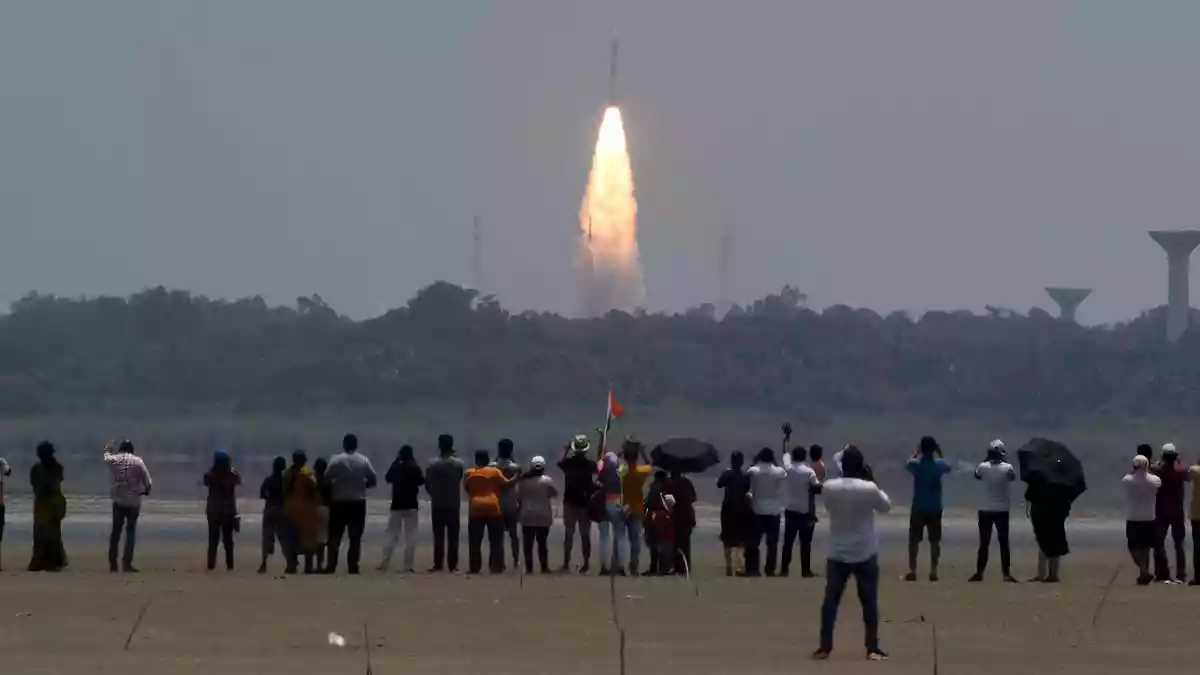
India's space journey has evolved beyond a string of spectacular missions. It has the national pulse and is a source of daily inspiration. In June 2025, when Group Captain Shubhanshu Shukla displayed the Tricolour aboard the International Space Station (ISS) and spoke to Prime Minister Narendra Modi, it was a moment of pride for every Indian. The Prime Minister called it a “defining chapter” of Amrit Kaal (‘era of nectar'), and for many, that moment felt like India's ascent was a part of their own heartbeat. It was not just science. It was identity being reshaped through vision and purposeful programmes.
That same spirit has been echoed earlier, on August 23, 2023, when Chandrayaan-3 made India the first nation to land near the lunar south pole. “India is now on the Moon,” declared Mr. Modi — words which rippled through classrooms, villages and living rooms alike. India's lunar programme has been truly path breaking: Chandrayaan-1 (2008) confirmed the presence of water molecules; Chandrayaan-2 (2019) mapped the moon with high precision and prepared the ground for Chandrayaan-3 (2023), which achieved the world's first soft landing near the south pole. When the Vikram lander and Pragyan rover explored the lunar surface for a full moon day, this led children to draw depictions of lunar landscapes in notebooks, it left researchers feeling vindicated, and inspired citizens who saw India's story in space as also their own future.
India has become a trusted global partner in space. Over 400 foreign satellites have been launched aboard Indian rockets. In 2014, India became the first Asian nation and only the fourth in the world to reach Mars orbit — and on its maiden attempt, with the Mars Orbiter Mission (Mangalyaan). The Aditya-L1 mission (2023), built through multi-institutional collaboration, is providing unprecedented insights into the sun's corona and its impact on space weather. XPoSat (2024) is studying black holes, while SpaDeX (2024) has demonstrated in-orbit docking for future space stations and lunar missions.
These milestones are reshaping policy, culture, and aspiration. The road map is bold: continuation of the Gaganyaan programme for human spaceflight, Chandrayaan-4 and 5 for deeper lunar exploration, a dedicated Venus mission, a Bharatiya Antariksh Station (BAS) by 2035, and an Indian human landing on the Moon by 2040. These are not distant dreams but national goals, aligned with the spirit of Amrit Kaal.
The Prime Minister has called for building a pool of 40 to 50 trained astronauts for future missions. On National Space Day 2025 (August 23), he urged young citizens to see themselves as participants in India's human space programme. Gaganyaan, with an approved outlay of over ₹20,000 crore, is advancing steadily. Four Indian Air Force test pilots are undergoing training, and a series of uncrewed and crewed flights will culminate in India's first indigenous human space mission, presently targeted for 2027.
Space technology today is woven into the fabric of governance and daily life. Satellites deliver disaster warnings, guide fishermen, assess crop yields and insurance claims, enhance railway safety, and power the geospatial backbone of the PM Gati Shakti programme. Space is no longer a distant luxury but a democratic utility — accessible to every citizen.
At the same time, space exploration fuels Science, Technology, Engineering and Mathematics (STEM) education, advanced research, and workforce development. Future-ready technologies in space operations autonomy, robotics, in-space manufacturing, surveillance and interplanetary travel are being developed, ensuring that India retains leadership in this strategic frontier.
The transformation of India's space sector is deliberate and ambitious. The opening of the field to private players, creating a thriving ecosystem of more than 350 startups building satellites, launch vehicles, and ground systems. The space budget has nearly tripled — from ₹5,615 crore in 2013-14 to ₹13,416 crore in 2025-26 — and has been augmented by nearly ₹5,000 crore in user funds. India's space economy, currently valued at $8 billion, is projected to grow to $44 billion in the years ahead, creating jobs, industries and innovations that orbit around this sector.
The Prime Minister has challenged the ecosystem to deliver five space unicorns within the next five years and to scale up annual launches, nearly ten-fold, to 50 a year. With private participation, India is advancing technologies related to semi-cryogenics, electric propulsion, quantum communication and in-orbit servicing.
Youth are at the heart of this vision. The International Olympiad on Astronomy and Astrophysics hosted in India (August 2025) drew nearly 300 participants from over 60 countries, with Indian students winning medals. Initiatives such as the ISRO Robotics Challenge and Indian Space Hackathon/Bharatiya Antariksh Hackathon are bringing school and college students into direct contact with rovers, satellites and rockets, building confidence that the laboratories and launchpads of tomorrow are theirs to claim.
At the policy level, the National Meet 2.0 held just before National Space Day produced 5,000-plus pages of documentation across 300 user interactions. This 15-year road map aligns every mission with the vision of Viksit Bharat 2047.
Space has been consistently projected as a global commons, where India's leadership translates into shared progress. The South Asia Satellite has provided neighbours with communication capacity, while during India's G-20 Presidency in 2023, India announced a “G20 satellite” for climate and environmental monitoring with data shared with all nations. Collaborative missions such as NASA-ISRO Synthetic Aperture Radar (NISAR) with the National Aeronautics and Space Administration (NASA), Thermal infraRed Imaging Satellite for High-resolution Natural resource Assessment (TRISHNA) with CNES (French space agency), Lunar Polar Exploration (LUPEX) with Japan Aerospace Exploration Agency (JAXA), and India's participation in the European Space Agency (ESA)'s Proba-3 demonstrate India's rise as a global partner, guided by the ethos of Vasudhaiva Kutumbakam (‘the world is one family').
India's space journey is more than rockets and satellites. It is about a nation discovering new ways to see itself. The salute of Shubhanshu Shukla aboard the ISS, the landing of Chandrayaan-3, 350 startups from small towns designing space systems, young students competing in Olympiads, and satellites quietly serving national security and citizen services are all part of the same story.
In this Amrit Kaal, India is not simply participating in the space age. It is shaping it. With ambition, confidence, and purpose, Bharat looks to the stars knowing that the horizon belongs to it too.
S. Somanath was former Secretary, Department of Space, and Chairman of the Indian Space Research Organisation (ISRO). He is now Distinguished Visiting Professor, Indian Institute of Science (IISc), Bengaluru, and Adviser (Space Technology), Government of Andhra Pradesh. The views expressed are personal
Published - January 01, 2026 12:16 am IST
India / space programme / India in Space / Prime Minister Narendra Modi / Asia / Mars Orbiter Mission / solar / weather / science (general) / armed Forces / technology (general) / engineering / mathematics / robotics / satellite technology / budgets and budgeting / award and prize / G-20 New Delhi 2023 / climate change
Source: TheHindu
Related Posts: India’s space journey,International Space Station ,Chandrayaan-3 and lunar south pole,Vikram lander and Pragyan rover ,India as trusted global partner in space

The Northeast India Space Workshop 2026 will convene in Guwahati to explore regional transformation. This event aims to leverage space technology for global reach and economic growth. Stakeholders will discuss Northeast India becoming a developer and testbed for space solutions
1 days ago

The dramatic 1° Celsius rise in global temperatures since industrialisation has already proved to have upended the lives of wild flora and fauna: that of at least 15,801 species on the Red List of Threatened Species, according to IUCN (International Union for Conservation of Nature)
2 days ago

India faces a substantial cost gap with the United States for launching payloads. A recent study estimates India's cost at over $13,000 per kilogram by 2025. This contrasts with the United States' estimated cost of $3,225 per kilogram. The study highlights scale and experience as key factors for
2 days ago

Prime Minister Narendra Modi encouraged young space entrepreneurs to innovate for agriculture and daily life. He highlighted the potential of India's private space sector for global impact. Startups were urged to engage with schools and inspire future generations
2 days ago

Rock-solid evidence for the origins of birds Stones in dinosaur stomachs may help understanding of avian evolution Published on: Aug 20, 2026, 21:09:09 IST The Economist Prefer HTon Google Share via Copy link How do you know what a dinosaur ate? Guts rot away after death
3 days ago

Was it meat or glucose that fueled the growth of the human brain? If evolutionary science told us, hitherto, that human brain expansion relied on meat to grow, a new study has an interesting addition to this theory. Published in a recent issue of Science
4 days ago

The Indian Space Research Organisation (ISRO) is set to launch the GISAT-1A satellite in September, in a mission that will be watched closely for many important reasons. Since the two successive PSLV mission failures, in 2025 and early 2026, ISRO had paused launches as it investigated the reason
4 days ago

The Hara forests are a vital ecological treasure of the Persian Gulf. Spanning the Strait of Hormuz, these mangrove forests consist mainly of grey mangrove trees (Avicennia marina), which have a special filtration system in their roots that allows them to thrive in saline conditions
5 days ago

India spends more to put a kilogram of payload into orbit than any other major spacefaring nation, marring its public image as a cost-effective launcher, according to a new peer-reviewed analysis of more than six decades of rocket launches published in Economics Letters
7 days ago

“The past is a foreign country; they do things differently there,” the English novelist L.P. Hartley wrote famously in his 1953 novel The Go-Between. In a peculiar twist, the same cannot be said of the Moon. It is not a foreign country, or even a foreign world: the U.S
7 days ago

The computer did not create a virus. It did not touch a test tube or handle a living cell. What it did may ultimately be more consequential: it helped decide what the virus’s genome should be. Researchers at Stanford University and the Arc Institute used artificial intelligence (AI) to design
8 days ago

Spectators across Spain watched in wonder, some whipping off their protective glasses and rising to their feet in unison, as a rare total solar eclipse swept across the north of the country on Wednesday (August 12, 2026) evening, plunging it into darkness
8 days ago

Japan's MMX mission will blast off soon to collect Martian moon samples. The spacecraft will orbit Mars for three years and land on Phobos. This mission aims to understand Solar System origins and life's emergence. A rival Chinese mission also plans to return Mars samples around 2031
8 days ago

Draft rules for the SHANTI Act, 2025, mandate financial security for nuclear damage. Operators must maintain insurance or financial security until spent fuel removal. Foreign reactor designs require certification by their country of origin's regulatory body
9 days ago

As a total solar eclipse will be visible in parts of Europe on August 12 for the first time since 1999, solar physicists at the Raman Research Institute (RRI) in Bengaluru, along with collaborators, have predicted the magnetic structure of the Sun’s outer atmosphere, or its ‘crown’
9 days ago

When a young man was brought to my clinic after his first episode of psychosis, his parents wanted to know when he could return to college. This is not an atypical first interaction. However, in many instances, after a few consultations later and especially once the immediate crisis had settled
11 days ago

Some people can live apparently ordinary lives even when both copies of a gene (one inherited from the mother and the other from the father) have stopped working. Until their DNA is sequenced, they may never know that this has happened. A large study from Pakistan, published in Nature (June 2026)
11 days ago

Physicist Deepak Dhar received the 2026 Dirac Medal for his statistical mechanics work. He shares the award with three other scientists for their complex systems research. Their contributions span biology, finance, computer science, and artificial intelligence
12 days ago

Colombia and Venezuela experienced deadly earthquakes due to tectonic plate friction. The Nazca plate sliding beneath the South American plate caused tremors. Earthquake magnitude and depth significantly influenced the destructive impact. Building codes and terrain also played crucial roles in the
12 days ago
India has been invited to join NASA's Moon Base program. Discussions focused on expanding civil and commercial space cooperation. Both nations agreed to advance open scientific data sharing under Artemis Accords. They also reaffirmed commitment to UN guidelines for outer space sustainability
12 days ago

A team led by researchers at the Johns Hopkins School of Medicine has found that several inherited traits in the mouse genome break the rules Gregor Mendel laid down in the 19th century about how genes work. This is not because the genes mutate but because of chemical modifications of the genome
13 days ago

Urban India’s water emergency will not be fixed by better crisis management alone. Over the coming decades, hundreds of millions more people will live and work in Indian cities, driving a sharp increase in the urban water demand. And unless we change how we design, finance
15 days ago

IN-SPACe seeks private partners to manage ISRO's new launch complex. This facility will support small rocket launches and enhance launch efficiency. Private entities will handle end-to-end operations and maintenance of the complex. ISRO will provide initial technical and operational support for
15 days ago

NASA astronauts Anil Menon and Jessica Meir on Friday (August 6, 2026) concluded their spacewalk outside the International Space Station to assemble the modification kit for its power channel that would allow addition of solar arrays. The spacewalk – 281st in support of the space station –
15 days ago

The gut microbiomes of eight tribal populations across India have a unique diversity shaped by their traditional diets, and are distinct from those observed in industrialised settings, researchers have reported in Gut Microbes. The effects of probiotics depend on a population’s diet and gut
15 days ago

Five minutes past noon on July 18, the launch pad of Satish Dhawan Space Centre in Sriharikota roared back to life after a gap of 187 days. The last launch from the space port was on January 12, 2026, involving the PSLV-C62 mission carrying the EOS-N1 earth observation satellite
15 days ago

A lettuce that makes meat protein: The science behind engineering plants to grow an animal molecule & why it matters The study established proof of concept, but lettuce with meat protein is still some distance from ending up in your burger. Updated on: Aug 7, 2026
16 days ago


