
The Delhi High Court has stayed proceedings in a criminal defamation case filed against Sudarshan TV and its editor Suresh Chavhanke in connection with allegations that his channel made false accusations against a madrasa. The case against Chavhanke was filed by Mohammed Tufail Khan

China said on Sunday (August 23, 2026) it was postponing its planned ambitious Chang'e-7 lunar mission, which was set to carry out explorations including searching for water ice on the moon. The Chang'e-7 spacecraft was originally set to lift off in the coming days from the Wenchang Space Launch

Canada’s Carney Puts His ‘No Deal Is Better Than a Bad Deal’ Doctrine to the Test The prime minister ’s approach has broad support from the Canadian public and his political opponents, but it isn’t without risks. Published on: Aug 24, 2026, 14:05:27 IST WSJ Prefer HTon Google Share via

A group of former cricket captains, including Indian batting legend Sunil Gavaskar and one of England's longest-serving skippers Sir Alastair Cook, have called on Pakistan to ensure its ex-PM Imran Khan be given proper care while in custody. The cricketer-turned-politician has been in jail since

Fewer than 20 commodity vessels transited the Strait of Hormuz at the weekend, shipping data showed on Monday (August 24, 2026), as Iranian and U.S. blockades restrict traffic through the chokepoint for energy shipments. Four vessels crossed the strait on Sunday (August 23, 2026)
Bangladesh’s reform plan is trapped in a legal design of its own making
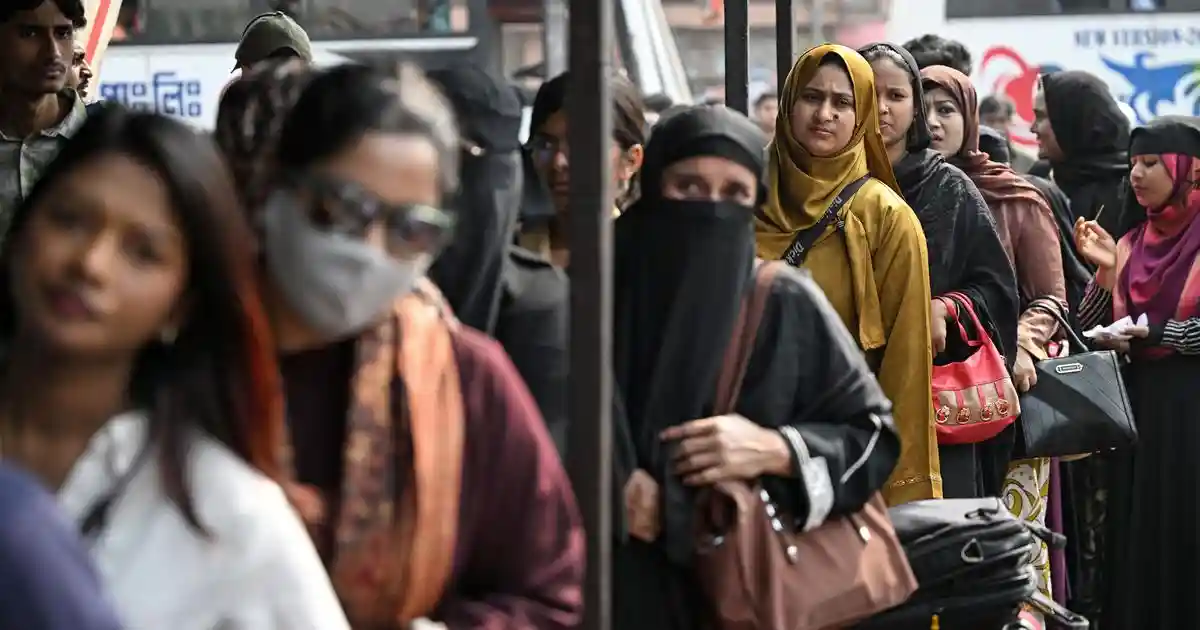
Bangladesh’s current reform deadlock is rooted in how a set of legal instruments including the July Charter, the referendum ordinance and related constitutional mechanisms were constructed by the country’s erstwhile interim administration to depend on one another.
The July Charter was drafted by a Consensus Commission established in the aftermath of political unrest and mass mobilisation, when the interim government led by Mohammed Yunus attempted to convert demands for institutional reform into a binding framework following the fall of Sheikh Hasina’s 15-year autocratic rule in August 2024.
After more than ten months of negotiations involving political parties, civil society, and legal experts, the Charter was finalised, signed, and published. It was officially unveiled in Dhaka in mid-October.
The document proposed several major reforms, including limiting any prime minister to two terms, converting Bangladesh’s unicameral legislature into a bicameral one, and strengthening judicial independence through the creation of a separate secretariat, among other changes.
Instead of proceeding directly through constitutional amendments, as there was no active parliament during the interim period, the process relied heavily on executive ordinance issued by the president of Bangladesh and a referendum mechanism to generate legitimacy. That design choice now defines the crisis.
The July Charter is not a standalone declaration. Its implementation order requires a referendum to validate core reform points. That requirement led to the referendum ordinance, issued by Yunus in November, which codified a list of 30 agreed reform items and embedded them into referendum questions.
Those questions were then aligned with the electoral timetable of the country’s Election Commission. The result is a closed loop: the Charter mandates the referendum; the referendum operationalises the Charter; and both are tied to the election process that is supposed to institutionalise the outcome.
The national election was held on February 12, alongside the referendum on the same day. The Bangladesh Nationalist Party secured a two-thirds majority in parliament, giving it the authority to amend the constitution through its legislative mandate.
At the same time, the referendum produced a “yes” outcome, which – under the referendum Ordinance – established a Constitutional Reform Council tasked with overseeing constitutional amendments. This body is designed to include representatives from both the treasury benches and the opposition.
Members from the opposition bloc, composed of Jamaat-e-Islami and Nationalist Citizen Party took oath as both lawmakers and members of the Constitutional Reform Council while Bangladesh Nationalist Party lawmakers only took oath as the members of parliament.
Bangladesh Nationalist Party MPs, explaining why they took only one oath, argued that constitutional reform should be carried out exclusively through parliament. Home Minister Salahuddin Ahmed said the existing constitution already outlines clear procedures for making amendments. Any body empowered to undertake constitutional reform would itself need to be established through parliamentary legislation, he contended.
This position reflects both legal and political calculations. With a two-thirds majority, the Bangladesh Nationalist Party already possesses sufficient authority to amend the constitution under current provisions. Keeping the reform process within parliament enables the ruling party to retain direct control over both the pace and scope of institutional change.
However, the opposition bloc argued that a temporary, parliament-backed council, such as a Constitutional Reform Council, could create a platform to consider broader structural reforms without immediately confronting constitutional limitations.
They believe such a body would operate like a constituent assembly, enabling political stakeholders to negotiate institutional changes before formally embedding them in the constitutional framework.
Shishir Manir, a senior advocate of the Bangladesh Supreme Court who contested the last election with a Jamaat ticket, stated that without establishing a Constitutional Reform Council, there is no clear path forward for the reform process. He noted that the council is mandated by the July Charter, which is connected to the July Charter Ordinance and, in turn, linked to both the referendum and the referendum ordinance.
This interdependence is central to the legal problem. The framework was built as a chain, instead of separate instruments. As one legal argument puts it, these components function as “inseparable” parts of a single structure.
If the referendum ordinance is allowed to lapse by the current parliament, the Charter’s implementation mechanism disappears. If that mechanism collapses, the referendum questions lose legal grounding. If those questions are undermined, the electoral timetable linked to them becomes exposed. The framework does not allow for clean separation.
That is why the current proposal by the treasury bench to treat the referendum ordinance as infructuous creates a contradiction. If it is allowed to lapse, Manir argued, this will be equivalent to invalidating the legal basis of a referendum while continuing to rely on its results. The inconsistency is difficult to sustain in law. If the instrument is void, its outputs are open to challenge. If the outputs are valid, the instrument cannot be treated as irrelevant.
Bangladesh’s constitution does not provide a clear way out. The country operates under a parliamentary system where the legislature is empowered to pass laws and approve or reject ordinances, while courts retain the authority to review them.
But the current reform framework sits in an ambiguous space between ordinary legislation and constitutional change. The referendum mechanism itself is a source of confusion. It was once part of the constitutional structure but was removed through later amendments.
Its reappearance through an ordinance – rather than a constitutional amendment – creates a gray zone: a quasi-constitutional process without explicit constitutional grounding.
Salahuddin Ahmed, the Bangladesh Nationalist Party lawmaker, argued in parliament that since 1973, no major decision – such as holding a referendum – has been carried out through a presidential ordinance while the country has been under a parliamentary system.
Bangladesh has experienced three distinct political phases: a parliamentary system from 1972 to 1975, a presidential or quasi-presidential system from 1975 to 1990, and a return to parliamentary democracy from 1991 onward.
However, historical precedent adds to the ambiguity rather than resolving it. A referendum law introduced in the early 1990s continued to exist even after constitutional provisions for referendums were altered, suggesting that statutory tools can outlive their original constitutional context.
But that precedent does not answer the central question now: whether a referendum conducted under an ordinance can bind future legislative or constitutional decisions. The current framework assumes that it can; the constitution does not explicitly confirm it.
This uncertainty is where the ruling Bangladesh Nationalist has positioned itself. Its formal argument is procedural and, on its face, consistent with constitutional orthodoxy: reforms must be anchored in the constitution, not in temporary ordinances.
In practice, however, this position aligns with allowing key reform ordinances to lapse or be rewritten. These include measures affecting judicial appointments, anti-corruption oversight and human rights enforcement – areas widely seen, both domestically and internationally, as central to institutional reform.
Opposition groups and reform advocates interpret this stance differently. Their argument is that the Bangladesh Nationalist Party is using constitutional ambiguity to avoid committing to substantive change.
They point to a pattern that less consequential ordinances are accepted or left untouched by the treasury bench, while those that redistribute power or constrain executive influence are targeted by them [treasury bench] for removal.
From this perspective, the issue is not legal consistency but political intent. The charge is that the ruling party supports procedural legitimacy while resisting structural reform.
The legal structure itself reinforces this political divide. Several of the contested ordinances, particularly those issued during the 2007-2008 caretaker period, were later placed before parliament and enacted into law, leading courts to accept them despite questions over their origin.
At the same time, the judiciary has drawn firm limits on executive overreach. In Abdul Mannan Khan v. Government of Bangladesh the appellate division ruled that repeated re-promulgation of ordinances without parliamentary approval amounted to a “fraud on the constitution”, underscoring that such powers cannot substitute for legislative authority.
The Charter, the referendum ordinance and the election schedule are cross-referenced and mutually dependent. Removing one element risks undermining the logic of the others. The framework was designed to lock reforms together; it now resists partial dismantling.
There is also a consistency gap in the current approach. Some legal authorities have suggested that actions taken under certain ordinances – such as appointments or institutional changes – can be preserved even if the ordinances themselves are repealed.
That creates a disjunct between legal authority and legal outcome. If the authority is removed, the status of the outcomes becomes contestable. This will be like preserving administrative decisions while discarding the law that authorised them.
The broader issue is that the reform process has not reached a stable legal endpoint. It began as a political response to public pressure, was translated into ordinances and partially validated through a referendum. But it has not been fully integrated into the constitutional framework. Until that integration occurs, every component remains vulnerable – to legislative reversal, judicial challenge, as well as political reinterpretation.
This is the core of the deadlock. The government cannot easily dismantle the framework without destabilising its legal coherence. The opposition bloc cannot fully endorse it without accepting a process that stretches constitutional boundaries. Parliament retains formal authority but operates within a system where each decision has cascading legal consequences.
The core debate is therefore not only about whether reform should proceed, but whether the legal architecture built to deliver it can withstand selective change.
Faisal Mahmud is a journalist and analyst.
Source: Scroll
Related Posts: World, Bangladesh, Bangladesh reform, Bangladesh referendum

India had asked the United States not to allow reporters to ask questions during Prime Minister Narendra Modi’s meeting with President Donald Trump on the sidelines of the G7 summit in France in June, US Ambassador to India Sergio Gor said on Saturday
8 hours ago

Former Australian captain Greg Chappell with the support of 20 other former international skippers appealed to the Pakistan Government led by Prime Minister Muhammad Shehbaz Sharif, to provide ‘humane treatment and proper medical care’ for Imran Khan
11 hours ago

The shock resignation of Tata Sons chairman N Chandrasekaran earlier this month has left corporate India's top job vacant. But finding his successor will be no easy task for the country's most revered conglomerate, whose sprawling $300bn empire spans Jaguar Land Rover and Air India as well as
11 hours ago

Iran's President Masoud Pezeshkian defended a memorandum of understanding with the United States as the best way out of a stalled war. Meanwhile, the new head of the Islamic Republic's top security body warned, in a more forceful tone, of retaliation if neighbouring countries support U.S
11 hours ago

Authorities in China have launched an investigation into reports of formaldehyde being used to preserve the freshness of cabbages for human consumption. Officials in the northeastern Hebei province confirmed that they had verified footage showing individuals dipping cabbages in a solution before
11 hours ago

Three newborns died after a fire that broke out in the neonatal intensive care unit of a government hospital in Maharashtra’s Amravati district in the early hours of Monday, PTI reported. The fire broke out at the Amravati District Women’s Hospital around 3
11 hours ago

Imran's party demands immediate cardiac care for him at Shifa International Hospital Imran's party demands immediate cardiac care for him at Shifa International Hospital Published on: Aug 24, 2026, 11:10:49 IST PTI Prefer HTon Google Share via Copy link Islamabad
11 hours ago

Japanese Prime Minister Sanae Takaichi’s three-day visit to New Delhi in July 2026 for the India-Japan summit appears to have elevated relations between the two Asian countries into a fresh phase of strategic expansion. Ties had already undergone a remarkable transformation over the past decade
11 hours ago

How well do COVID antivirals actually work? Not as well as we thought How well do COVID antivirals actually work? Not as well as we thought Published on: Aug 24, 2026, 11:11:50 IST PTI Prefer HTon Google Share via Copy link Sydeny, If you're aged over 70
11 hours ago

On Sunday, in a post on X, Wali said the audio contained "explosive evidence" and claimed that Brar admitted his gang had ordered Nijjar's killing, alleging that the assassination was driven by an inter-gang feud. Ottawa: Three years after NIA designated terrorist Hardeep Singh Nijjar was killed in
14 hours ago

Until recently, there would have been little to distinguish Vietnam's so-called Justice Tree from the hundreds of others lining the streets of Hanoi. Then the bouquets started piling up. It was here that former politician Nguyen Sy Cuong was driving his BMW in May last year when he veered into the
14 hours ago

Fast-fashion giant Shein says it plans to raise up to HK13.86bn (£1.3bn; $1.77bn) when its shares start trading on the Hong Kong stock market on 1 September. In a filing on Monday, Shein said it will offer nearly 280 million shares for between HK$47.60 and HK$49.50
14 hours ago

A fast-moving, wind-driven wildfire near Reno, Nevada, has forced about 42,000 people to evacuate, while another 45,000 have been urged to prepare to leave. The Hawk Fire has burned 15,040 acres, destroyed some homes and injured six people. Officials declared a state of emergency as the blaze
14 hours ago

Former Indian diplomat Navdeep Suri has raised concerns about the verification process under the Special Intensive Revision of electoral rolls. Suri, a retired Indian Foreign Services officer, went through the process in Punjab. It is among the 16 states where the voter roll revision is being
14 hours ago

A moderate earthquake with a preliminary magnitude of 5.9 rattled eastern Japan, including the Tokyo area, early Sunday (August 23, 2026), injuring more than 20 people, most of them slightly, officials said. There was no danger of a tsunami. According to the Japan Meteorological Agency
1 days ago

Chinese humanoid robots broke records set by humans, including beating Usain Bolt’s 100-meter sprint world record, on the opening day of the Olympics-like World Humanoid Robot Games in Beijing on Saturday (August 22, 2026). More than 2,000 humanoid robots were participating in the event
1 days ago

One afternoon in 1907, a young accountant named Chandrasekhar Venkata Raman walked into the laboratory of the Indian Association for the Cultivation of Science at 210 Bowbazar Street in Calcutta. Though he had a passion for the sciences, colonial India offered no stable careers in the field
1 days ago

Three first information reports were filed against 14 identified and more than 200 unidentified persons on Saturday in connection with clashes between the police and student protesters a day earlier, PTI quoted Ranchi Superintendent of Police Paras Rana as saying
1 days ago

Did an Amazon delivery guy assault a 71-year-old man in California? What we know about the attack and lawsuit A California lawsuit alleged that an Amazon delivery driver assaulted a 71-year-old man at an Elk Grove gas station. Updated on: Aug 23, 2026
1 days ago

‘Pure evil’: Videos of mothers splashing water at their kids spark outrage amid Lindsay Clancy trial Social media videos of mothers throwing water at their children have sparked concerns amid Lindsay Clancy's trial. Published on: Aug 23, 2026
1 days ago

The sister of jailed former Pakistan Prime Minister Imran Khan on Saturday (August 22, 2026) filed a petition in the Supreme Court, accusing the government and senior officials of violating the top court’s order to shift him to a private hospital for medical examination and treatment
1 days ago

The United States and Canada have entered into uncharted territory. The longtime allies and economic partners, who have enjoyed free trade for decades, are now in an escalating trade war with no clear off ramp. And for Prime Minister Mark Carney
1 days ago

Harrisburg weather update: Special Weather Statement issued for central Pennsylvania as thunderstorms bring 40mph wind NWS has issued a Special Weather Statement for Harrisburg and surrounding parts of central Pennsylvania. Published on: Aug 23, 2026
1 days ago

The police in Maharashtra’s Latur have registered a first information report against Abhijeet Dipke, the founder of the Cockroach Janta Party political campaign, for allegedly entering a government school without permission, threatening teachers and defaming the institution
1 days ago

The United States and Iran exchanged defiant messages ahead of Monday’s (August 24, 2026) scheduled announcement of new U.S. economic sanctions that could impact the Islamic Republic and Tehran’s most important trading partners including China
1 days ago

Fourteen people were killed in military air strikes at a monastery in Myanmar early on Friday, opposition fighters and a local rescue worker have said. All of those killed were elderly and a number of monks were also injured, the rescue worker told BBC Burmese, adding that the site was struck twice
1 days ago

The Armed Forces Tribunal on Thursday upheld an administrative censure for a brigadier who was commanding a sector of the Rashtriya Rifles in Jammu and Kashmir’s Poonch district in December 2023 when three civilians died during an interrogation following a militant attack
1 days ago


