
Ask a sixteen-year-old about a social media ban, and you get an answer sharper than most adults arguing about bans. She says, “It doesn’t prepare us for the real world when we will have to deal with these distractions in our life”. The teenager’s response strikes at the core of the ban vs

How I got hooked on chasing solar eclipses Traveling the globe for celestial events may seem downright loony—until you get a taste of the addictive world of ‘eclipse chasing’ Published on: Aug 23, 2026, 18:30:10 IST WSJ Prefer HTon Google Share via Copy link ‘It was glorious

Made-in-India semiconductor chips are now powering key Indian space missions. These domestically manufactured components support lunar and solar exploration efforts. Specialized chips from Mohali's Semiconductor Laboratory are used in Chandrayaan-3 and Aditya-L1

India's space program began with a small rocket range in 1962. It progressed to launching its first satellite and developing indigenous launch vehicles. Chandrayaan-3's lunar landing marked a significant achievement for the nation. The program now includes private sector involvement and ambitious

India plans to establish its own space station by the year 2035. The first module for the Bharatiya Antariksha Station has already received approval. This ambitious project aligns with the nation's growing space capabilities and aspirations. National Space Day celebrates India's achievements and
AI models ace their predictions of India’s monsoon rains
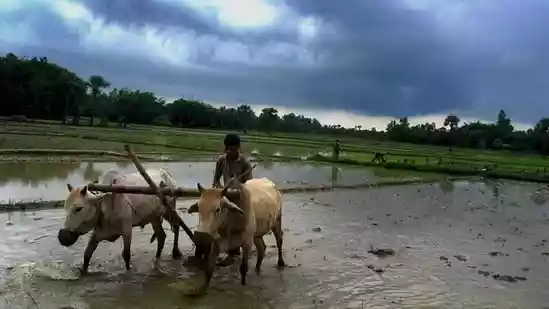
The Indian monsoon, which usually begins its slow northward sweep around the start of June, brings three-quarters of the country's annual rainfall. That makes it essential for agriculture, on which almost half of Indians depend. But the monsoon is notoriously hard to predict. It is driven by differences in temperature between land and sea, the amount of snow cover on the Himalayas, soil moisture and many other far-flung influences. And climate change is making the guessing game even harder.
The India Meteorological Department (IMD) does its best, using the numerical weather prediction (NWP) models that have been a staple of meteorology for decades. Run on supercomputers, these divide the world into a three-dimensional grid, populate each box with variables representing temperature, pressure, wind speed and so on, and then crunch through zillions of calculations to try to simulate how things will evolve over time. Those models allow the IMD to offer broad guidance—such as whether to expect more rain than usual, or less—a month or so ahead. But detailed information about what the rains will do day-by-day is not considered reliable more than about five days out.
This year, though, the Indian government tried something new. About 38m farmers received forecasts generated not by an NWP model, but by ones powered by artificial intelligence (AI) instead. These work in a different way: rather than going to the trouble of trying to simulate, equation by equation, exactly what is going on in the atmosphere, they mostly make their predictions by comparing the patterns they see in weather data with previous, similar patterns in the historical weather records on which they have been trained.
The models aced their test. In some regions, they predicted when the rain would arrive 30 days ahead. They also forecast that rainfall would stall in the middle of the season—as it did, for 20 days—despite this not appearing in the NWP forecasts. Almost half of the farmers who paid attention to the messages later said that the information influenced their decisions on what to plant and when—though it is still too early to assess whether this will influence their eventual earnings.
None of this would have been possible even five years ago. But in 2022 Nvidia, an American chip designer, published the first results from FourCastNet, an AI weather program trained on decades of weather data. The company claimed that it accurately predicted hurricanes and rainfall a week in advance with just two seconds of computing time—thousands of times less than what an NWP model needs. Tech firms and weather agencies began racing to build their own.
It quickly became apparent that relying solely on AI came with problems of its own. Unconstrained by the laws of physics, forecasts could become worryingly unrealistic. Fed only past data, the models often struggled to predict rare or extreme events—the same “edge case” problem that has dogged driverless cars.
So the focus switched to trying to combine the best of the old and the new. One of the two models used to forecast this year's monsoon was developed by the European Centre for Medium-Range Weather Forecasts (ECMWF), an institute widely considered the world's best, for use alongside its existing NWP software. The other was a version of Google's NeuralGCM, which still grinds through calculations to represent big atmospheric processes, but then uses AI to fill in the details.
Pedram Hassanzadeh, an AI and extreme-weather researcher at the University of Chicago, thinks AI models could lead to a “democratisation of weather forecasting”. Numerical forecasts demand supercomputers and plenty of weather-observing stations to supply them with numbers. Poor countries often lack both.
The Human-Centered Weather Forecasts Initiative (HCF), which Dr Hassanzadeh helps lead, encourages governments to use AI to overcome both barriers. India's monsoon project, which was co-ordinated by the HCFI, used models that, once trained, could run on a high-end laptop. They could also be tweaked to focus on the best-quality data that were available. In India's case, that meant a long-running set of readings from rain gauges.
The HCF has funding (from the Gates Foundation, a big charity, and the United Arab Emirates) for similar work in east and west Africa. Like India, both regions experience distinct rainy seasons. It is teaching meteorological and agricultural officials from Bangladesh, Chile, Ethiopia, Kenya and Nigeria how to use AI weather models for their own particular needs.
Other bottlenecks are easing too. Like numerical models, AI models still depend on data assimilation—the process of converting messy observations from satellites and weather stations into a well-ordered snapshot of the atmosphere. That work remains concentrated among rich-country agencies with the resources to do it.
Hence the excitement when the ECMWF announced in October that it would make both its most up-to-date forecasts and its assimilated data freely available (it has already opened its historical archive). Some of that will be used by private companies employing AI weather forecasts to anticipate disruptions to their supply chains or make trading decisions. But it will also help many who previously struggled to get good forecasts at all.
Get 360° coverage—from daily headlines
to 100 year archives.
Source: HindustanTimes
Related Posts: Indian monsoon,agriculture,climate change,artificial intelligence,weather forecasting

India observed its third National Space Day, commemorating the Chandrayaan-3 lunar landing. ISRO Chairman Dr. V. Narayanan recalled the agency's humble beginnings and current global standing. He highlighted Chandrayaan-3's soft landing near the Moon's south pole in August 2023
1 days ago

The Indian government created the Indian Institutes of Science Education and Research (IISERs) to offer students an intellectually vibrant research environment and to bring them into research at a relatively — vis-à-vis the Indian milieu — early stage
1 days ago

Prime Minister Narendra Modi aims to lure global expertise to India's expanding space landscape. He identifies the private sector's potential as a crucial asset for global competition. Key advantages include India’s affordability and its appetite for innovation
1 days ago

The Northeast India Space Workshop 2026 will convene in Guwahati to explore regional transformation. This event aims to leverage space technology for global reach and economic growth. Stakeholders will discuss Northeast India becoming a developer and testbed for space solutions
1 days ago

The dramatic 1° Celsius rise in global temperatures since industrialisation has already proved to have upended the lives of wild flora and fauna: that of at least 15,801 species on the Red List of Threatened Species, according to IUCN (International Union for Conservation of Nature)
2 days ago

India faces a substantial cost gap with the United States for launching payloads. A recent study estimates India's cost at over $13,000 per kilogram by 2025. This contrasts with the United States' estimated cost of $3,225 per kilogram. The study highlights scale and experience as key factors for
2 days ago

Prime Minister Narendra Modi encouraged young space entrepreneurs to innovate for agriculture and daily life. He highlighted the potential of India's private space sector for global impact. Startups were urged to engage with schools and inspire future generations
2 days ago

Rock-solid evidence for the origins of birds Stones in dinosaur stomachs may help understanding of avian evolution Published on: Aug 20, 2026, 21:09:09 IST The Economist Prefer HTon Google Share via Copy link How do you know what a dinosaur ate? Guts rot away after death
3 days ago

Was it meat or glucose that fueled the growth of the human brain? If evolutionary science told us, hitherto, that human brain expansion relied on meat to grow, a new study has an interesting addition to this theory. Published in a recent issue of Science
4 days ago

The Indian Space Research Organisation (ISRO) is set to launch the GISAT-1A satellite in September, in a mission that will be watched closely for many important reasons. Since the two successive PSLV mission failures, in 2025 and early 2026, ISRO had paused launches as it investigated the reason
4 days ago

The Hara forests are a vital ecological treasure of the Persian Gulf. Spanning the Strait of Hormuz, these mangrove forests consist mainly of grey mangrove trees (Avicennia marina), which have a special filtration system in their roots that allows them to thrive in saline conditions
5 days ago

India spends more to put a kilogram of payload into orbit than any other major spacefaring nation, marring its public image as a cost-effective launcher, according to a new peer-reviewed analysis of more than six decades of rocket launches published in Economics Letters
7 days ago

“The past is a foreign country; they do things differently there,” the English novelist L.P. Hartley wrote famously in his 1953 novel The Go-Between. In a peculiar twist, the same cannot be said of the Moon. It is not a foreign country, or even a foreign world: the U.S
7 days ago

The computer did not create a virus. It did not touch a test tube or handle a living cell. What it did may ultimately be more consequential: it helped decide what the virus’s genome should be. Researchers at Stanford University and the Arc Institute used artificial intelligence (AI) to design
8 days ago

Spectators across Spain watched in wonder, some whipping off their protective glasses and rising to their feet in unison, as a rare total solar eclipse swept across the north of the country on Wednesday (August 12, 2026) evening, plunging it into darkness
8 days ago

Japan's MMX mission will blast off soon to collect Martian moon samples. The spacecraft will orbit Mars for three years and land on Phobos. This mission aims to understand Solar System origins and life's emergence. A rival Chinese mission also plans to return Mars samples around 2031
8 days ago

Draft rules for the SHANTI Act, 2025, mandate financial security for nuclear damage. Operators must maintain insurance or financial security until spent fuel removal. Foreign reactor designs require certification by their country of origin's regulatory body
9 days ago

As a total solar eclipse will be visible in parts of Europe on August 12 for the first time since 1999, solar physicists at the Raman Research Institute (RRI) in Bengaluru, along with collaborators, have predicted the magnetic structure of the Sun’s outer atmosphere, or its ‘crown’
9 days ago

When a young man was brought to my clinic after his first episode of psychosis, his parents wanted to know when he could return to college. This is not an atypical first interaction. However, in many instances, after a few consultations later and especially once the immediate crisis had settled
11 days ago

Some people can live apparently ordinary lives even when both copies of a gene (one inherited from the mother and the other from the father) have stopped working. Until their DNA is sequenced, they may never know that this has happened. A large study from Pakistan, published in Nature (June 2026)
11 days ago

Physicist Deepak Dhar received the 2026 Dirac Medal for his statistical mechanics work. He shares the award with three other scientists for their complex systems research. Their contributions span biology, finance, computer science, and artificial intelligence
12 days ago

Colombia and Venezuela experienced deadly earthquakes due to tectonic plate friction. The Nazca plate sliding beneath the South American plate caused tremors. Earthquake magnitude and depth significantly influenced the destructive impact. Building codes and terrain also played crucial roles in the
12 days ago
India has been invited to join NASA's Moon Base program. Discussions focused on expanding civil and commercial space cooperation. Both nations agreed to advance open scientific data sharing under Artemis Accords. They also reaffirmed commitment to UN guidelines for outer space sustainability
12 days ago

A team led by researchers at the Johns Hopkins School of Medicine has found that several inherited traits in the mouse genome break the rules Gregor Mendel laid down in the 19th century about how genes work. This is not because the genes mutate but because of chemical modifications of the genome
13 days ago

Urban India’s water emergency will not be fixed by better crisis management alone. Over the coming decades, hundreds of millions more people will live and work in Indian cities, driving a sharp increase in the urban water demand. And unless we change how we design, finance
15 days ago

IN-SPACe seeks private partners to manage ISRO's new launch complex. This facility will support small rocket launches and enhance launch efficiency. Private entities will handle end-to-end operations and maintenance of the complex. ISRO will provide initial technical and operational support for
15 days ago

NASA astronauts Anil Menon and Jessica Meir on Friday (August 6, 2026) concluded their spacewalk outside the International Space Station to assemble the modification kit for its power channel that would allow addition of solar arrays. The spacewalk – 281st in support of the space station –
15 days ago


