
Don’t want money or grand parades, just want to know our country is watching: SatwikDon’t want money or grand parades, just want to know our country is watching: Satwik Published on: May 08, 2026 1:03 PM IST PTI Share via Copy link New Delhi

Mumbai: The country’s largest lender State Bank of India, on Friday, reported a standalone net profit of ₹19.683.75 crore in the March quarter of FY26 (Q4FY26), up 5.6% year-on-year. Its net interest income (NII) in Q4FY26 increased 4% on year to ₹44,380 crore

Please don’t zoom-in! After Karisma Kapoor, Ridhi Dogra and others calling out zoom-in culture, paps share their sideAs paparazzi culture becomes more invasive, celebs like Karisma, Ridhi, Ayesha are pushing back against uncomfortable practice. See what paps have to share Published on: May 08

TBSE Result 2026: Tripura Board 10th, 12th results declared at tbse.tripura.gov.in, direct link hereTBSE Result 2026 has been declared. The direct link to check Tripura Board 10th, 12th results is given here. Updated on: May 08, 2026 12:55 PM IST By HT Education Desk | Edited by Papri Chanda Share

Communist Party of India leader D Raja on Friday urged Tamil Nadu Governor Rajendra Arlekar to invite actor-politician Vijay’s Tamilaga Vettri Kazhagam to form the government as the single-largest party in the Assembly and allow it to prove its majority on the floor of the House, PTI reported

New Delhi, May 8 (PTI) Television actor Aashka Goradia and her husband and entrepreneur Brent Goble, have embraced parenthood for the second time as they welcomed another baby boy. The couple shared the news on Friday with a collaborative post on their respective Instagram handles as they announced

Indian mothers nutritionally deficient? Gynaecologist shares 4 nutrient gaps behind fatigue, brain fog, sleep issuesIs your diet nutritionally shallow? Find out what your common daily health signs may be connected to. Published on: May 08, 2026 2:03 PM IST By Adrija Dey Share via Copy link Mothers

London, May 8 (PTI) British Prime Minister Keir Starmer on Friday said he takes responsibility for the “very tough" losses for the Labour Party in the local election, which threw up big wins for the anti-immigration Reform UK. Speaking to reporters as the vote count for Thursday’s UK-wide polls
Dadabhai Naoroji’s 200th birth anniversary: How early nationalists thought about mass education
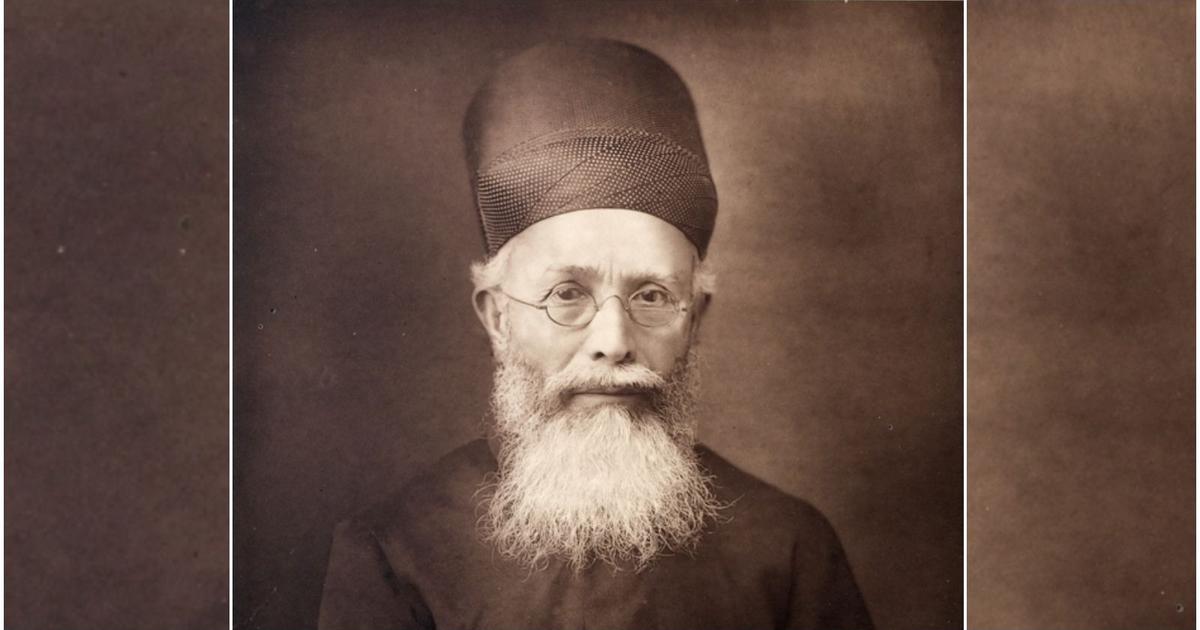
Were early Indian nationalists – people like Dadabhai Naoroji, Gopal Krishna Gokhale, Romesh Chunder Dutt, and Mahadev Govind Ranade – a bunch of staid men with fusty, conservative ideas?
A previous generation of historians was quite unkind to them, dismissing them as Anglophiles and self-interested elites. But if one dives into the archives, one quickly discovers that that the nineteenth century in India was fertile ground for some remarkable, even radical, political agendas which embraced vast swathes of Indian society.
Today is a particularly appropriate day to recall early nationalist ideas. Two-hundred years ago, on September 4, 1825, Dadabhai Naoroji was born in the city then known as Bombay. Perhaps the most consequential nationalist leader before Mahatma Gandhi, Naoroji shepherded the Indian National Congress through its early decades, fought for Indian rights in the British Parliament, and forged ties with numerous other emancipatory movements around the world.
His life and lifework were shaped by one of the most ambitious programmes of early nationalism: popular education. On his 200th birth anniversary, it is worthwhile to recall how nineteenth-century Indian leaders championed quality, state-supported education – and to ask why post-Independence India has been so delinquent in delivering this essential public good.
Naoroji was born into relative poverty. His parents had migrated from Dharampur in Gujarat, perhaps because of a famine stalking the region. Sometime in the early 1830s, young Dadabhai's mother, illiterate and now widowed, took the critical decision to enroll her son in an innovative experiment in free public education administered by the Bombay Native Education Society. The Society, a quasi-governmental body jointly operated by Britons and Indians, placed Naoroji in an English-medium school.
Although dressed in ragged clothing, he quickly distinguished himself amongst his more affluent peers. He was eventually selected to attend Elphinstone College, the premier higher educational institution in western India, on a scholarship which covered school fees – the princely sum of Rs 16.
This experience of free education left a profound mark on Naoroji. In the short term, in the 1840s and 1850s, Naoroji threw himself into activities to further extend education in western India. Along with a band of plucky Parsis and Maharashtrians, he opened a network of girls' schools in Bombay in 1849 – fully taught and financed by Indians rather than the government.
Despite virulent opposition from orthodox fathers, these schools helped kickstart a wider movement for female education from Ahmedabad through Ahmednagar. He helped establish publications, such as Dnyan Prasarak and Rast Goftar, to spread knowledge and reformist ideas amongst those who had no access to schools. Many of the editions were distributed for free. Rast Goftar might have briefly become the highest-circulating newspaper in India.
In the long term, free education shaped Naoroji's lifework. Just before he turned 79, Naoroji penned a brief reflective essay where he described his nationalist career as a sort of debt repayment for his public schooling.
“I realised that I had been educated at the expense of the poor, to whom I myself belong,” he wrote. “The thought developed itself in my mind that as my education and all the benefits arising therefrom came from the people, I must return to them the best I had in me. I must devote myself to the service of the people.”
A significant part of early Indian nationalism, therefore, was the indirect product of a Bombay classroom that was need-blind.
While developing the institutions and ideas of early nationalism, Naoroji never lost sight of how mass education fit into India's development ambitions. In 1882, he submitted a statement to the British Indian government which excoriated its woeful underspending on schools. In particular, he pointed out just how few girls were enrolled in primary institutions. Female education, for Naoroji, was an essential component of India's social transformation: with more girls in school, Indians would “understand that woman had as much right to exercise and enjoy all the rights, privileges, and duties of this world as man.”
Education, therefore, was much more than a tool for augmenting Indian human capital: it was a way to inculcate a more democratic culture, one which included women's rights and gender equality.
Naoroji was hardly alone in championing mass education. Indeed, some leaders were making sweeping demands from the 1840s onward, when Naoroji was still a college student. In 1848, Shahamat Ali, a resident of Delhi and an advocate of Indian political reform, traveled to Great Britain. Here, he was evidently influenced by Chartism, the working-class movement which campaigned for ideas like universal male suffrage. Ali endorsed the democratising spirit of Chartism, recognising that popular education was an essential element.
In a pamphlet issued while he was in Britain, he criticised the East India Company for underfunding Indian education and only educating a select few. Instead, he held up “the great object of educating a population of a hundred millions”. As an example, Ali turned to the educational reforms of Muhammad Ali in Egypt, demonstrating how Indians looked beyond Europe for reformist inspiration.
Not long after Shahamat Ali returned to India, citizens in Calcutta, Bombay, and Madras formed the first modern political associations in the country. These associations submitted petitions to the British Parliament in 1853, hoping to liberalise colonial rule. Each petition called for the extension of education in India.
But reformers in Bombay went the farthest. Their petition (influenced by Bhau Daji, Navrozji Fardunji, and, quite possibly, Naoroji) declared that mass education should be the government's first priority. “All the reforms and all the improvements sought for,” the petitioners stated, “are but secondary in importance compared with the necessity of introducing a complete system of education for the masses of the people.”
This demand was quite ahead of its time: it was only in 1870 that compulsory public education began in fits and starts in Great Britain, and Indians therefore had to look to public educational experiments in other countries, like the United States and Prussia.
As the Indian nationalist movement gathered pace in the late nineteenth century, these early rumblings for mass education were woven into its platform. It is no coincidence that some of the most towering leaders of early nationalism – including Naoroji, Ranade, and Gokhale, were also teachers and professors.
While they protested against state underfunding of schools, they helped establish educational institutions, looking to charitable Indians for financial assistance. They lent support to public educational experiments in princely states, such as in Travancore from the 1860s and in Baroda starting in the 1890s.
Nationalists also looked beyond India for models: they studied the development of technical and commercial education in Europe and the remarkable educational advancements of Meiji-era Japan.
By the turn of the twentieth century, one particular nationalist leader, Gokhale, was thinking of how to force the colonial government to concede popular education. A professor at Fergusson College in Poona, Gokhale declared that primary education meant “the future salvation of our country”. In 1911, he introduced a bill into the Imperial Legislative Council of India for free and compulsory primary schooling.
Gokhale's bill drew upon various precedents: Irish education, primary education in England, and the experiences of Japan and the Philippines (then an American colony). It also recognised India's multilingualism, allowing for instruction in any Indian language, and devolved responsibility to local governments.
The colonial authorities, while recognising surging public support for mass education, balked at its implications. George Clarke, the governor of Bombay, believed that Gokhale's bill was designed “to make our Rule impossible”, while others predicted popular uprisings from the newly-educated poor.
They could turn to the bill's sponsor to justify some of their worries: Gokhale had argued that popular education would have a democratising effect, promoting “individual autonomy, empowerment and freedom of choice so that criticising the government and protesting against unjust measures would become a duty”. With little surprise, Gokhale's bill was defeated in 1912.
It is a rather straightforward task to criticise colonial authorities for stymieing educational initiatives such as Gokhale's bill. It is a far more difficult and painful undertaking to acknowledge the yawning gap between early nationalist visions for mass education and independent India's woeful track record in educating its citizens. What happened?
The Indian Constitution set a target for 1960 for providing compulsory primary education for all children up to the age of 14. This goal, however, was enshrined in the Directive Principles, and hence non-enforceable. Curiously, mass education fell out of favour in various five-year plans, while governments chronically underspent on primary and secondary schools.
As economists like Amartya Sen and Jean Drèze have pointed out, independent India followed a dramatically different trajectory from many of its Asian neighbors, which wisely invested in public goods like education.
By 1975, JP Naik, a prolific author of works on Indian education, declared that “the goal of universal primary education remains as elusive as before”. Myron Weiner, an American political scientist, charged in 1990 that the Indian government was simply “unwilling” to educate the masses. It was beholden to casteist and classist notions and designed its educational system – with a top-heavy focus on higher education – to reinforce rather than break down social divisions.
The result was that India became “the largest single producer of the world's illiterates”.
To an extent, we can see some of this caste and class prejudice in the educational schemes of early nationalists. It is astonishing that Naoroji and his fellow Bombay reformers seem to have had no contact with Jotirao and Savitribai Phule, despite their shared interests in the promotion of learning as well as their geographic proximity.
In the early 1890s, several nationalist organs critiqued a non-Brahmin manifesto for free and compulsory education. Some early political thinkers, like Harish Chandra Mukherjee in Bengal, argued for a focus on higher education rather than mass education, clinging to the slender hope that knowledge would somehow trickle down to the “lower classes”.
Despite these shortcomings, early nationalists would likely be shocked to see the state of public primary and secondary education in India after 1947. They would be shrewd enough to identify educational policies as a key factor behind India's hobbled economic growth in the first decades following Independence. And they would no doubt recognise that, despite the commendable strides India has taken towards universal education in the past few decades, the abysmal quality of government schools further hampers India's productivity and economic growth today.
We thus confront a rather ironic turn of events. Figures like Naoroji and Gokhale convincingly argued for the three-fold benefits of quality public education at the primary and secondary levels: the creation of a skilled Indian population, the generation of jobs, and, consequently, increased national prosperity.
This view enjoyed wide popularity amongst the political elite of the time. Independent India has consistently underinvested in quality public education at the primary and secondary levels, which, as the economist Ashoka Mody notes, has produced a three-fold result: a vast portion of the population lacking essential skills, an endemic jobs crisis, and, therefore, curtailed national prosperity. This fact continues to elude much of the elite today.
Perhaps the best way to commemorate Dadabhai Naoroji on his two-hundredth birth anniversary is to continue asking uncomfortable questions about Indian educational policy – and how an ambitious vision from the nineteenth century still remains largely unrealised.
Free public education allowed for a poor child from Bombay to become one of the most significant global political actors in the Victorian era. How many millions of poor children are there in India today who, like young Dadabhai, await the necessary means to realize their potential?
Dinyar Patel is an associate professor of history at the SP Jain Institute of Management and Research in Mumbai. His award-winning biography of Dadabhai Naoroji, Naoroji: Pioneer of Indian Nationalism, was published by Harvard University Press in May 2020.
Source: Scroll
Related Posts: Kremlin rejects Trump claims on war in Ukraine as nationalists mock his comments Kremlin rejects Trump claims on war in Ukraine as nationalists mock his comments Kim Kardashian finally reacts to Kris Jenner's new look for the first time Mohsin Naqvi warned by Kris Srikkanth Kim Kardashian and Kris Jenner sue Ray J for defamation over racketeering claims All the diamond jewels stars wore at Kris Jenner’s 70th birthday Meghan and Harry join Hollywood stars for Kris Jenner’s grand 70th birthday Kim Kardashian channels Kris Jenner with new pixie haircut at Paris Fashion Week Kris Jenner And Lauren Sanchez Prove Power Dressing Is The New Lunch Date Uniform Is Kris Jenner's new youthful look a result of deep plane facelift

The recent murder of Chandranath Rath, an associate of BJP leader Suvendu Adhikari, has brought attention to a series of deaths connected to the politician. Over the past 13 years, several individuals close to Adhikari have died under various circumstances.The recent murder of Chandranath Rath
8 hours ago

Karnataka Home Minister G. Parameshwara on Thursday (May 7, 2026) said that the BCCI might have decided to shift the IPL finals venue from Bengaluru to Ahmedabad considering commercial viability. He clarified that distributing tickets to MLAs has nothing to do with shifting the final match
8 hours ago

When film star-turned-politician C Joseph Vijay's newly-formed political party won the most number of seats in the recent election in the Indian state of Tamil Nadu, it was hailed as historic. But five days after Monday's vote-counting, political uncertainty prevails in the southern state
8 hours ago

A cricket match, a tense over, a hungry watch party — and suddenly, more than 100 burgers are ordered in a single transaction. That moment has emerged as one of the most striking indicators of how India’s digital viewing habits are rapidly evolving during this cricket season.A cricket match
8 hours ago

Tech bodies oppose IT Rules amendmentsThe Internet and Mobile Association of India (IAMAI) and the Broadband India Forum (BIF) submitted their objections to the Ministry of Electronics and Information Technology (MeitY) on May 7 Published on: May 08
8 hours ago

Neetu Kapoor reacts to ‘horrible’ trolling after returning to work post Rishi Kapoor’s death: ‘Got into drinking…’Neetu Kapoor opened up about the trolling she faced after deciding to return to work during her appearance in latest episode of Soha Ali Khan’s YouTube show. May 8, 2026
8 hours ago

Actor-politician Vijay congratulated Tamil Nadu Class 12 students on their exam results. He encouraged those who did not pass to try again. His message included a line about being 'on the verge of victory'. This statement sparked interest, linking it to both student aspirations and the political
8 hours ago

Unthinkable AIADMK-DMK alliance buzz, kingmaker parties: All that TVK majority mark crisis has led toThe 234-member Tamil Nadu assembly has thrown up a hung verdict with Vijay's TVK emerging as the single largest party with 108 seats. Updated on: May 08
8 hours ago

IPL: As the Gujarat Titans gear up to face the Rajasthan Royals in Jaipur, both teams find themselves on equal footing with six victories each out of ten games played. The Titans are riding high on a three-match winning streak, showcasing their solid batting prowess
8 hours ago

CUET Exam 2026: 7 last-minute preparation tips to maximise your scoreCUET Exam 2026 will begin next week. Check the 7 last minute preparation tips here that will help to maximise your score. Published on: May 08, 2026 1:22 PM IST By HT Education Desk Share via Copy link With the Common University
8 hours ago

Girl 'harassed' by cabbies after car-taxi collision in Gurugram; family alleges police inactionGirl 'harassed' by cabbies after car-taxi collision in Gurugram; family alleges police inaction Published on: May 08, 2026 2:12 PM IST PTI Share via Copy link Gurugram
8 hours ago

The Supreme Court on Friday (May 8, 2026) recorded disappointment at the non-production of witnesses in the trial of Ashish Mishra, son of former Union minister Ajay Mishra, and others in the 2021 Lakhimpur Kheri violence case. A Bench headed by Chief Justice of India Surya Kant
8 hours ago

Global technology major Adobe on Friday announced the opening of a , making it the San Jose-headquartered company's seventh office in India.Located in Sector 129, the new campus will house over 700 employees across engineering and customer-focused roles
8 hours ago

From work meetings to weekend plans: Here’s how to style one bag multiple waysBags are a fashion staple and can make a huge difference in your overall look. Here’s how you can style one bag in different ways. Published on: May 08, 2026 2:14 PM IST By Anukriti Srivastava Share via Copy link If
8 hours ago

Union Home Minister Amit Shah is in Kolkata to select the first BJP Chief Minister and cabinet. He will chair meetings with legislative party leaders and MLAs. The new government's oath-taking ceremony is scheduled for Saturday. Chief Ministers from 20 states will attend the event
8 hours ago

As households across the globe count the costs of the US-Israel war in Iran, some companies have been counting bumper profits instead. The uncertainty sparked by the conflict, and Iran's effective closure of the Strait of Hormuz, is driving up the cost of living and hitting the budgets of firms
8 hours ago

‘What exactly am I paying rent for?’: Bengaluru techie earning ₹1 lakh debates moving back home as WFH rules easeThe user explained that his hometown is around 500 km away and travelling for office visits would still be manageable. Published on: May 08
8 hours ago

In the modern world, sedentary lifestyles are often associated with lengthy working hours, binge-watching shows, or endless scrolling on devices. However, there is one overlooked habit that silently contributes to the same risks: prolonged sitting on the toilet seat
8 hours ago

The Enforcement Directorate on Thursday claimed that one of the persons accused in a land scam and money laundering case was an alleged associate of Aam Aadmi Party’s Punjab chief Aman Arora, The Indian Express reported. This came after the central agency conducted raids at several locations in
8 hours ago

Editorial independence is core to our work. Some links may earn us a commission, without influencing our opinions.Don’t wait! Samsung, Redmi, and Lenovo tablets hit record low prices in Amazon Summer SaleThe Amazon Summer Sale is live now and it brings cashback offers of up to ₹33
8 hours ago

A clip showing two very different reactions to exam marks has started a conversation online about pressure, expectations and happiness among students. In the video, a girl is seen crying after scoring 90 per cent, while a boy proudly celebrates his 60 per cent marks by distributing sweets with a
8 hours ago

Trump has 'no intention' of invading Cuba, reveals Brazil's President Lula after White House talksThe diplomatic overture comes at a time when Cuba has been firmly in Trump's "crosshairs," particularly following the capture of Venezuela's president. Updated on: May 08
8 hours ago

‘How is this possible?’: Bengaluru woman’s ₹15,000 monthly budget leaves internet stunnedA Bengaluru woman shared her ₹15,000 monthly budget, leaving many internet users stunned. Published on: May 08, 2026 1:56 PM IST By Mahipal Singh Chouhan Share via Copy link A Bengaluru woman has left
8 hours ago

Hollywood star Rebel Wilson has been accused of making a "complete revision of history" in a defamation case brought against her by a young Australian actress. Charlotte MacInnes, who stars in Wilson's film The Deb, is suing the Bridesmaids actress for harming her reputation in Instagram posts in
8 hours ago

Prince Yadav of Lucknow Super Giants took the crucial wicket of Virat Kohli with a brilliant delivery. This performance helped his team secure a win against Royal Challengers Bengaluru. Yadav expressed happiness over the team's victory, emphasizing its importance over individual achievements
8 hours ago

The Tripura Board of Secondary Education (TBSE) has declared the Class 10 and Class 12 results 2026. A total of 84.18% of Madhyamik students and 79.33% of HS students have passed the exams. While the class 10 results see a decline in the overall pass rate
8 hours ago

The Bharatiya Janata Party has labeled Shiv Sena (UBT) leader Sanjay Raut the "joker of Indian politics." Raut questioned reports of US President Donald Trump congratulating Prime Minister Narendra Modi on the West Bengal election results. The BJP spokesperson stated that opposition leaders are
8 hours ago


![New Delhi [India], May 8 (ANI): Royal Challengers Bengaluru (RCB) all-rounder Krunal Pandya has spoken about the challenges and mindset required to compete as](http://newsorbit360.com/files/news/en/imgs/pressure-is-always-there.webp?width=120&height=70)


